Environment ministry unveils options to transform Czech power sector
Published:
31 October 2003 y., Friday
The Ministry of Environment last week unveiled a series of principles and policies that would radically transform the country's energy policy.
The philosophy underlying the 120-page policy document is that a fundamental change in current energy production must occur before the country can meet European Union (EU) demands to curb the greenhouse gases responsible for climate change.
The document is largely a response to the proposed future energy policy drawn up by the Ministry of Industry and Trade before the summer. Its favorite option, that of the country's biggest power company CEZ and, not surprisingly, the coal companies themselves, is for Czech power production to continue to be largely reliant on domestic power sources, notably coal-fired and nuclear plants.
The most serious flaw in that proposal, writes environmental ministry adviser Martin Bursik, the document's main author, is that it doesn't address how to counter the greenhouse gases produced and climate change caused by current Czech energy production and use. Czech membership in the EU and the EU's moves to take the global lead in countering climate change means the Czech Republic will come under increasing pressure to fall into line with this aspect of energy policy in the future, Bursik added.
Current emissions of greenhouse gases per person in the Czech Republic are around 30 percent higher than the EU average due to the heavy use of fossil fuels and inefficient production and use of energy.
Energy and transport together account for 42 percent of Czech emissions of carbon dioxide, the main greenhouse gas.
The Ministry of Industry and Trade also failed to take into account EU efforts to introduce ecological taxes, which would penalize the energy sources most responsible for greenhouse gases, namely brown and hard coal. A directive on ecological taxes is expected to be adopted by the European Commission within a few weeks. It will call for national taxes based on the carbon dioxide producing capacities of various fuels to be introduced by all countries including future members like the Czech Republic, Bursik said.
Such taxes would transform the current economics of the energy market and help to make renewable sources attractive. With the taxes and other incentives, renewable energy could account for 20 percent of Czech energy production by 2030, according to the environment ministry.
Šaltinis:
ceebiz.com
Copying, publishing, announcing any information from the News.lt portal without written permission of News.lt editorial office is prohibited.
The most popular articles
 Women in the EU earn on average 18% less than men - a gap that has scarcely narrowed over the last 15 years and in some countries has even grown.
more »
Women in the EU earn on average 18% less than men - a gap that has scarcely narrowed over the last 15 years and in some countries has even grown.
more »
 43 gas and electricity projects to split €2.3bn, the most the EU has ever spent on energy infrastructure in a single package.
more »
43 gas and electricity projects to split €2.3bn, the most the EU has ever spent on energy infrastructure in a single package.
more »
 Georgia and the European Union have initialled a comprehensive air services agreement at a meeting in Tbilisi, Georgia, today which will open up and integrate the respective markets, strengthen cooperation and offer new opportunities for consumers and operators.
more »
Georgia and the European Union have initialled a comprehensive air services agreement at a meeting in Tbilisi, Georgia, today which will open up and integrate the respective markets, strengthen cooperation and offer new opportunities for consumers and operators.
more »
 In order to vitalize and strengthen cooperation of business stakeholders in the region, the Nordic and Baltic countries continue running joint mobility programme.
more »
In order to vitalize and strengthen cooperation of business stakeholders in the region, the Nordic and Baltic countries continue running joint mobility programme.
more »
 The EBRD is boosting the availability of financing to the real economy sector in Serbia, with a €20 million credit line to Société Générale Serbia for on-lending to small and medium enterprises.
more »
The EBRD is boosting the availability of financing to the real economy sector in Serbia, with a €20 million credit line to Société Générale Serbia for on-lending to small and medium enterprises.
more »
 The EBRD is supporting the development of the private sector in Armenia and increases further the availability of financing in the real economy sector with a $10 million loan to Ameriabank for on lending to local companies under its Medium Sized Co-financing Facility (MCFF).
more »
The EBRD is supporting the development of the private sector in Armenia and increases further the availability of financing in the real economy sector with a $10 million loan to Ameriabank for on lending to local companies under its Medium Sized Co-financing Facility (MCFF).
more »
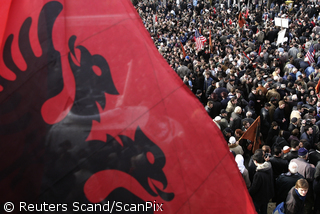 The EBRD is supporting the modernisation and improvement of transport infrastructure in Albania with a €50 million sovereign loan to finance the rehabilitation of regional and local roads in the country.
more »
The EBRD is supporting the modernisation and improvement of transport infrastructure in Albania with a €50 million sovereign loan to finance the rehabilitation of regional and local roads in the country.
more »
 Given the deep impact Latvia has suffered in the wake of the global crisis, and due to the emergency nature of this program, the first operation will focus mainly on the first and second objectives.
more »
Given the deep impact Latvia has suffered in the wake of the global crisis, and due to the emergency nature of this program, the first operation will focus mainly on the first and second objectives.
more »
 Mr. Dominique Strauss-Kahn, Managing Director of the International Monetary Fund (IMF), will visit Africa March 7-11, to discuss opportunities and challenges facing African economies in the wake of the global crisis.
more »
Mr. Dominique Strauss-Kahn, Managing Director of the International Monetary Fund (IMF), will visit Africa March 7-11, to discuss opportunities and challenges facing African economies in the wake of the global crisis.
more »
 Without enough money, the EU 2020 strategy risks turning into "another vague scoreboard for the Member States", the EP Budgets Committee warned on Thursday when adopting its priorities for the 2011 budget.
more »
Without enough money, the EU 2020 strategy risks turning into "another vague scoreboard for the Member States", the EP Budgets Committee warned on Thursday when adopting its priorities for the 2011 budget.
more »