Environment ministry unveils options to transform Czech power sector
Published:
31 October 2003 y., Friday
The Ministry of Environment last week unveiled a series of principles and policies that would radically transform the country's energy policy.
The philosophy underlying the 120-page policy document is that a fundamental change in current energy production must occur before the country can meet European Union (EU) demands to curb the greenhouse gases responsible for climate change.
The document is largely a response to the proposed future energy policy drawn up by the Ministry of Industry and Trade before the summer. Its favorite option, that of the country's biggest power company CEZ and, not surprisingly, the coal companies themselves, is for Czech power production to continue to be largely reliant on domestic power sources, notably coal-fired and nuclear plants.
The most serious flaw in that proposal, writes environmental ministry adviser Martin Bursik, the document's main author, is that it doesn't address how to counter the greenhouse gases produced and climate change caused by current Czech energy production and use. Czech membership in the EU and the EU's moves to take the global lead in countering climate change means the Czech Republic will come under increasing pressure to fall into line with this aspect of energy policy in the future, Bursik added.
Current emissions of greenhouse gases per person in the Czech Republic are around 30 percent higher than the EU average due to the heavy use of fossil fuels and inefficient production and use of energy.
Energy and transport together account for 42 percent of Czech emissions of carbon dioxide, the main greenhouse gas.
The Ministry of Industry and Trade also failed to take into account EU efforts to introduce ecological taxes, which would penalize the energy sources most responsible for greenhouse gases, namely brown and hard coal. A directive on ecological taxes is expected to be adopted by the European Commission within a few weeks. It will call for national taxes based on the carbon dioxide producing capacities of various fuels to be introduced by all countries including future members like the Czech Republic, Bursik said.
Such taxes would transform the current economics of the energy market and help to make renewable sources attractive. With the taxes and other incentives, renewable energy could account for 20 percent of Czech energy production by 2030, according to the environment ministry.
Šaltinis:
ceebiz.com
Copying, publishing, announcing any information from the News.lt portal without written permission of News.lt editorial office is prohibited.
The most popular articles
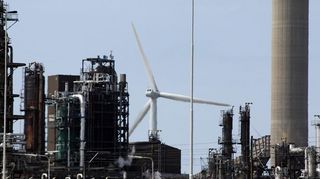 According to Spain's Minister of Industry, Tourism and Trade, Miguel Sebastián, currently chairing an Informal Energy Council today in Seville, the key to achieving a common EU energy market is to establish interconnections.
more »
According to Spain's Minister of Industry, Tourism and Trade, Miguel Sebastián, currently chairing an Informal Energy Council today in Seville, the key to achieving a common EU energy market is to establish interconnections.
more »
 Mr. Dominique Strauss-Kahn, Managing Director of the International Monetary Fund (IMF), announced today that the Fund will provide US$100 million very rapidly in emergency financing to Haiti to assist it in dealing with the aftermath of the massive and devastating earthquake that has hit the country.
more »
Mr. Dominique Strauss-Kahn, Managing Director of the International Monetary Fund (IMF), announced today that the Fund will provide US$100 million very rapidly in emergency financing to Haiti to assist it in dealing with the aftermath of the massive and devastating earthquake that has hit the country.
more »
 Mr. Dominique Strauss-Kahn, Managing Director of the International Monetary Fund (IMF), issued the following statement on Jamaica today.
more »
Mr. Dominique Strauss-Kahn, Managing Director of the International Monetary Fund (IMF), issued the following statement on Jamaica today.
more »
 The Government of the Republic of Korea and the International Monetary Fund (IMF) announced today that they will jointly host a high-level international conference on Asia in Seoul, South Korea, during July 12-13, 2010.
more »
The Government of the Republic of Korea and the International Monetary Fund (IMF) announced today that they will jointly host a high-level international conference on Asia in Seoul, South Korea, during July 12-13, 2010.
more »
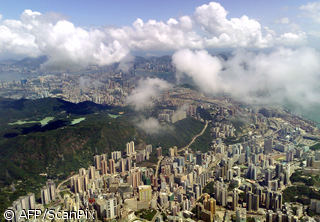 Mr. Dominique Strauss-Kahn, Managing Director of the International Monetary Fund (IMF), will travel to Tokyo and Hong Kong SAR, January 18−20, 2010.
more »
Mr. Dominique Strauss-Kahn, Managing Director of the International Monetary Fund (IMF), will travel to Tokyo and Hong Kong SAR, January 18−20, 2010.
more »
 After lots were drawn, ten winners of Danske Bankas scholarships and one winner of an iPod shuffle player were established.
more »
After lots were drawn, ten winners of Danske Bankas scholarships and one winner of an iPod shuffle player were established.
more »
 The Meeting is convened on the initiative and by the resolution of the Management Board of the Bank.
more »
The Meeting is convened on the initiative and by the resolution of the Management Board of the Bank.
more »
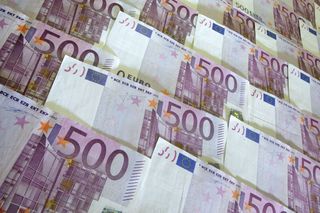 Today, Thursday, on the second and last day of their informal meeting in La Granja (Segovia), the ministers responsible for European Affairs will study the challenge of how to boost reflation through sustainable growth that generates new employment.
more »
Today, Thursday, on the second and last day of their informal meeting in La Granja (Segovia), the ministers responsible for European Affairs will study the challenge of how to boost reflation through sustainable growth that generates new employment.
more »
 How well-equipped are European companies to meet the challenges of global competition and the recent recession? The 2009 European Company Survey provides some clues.
more »
How well-equipped are European companies to meet the challenges of global competition and the recent recession? The 2009 European Company Survey provides some clues.
more »
 The European Commission decided today not to raise any objections to Finland's plan to support infrastructure investments in Vaasa regional airport.
more »
The European Commission decided today not to raise any objections to Finland's plan to support infrastructure investments in Vaasa regional airport.
more »