Poland Opposes Seven-Year Restriction on Free Movement of Labor After EU Entry
Published:
13 April 2001 y., Friday
Poland immediately rejected Wednesday a proposal by the European Commission to allow member states to keep out workers from candidate countries in eastern Europe for up to seven years after their accession.
"It is very clear we are not in agreement with the proposals of Commissioner Verheugen. They are very close to the German and Austrian proposals, with some changes. Naturally we don't accept that position," Poland's chief EU negotiator, Jan Kulakowski, was quoted as saying by PAP news agency.
Trying to strike a compromise on the sensitive issue of free movement of labor, Enlargement Commissioner Guenter Verheugen put forward a proposal for a general transition period of five years when member countries could impose their own restrictions.
Once the five years are up, any member state would be able to maintain its national provisions for an extra two years in the case of serious disturbances in its labor market. Germany and Austria have called for a seven-year transition period on the free movement of labor, fearful of a flood of workers from neighboring candidate states such as Poland and Hungary.
"Our position today is that no transition period is necessary in the area of free movement of people," said Kulakowski.
Šaltinis:
Agence France Presse
Copying, publishing, announcing any information from the News.lt portal without written permission of News.lt editorial office is prohibited.
The most popular articles
 The European Commission today concluded on the existence of excessive deficits in Cyprus, Denmark and Finland and recommended deadlines for their correction to the Council.
more »
The European Commission today concluded on the existence of excessive deficits in Cyprus, Denmark and Finland and recommended deadlines for their correction to the Council.
more »
 Over 2000 former construction workers in Spain and nearly 600 ex-employees of Irish glass company Waterford Crystal and its suppliers will receive a total of €11 million in aid from the EU Globalisation Adjustment Fund to help with training, business start-ups and job guidance under plans agreed by MEPs and the Council of Ministers.
more »
Over 2000 former construction workers in Spain and nearly 600 ex-employees of Irish glass company Waterford Crystal and its suppliers will receive a total of €11 million in aid from the EU Globalisation Adjustment Fund to help with training, business start-ups and job guidance under plans agreed by MEPs and the Council of Ministers.
more »
 MEPs on Tuesday decided six top priorities and a number of additional key issues for the upcoming negotiations on the 2011 budget.
more »
MEPs on Tuesday decided six top priorities and a number of additional key issues for the upcoming negotiations on the 2011 budget.
more »
 The EU-China Science and Technology Week starts today at the heart of World Expo Shanghai.
more »
The EU-China Science and Technology Week starts today at the heart of World Expo Shanghai.
more »
 European Climate Action Commissioner Connie Hedegaard and European Investment Bank President Philippe Maystadt agreed on Monday to explore a joint climate finance initiative for developing countries as part of the European Union commitment made at the UN climate conference in Copenhagen last December.
more »
European Climate Action Commissioner Connie Hedegaard and European Investment Bank President Philippe Maystadt agreed on Monday to explore a joint climate finance initiative for developing countries as part of the European Union commitment made at the UN climate conference in Copenhagen last December.
more »
 Sustainability, competitiveness and security of energy supply: the three pillars to the foundation of a new EU energy community.
more »
Sustainability, competitiveness and security of energy supply: the three pillars to the foundation of a new EU energy community.
more »
 EU Trade Commissioner Karel De Gucht and Palestinian Minister of National Economy Hasan Abu-Libdeh today discussed measures to enhance EU-Palestinian bilateral trade relations and to facilitate trade of Palestinian products to EU markets.
more »
EU Trade Commissioner Karel De Gucht and Palestinian Minister of National Economy Hasan Abu-Libdeh today discussed measures to enhance EU-Palestinian bilateral trade relations and to facilitate trade of Palestinian products to EU markets.
more »
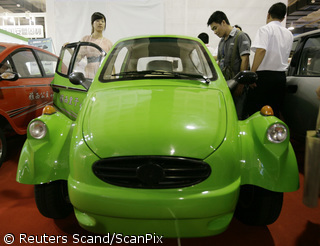 Some of the most innovative and exciting transport research projects funded by the EU are being showcased at the Transport Research Arena (TRA) in Brussels this week.
more »
Some of the most innovative and exciting transport research projects funded by the EU are being showcased at the Transport Research Arena (TRA) in Brussels this week.
more »
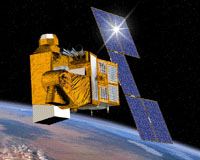 Nowadays we rely heavily on satellite positioning and navigation, but the only available technology is American.
more »
Nowadays we rely heavily on satellite positioning and navigation, but the only available technology is American.
more »
 The European Commission will reveal how it aims to revamp its transport networks policy in response to the challenges of the 21st century at a conference dedicated to the Trans-European Transport Network (TEN-T) in Zaragoza on 8 and 9 June.
more »
The European Commission will reveal how it aims to revamp its transport networks policy in response to the challenges of the 21st century at a conference dedicated to the Trans-European Transport Network (TEN-T) in Zaragoza on 8 and 9 June.
more »