Poland Opposes Seven-Year Restriction on Free Movement of Labor After EU Entry
Published:
13 April 2001 y., Friday
Poland immediately rejected Wednesday a proposal by the European Commission to allow member states to keep out workers from candidate countries in eastern Europe for up to seven years after their accession.
"It is very clear we are not in agreement with the proposals of Commissioner Verheugen. They are very close to the German and Austrian proposals, with some changes. Naturally we don't accept that position," Poland's chief EU negotiator, Jan Kulakowski, was quoted as saying by PAP news agency.
Trying to strike a compromise on the sensitive issue of free movement of labor, Enlargement Commissioner Guenter Verheugen put forward a proposal for a general transition period of five years when member countries could impose their own restrictions.
Once the five years are up, any member state would be able to maintain its national provisions for an extra two years in the case of serious disturbances in its labor market. Germany and Austria have called for a seven-year transition period on the free movement of labor, fearful of a flood of workers from neighboring candidate states such as Poland and Hungary.
"Our position today is that no transition period is necessary in the area of free movement of people," said Kulakowski.
Šaltinis:
Agence France Presse
Copying, publishing, announcing any information from the News.lt portal without written permission of News.lt editorial office is prohibited.
The most popular articles
 In European sustainable energy week 2010, new EU energy commissioner presents strategy to reduce Europe’s dependence on fossil fuel.
more »
In European sustainable energy week 2010, new EU energy commissioner presents strategy to reduce Europe’s dependence on fossil fuel.
more »
 The EBRD is launching a Project Complaint Mechanism, which is expected to enhance the accountability and transparency of the Bank’s operations.
more »
The EBRD is launching a Project Complaint Mechanism, which is expected to enhance the accountability and transparency of the Bank’s operations.
more »
 The EBRD is boosting the availability of local currency financing in Armenia with a synthetic loan in Armenian Drams (AMD) worth $4 million to FINCA UCO CJSC for on-lending to local micro and small enterprises (MSEs).
more »
The EBRD is boosting the availability of local currency financing in Armenia with a synthetic loan in Armenian Drams (AMD) worth $4 million to FINCA UCO CJSC for on-lending to local micro and small enterprises (MSEs).
more »
 This year is the UN year of biodiversity and it brings endangered species into the spotlight.
more »
This year is the UN year of biodiversity and it brings endangered species into the spotlight.
more »
 The World Bank Board of Directors today approved a US$65 million project to support the recovery of Haiti’s critical infrastructure as well as the reestablishment of basic State functions following the devastating 7.0 magnitude earthquake on January 12, 2010.
more »
The World Bank Board of Directors today approved a US$65 million project to support the recovery of Haiti’s critical infrastructure as well as the reestablishment of basic State functions following the devastating 7.0 magnitude earthquake on January 12, 2010.
more »
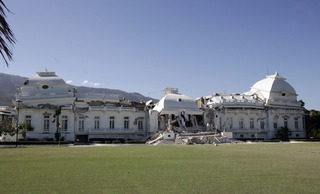 Haiti’s arduous reconstruction and recovery process jolted forward today following fresh commitments to help the Caribbean nation rebuild in the wake of its devastating January 12 earthquake.
more »
Haiti’s arduous reconstruction and recovery process jolted forward today following fresh commitments to help the Caribbean nation rebuild in the wake of its devastating January 12 earthquake.
more »
 A mission from the African Department of the International Monetary Fund (IMF) visited Uganda during March 4-17, 2010, to conduct the seventh and final review under Uganda’s Policy Support Instrument (PSI) and reach understandings on a policy framework for a new three-year PSI to cover the period 2010 to 2013.
more »
A mission from the African Department of the International Monetary Fund (IMF) visited Uganda during March 4-17, 2010, to conduct the seventh and final review under Uganda’s Policy Support Instrument (PSI) and reach understandings on a policy framework for a new three-year PSI to cover the period 2010 to 2013.
more »
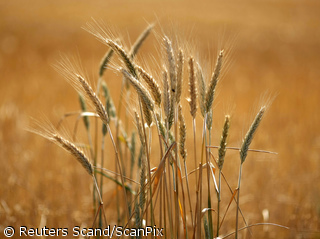 The European Economic and Social Committee (EESC), as the first EU institution, rose to the challenge of providing a comprehensive vision for the future of the Common Agriculture Policy (CAP), in advance of the European Commission's papers on the matter, due to be issued later this year and in 2011.
more »
The European Economic and Social Committee (EESC), as the first EU institution, rose to the challenge of providing a comprehensive vision for the future of the Common Agriculture Policy (CAP), in advance of the European Commission's papers on the matter, due to be issued later this year and in 2011.
more »
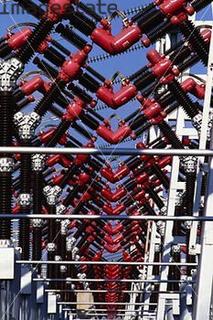 The outlook for primary energy supplies, heat, and electricity is questionable for the Eastern Europe and Central Asia region, despite Russia and Central Asia’s current role as a major energy supplier to both Eastern and Western Europe.
more »
The outlook for primary energy supplies, heat, and electricity is questionable for the Eastern Europe and Central Asia region, despite Russia and Central Asia’s current role as a major energy supplier to both Eastern and Western Europe.
more »
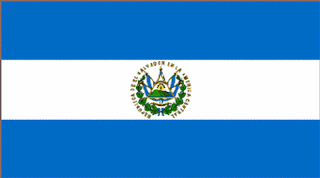 The Executive Board of the International Monetary Fund (IMF) today approved a 36-month, SDR 513.9 million (about US$790 million) Stand-By Arrangement (SBA) for El Salvador to help the country mitigate the adverse effects of the global crisis.
more »
The Executive Board of the International Monetary Fund (IMF) today approved a 36-month, SDR 513.9 million (about US$790 million) Stand-By Arrangement (SBA) for El Salvador to help the country mitigate the adverse effects of the global crisis.
more »