Poland Opposes Seven-Year Restriction on Free Movement of Labor After EU Entry
Published:
13 April 2001 y., Friday
Poland immediately rejected Wednesday a proposal by the European Commission to allow member states to keep out workers from candidate countries in eastern Europe for up to seven years after their accession.
"It is very clear we are not in agreement with the proposals of Commissioner Verheugen. They are very close to the German and Austrian proposals, with some changes. Naturally we don't accept that position," Poland's chief EU negotiator, Jan Kulakowski, was quoted as saying by PAP news agency.
Trying to strike a compromise on the sensitive issue of free movement of labor, Enlargement Commissioner Guenter Verheugen put forward a proposal for a general transition period of five years when member countries could impose their own restrictions.
Once the five years are up, any member state would be able to maintain its national provisions for an extra two years in the case of serious disturbances in its labor market. Germany and Austria have called for a seven-year transition period on the free movement of labor, fearful of a flood of workers from neighboring candidate states such as Poland and Hungary.
"Our position today is that no transition period is necessary in the area of free movement of people," said Kulakowski.
Šaltinis:
Agence France Presse
Copying, publishing, announcing any information from the News.lt portal without written permission of News.lt editorial office is prohibited.
The most popular articles
 On 11 February, heads of state or government of European Union member states will meet in Brussels to seek a commitment towards implementing a revitalised economic strategy to boost employment and growth in the EU.
more »
On 11 February, heads of state or government of European Union member states will meet in Brussels to seek a commitment towards implementing a revitalised economic strategy to boost employment and growth in the EU.
more »
 International Monetary Fund forecasts that Lithuania’s economy will grow 1.6 % this year, making it “the only one of the three Baltic economies expected to be in the positive territory in 2010”.
more »
International Monetary Fund forecasts that Lithuania’s economy will grow 1.6 % this year, making it “the only one of the three Baltic economies expected to be in the positive territory in 2010”.
more »
 Raynair announced it would open its 40th and 1st Central European base at Kaunas, Lithuania’s second largest city, in May with 2 based aircraft and 18 routes.
more »
Raynair announced it would open its 40th and 1st Central European base at Kaunas, Lithuania’s second largest city, in May with 2 based aircraft and 18 routes.
more »
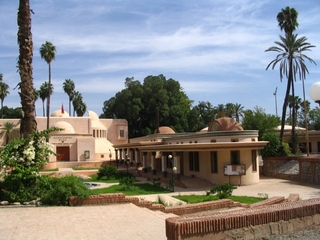 A new Partnership Strategy for Morocco has been approved by the Board of Executive Directors of the World Bank.
more »
A new Partnership Strategy for Morocco has been approved by the Board of Executive Directors of the World Bank.
more »
 The electric car is an opportunity for European industry.
more »
The electric car is an opportunity for European industry.
more »
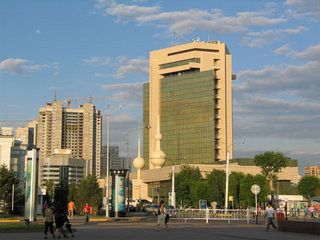 The EBRD’s Board of Directors has adopted a new strategy for Kazakhstan, which reinforces the Bank’s commitment to further support the Kazakh economy and sets out the priorities for its activities in the country over the next three years.
more »
The EBRD’s Board of Directors has adopted a new strategy for Kazakhstan, which reinforces the Bank’s commitment to further support the Kazakh economy and sets out the priorities for its activities in the country over the next three years.
more »
 The European Commission has authorised, under EU state aid rules, plans notified by Sweden to provide a guarantee that would enable Saab Automobile AB to access a loan from the European Investment Bank (EIB).
more »
The European Commission has authorised, under EU state aid rules, plans notified by Sweden to provide a guarantee that would enable Saab Automobile AB to access a loan from the European Investment Bank (EIB).
more »
 At the informal meeting of the Ministers of Competitiveness (Science and Industry), to be held between 7 and 9 February in San Sebastian, the issues on the table will include placing science at the top of the EU agenda and showcasing its role in economic recovery, as well taking the debate on the electric vehicle to EU level.
more »
At the informal meeting of the Ministers of Competitiveness (Science and Industry), to be held between 7 and 9 February in San Sebastian, the issues on the table will include placing science at the top of the EU agenda and showcasing its role in economic recovery, as well taking the debate on the electric vehicle to EU level.
more »
 The Executive Board of the International Monetary Fund (IMF) today approved a 27-month Stand-By Arrangement with Jamaica in the amount of SDR 820.5 million (about US$1.27 billion) to support the country’s economic reforms and help it cope with the consequences of the global downturn.
more »
The Executive Board of the International Monetary Fund (IMF) today approved a 27-month Stand-By Arrangement with Jamaica in the amount of SDR 820.5 million (about US$1.27 billion) to support the country’s economic reforms and help it cope with the consequences of the global downturn.
more »
 Mr. Nadeem Ilahi, chief of an International Monetary Fund (IMF) staff mission to the Kyrgyz Republic, issued the following statement today in Bishkek.
more »
Mr. Nadeem Ilahi, chief of an International Monetary Fund (IMF) staff mission to the Kyrgyz Republic, issued the following statement today in Bishkek.
more »