Poland Opposes Seven-Year Restriction on Free Movement of Labor After EU Entry
Published:
13 April 2001 y., Friday
Poland immediately rejected Wednesday a proposal by the European Commission to allow member states to keep out workers from candidate countries in eastern Europe for up to seven years after their accession.
"It is very clear we are not in agreement with the proposals of Commissioner Verheugen. They are very close to the German and Austrian proposals, with some changes. Naturally we don't accept that position," Poland's chief EU negotiator, Jan Kulakowski, was quoted as saying by PAP news agency.
Trying to strike a compromise on the sensitive issue of free movement of labor, Enlargement Commissioner Guenter Verheugen put forward a proposal for a general transition period of five years when member countries could impose their own restrictions.
Once the five years are up, any member state would be able to maintain its national provisions for an extra two years in the case of serious disturbances in its labor market. Germany and Austria have called for a seven-year transition period on the free movement of labor, fearful of a flood of workers from neighboring candidate states such as Poland and Hungary.
"Our position today is that no transition period is necessary in the area of free movement of people," said Kulakowski.
Šaltinis:
Agence France Presse
Copying, publishing, announcing any information from the News.lt portal without written permission of News.lt editorial office is prohibited.
The most popular articles
 An aviation agreement has been signed today by the European Union and the Vietnamese authorities which will remove nationality restrictions in the bilateral air services agreements between EU Member States and Vietnam.
more »
An aviation agreement has been signed today by the European Union and the Vietnamese authorities which will remove nationality restrictions in the bilateral air services agreements between EU Member States and Vietnam.
more »
 The European Investment Bank marked the 50th anniversary of the Republic of Cyprus and its 30 years of activity in the country with a public ceremony celebrating the signature of a total of EUR 180 million for urban environment.
more »
The European Investment Bank marked the 50th anniversary of the Republic of Cyprus and its 30 years of activity in the country with a public ceremony celebrating the signature of a total of EUR 180 million for urban environment.
more »
 In response to the financial crisis, the Commission has put forward legislative proposals to strengthen and expand existing tools for coordinating economic and fiscal policy in the EU.
more »
In response to the financial crisis, the Commission has put forward legislative proposals to strengthen and expand existing tools for coordinating economic and fiscal policy in the EU.
more »
 In the first meeting of the SME Finance Forum, possible means to improve the current situation of access to finance were discussed, such as the introduction of a grace period for firms in difficulties, the involvement of credit mediators and improved loan guarantees.
more »
In the first meeting of the SME Finance Forum, possible means to improve the current situation of access to finance were discussed, such as the introduction of a grace period for firms in difficulties, the involvement of credit mediators and improved loan guarantees.
more »
 The EU budget is no simple matter, but then no budget ever is.
more »
The EU budget is no simple matter, but then no budget ever is.
more »
 Parliament will be crucial in avoiding a “lowest common denominator” approach when helping to design the EU's new economic governance architecture, ECB president Jean-Claude Trichet told the Economic and Monetary Affairs Committee on Monday.
more »
Parliament will be crucial in avoiding a “lowest common denominator” approach when helping to design the EU's new economic governance architecture, ECB president Jean-Claude Trichet told the Economic and Monetary Affairs Committee on Monday.
more »
 With a multitude of language-related events taking place on or around 26 September, the main themes for this year's European Day of Languages are business and jobs.
more »
With a multitude of language-related events taking place on or around 26 September, the main themes for this year's European Day of Languages are business and jobs.
more »
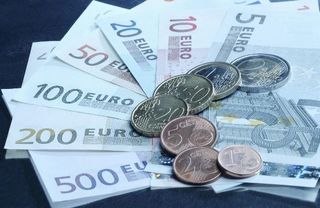 The EU disbursed today € 1.15 billion to Romania, the third instalment of a € 5 billion loan, which was agreed in May 2009 as part of a multilateral financial assistance package.
more »
The EU disbursed today € 1.15 billion to Romania, the third instalment of a € 5 billion loan, which was agreed in May 2009 as part of a multilateral financial assistance package.
more »
 The European Investment Bank has agreed to lend GBP250 million for the replacement, reinforcement and expansion of the gas distribution networks operated by Scotland Gas Networks and Southern Gas Networks.
more »
The European Investment Bank has agreed to lend GBP250 million for the replacement, reinforcement and expansion of the gas distribution networks operated by Scotland Gas Networks and Southern Gas Networks.
more »
 The bargaining positions of all players in the human food chain must be rebalanced, and fair competition enforced by law, to ensure fair returns to farmers and price transparency to consumers, says Parliament in a resolution voted on Tuesday.
more »
The bargaining positions of all players in the human food chain must be rebalanced, and fair competition enforced by law, to ensure fair returns to farmers and price transparency to consumers, says Parliament in a resolution voted on Tuesday.
more »