Poland Opposes Seven-Year Restriction on Free Movement of Labor After EU Entry
Published:
13 April 2001 y., Friday
Poland immediately rejected Wednesday a proposal by the European Commission to allow member states to keep out workers from candidate countries in eastern Europe for up to seven years after their accession.
"It is very clear we are not in agreement with the proposals of Commissioner Verheugen. They are very close to the German and Austrian proposals, with some changes. Naturally we don't accept that position," Poland's chief EU negotiator, Jan Kulakowski, was quoted as saying by PAP news agency.
Trying to strike a compromise on the sensitive issue of free movement of labor, Enlargement Commissioner Guenter Verheugen put forward a proposal for a general transition period of five years when member countries could impose their own restrictions.
Once the five years are up, any member state would be able to maintain its national provisions for an extra two years in the case of serious disturbances in its labor market. Germany and Austria have called for a seven-year transition period on the free movement of labor, fearful of a flood of workers from neighboring candidate states such as Poland and Hungary.
"Our position today is that no transition period is necessary in the area of free movement of people," said Kulakowski.
Šaltinis:
Agence France Presse
Copying, publishing, announcing any information from the News.lt portal without written permission of News.lt editorial office is prohibited.
The most popular articles
 In another move to strengthen the financial system, the Commission is proposing controls on credit rating agencies - private companies that evaluate financial risks for investors.
more »
In another move to strengthen the financial system, the Commission is proposing controls on credit rating agencies - private companies that evaluate financial risks for investors.
more »
 Monday 10 November saw a large report land on the desk of MEPs in the Budgetary Control Committee.
more »
Monday 10 November saw a large report land on the desk of MEPs in the Budgetary Control Committee.
more »
 EU wants G20 meeting to pave the way for reform of the international financial system.
more »
EU wants G20 meeting to pave the way for reform of the international financial system.
more »
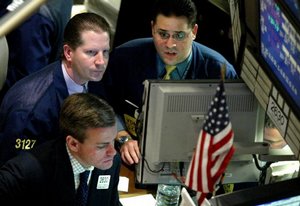 New Yorkers reflect on the election of Barack Obama as the 44th President of the United States.
more »
New Yorkers reflect on the election of Barack Obama as the 44th President of the United States.
more »
 The ability of the EU's common agriculture policy (CAP) to cope with the challenges of affordable food and climate change was discussed in Brussels 3-4 November.
more »
The ability of the EU's common agriculture policy (CAP) to cope with the challenges of affordable food and climate change was discussed in Brussels 3-4 November.
more »
 European Union economic growth should be 1.4% in 2008, half what it was in 2007, and drop even more sharply in 2009 to 0.2% before recovering gradually to 1.1% in 2010 (1.2%, 0.1% and 0.9%, respectively, for the euro area).
more »
European Union economic growth should be 1.4% in 2008, half what it was in 2007, and drop even more sharply in 2009 to 0.2% before recovering gradually to 1.1% in 2010 (1.2%, 0.1% and 0.9%, respectively, for the euro area).
more »
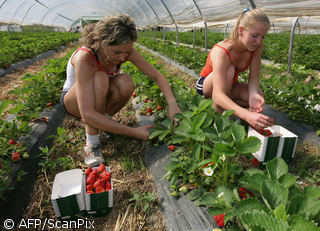 There are an estimated 4-8 million immigrants working illegally in the European Union.
more »
There are an estimated 4-8 million immigrants working illegally in the European Union.
more »
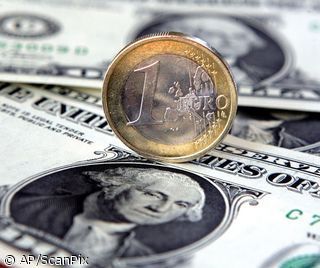 Hit by economic turmoil and the sharp global downturn, growth in the EU slows almost to a halt.
more »
Hit by economic turmoil and the sharp global downturn, growth in the EU slows almost to a halt.
more »
 The top priority is to cushion the impact of the financial crisis on jobs, purchasing power and prosperity of EU citizens.
more »
The top priority is to cushion the impact of the financial crisis on jobs, purchasing power and prosperity of EU citizens.
more »
 The International Monetary Fund has approved short-term financing to help emerging market economies weather the global financial storm.
more »
The International Monetary Fund has approved short-term financing to help emerging market economies weather the global financial storm.
more »