Future Bright For Digital Cash.
Published:
7 November 1999 y., Sunday
The future looks good for online digital cash transactions, a report released today says, but it warns that a shakeout is on the horizon for companies that develop and deliver virtual money technologies. In its report, "The Dash to Digital Cash," the Aberdeen Group says the drive to support micropayments - typically sub-$10 transactions without the disproportionate processing fees of an ordinary credit card - is expected to gain significant momentum over the next two years or three years. "Although the Web is able to distribute very granular content and services, until now the costs of processing small financial transactions has effectively blocked the emergence of low cost, pay-as-you-go content models that require low-value transactions," said Judith Rosall, an Aberdeen research director and the author of the report. "Our research indicates that digital cash technologies - which enable easy and inexpensive-to-process micropayments - are reaching a stage of maturity where they will significantly impact the pricing and content models offered over the Web," she said. "We believe that digital cash technologies will begin growing in adoption and acceptance in (the) year 2000 and will contribute to significant worldwide e-commerce market growth, particularly in the sales of digital content, digital music, and online gaming." The Aberdeen report looked at a number of approaches to digital cash, including credit card aggregation (often through "electronic wallet" technologies), stored-value smart cards, and billing through Internet service providers (ISPs) or telecommunication companies. Sizing up the players in the market, the report says that, as the digital cash business heats up, the providers likely to survive may be the ones whose own wallets are the fattest. It predicts a marketing war as providers jockey to become the recognized brands.
Copying, publishing, announcing any information from the News.lt portal without written permission of News.lt editorial office is prohibited.
The most popular articles
 The EU should act in a united fashion to tackle the financial market crisis, and Member States should avoid unilateral steps which cause problems for their neighbours, according to most of the MEPs taking part in the debate on next week's EU summit and the financial turmoil.
more »
The EU should act in a united fashion to tackle the financial market crisis, and Member States should avoid unilateral steps which cause problems for their neighbours, according to most of the MEPs taking part in the debate on next week's EU summit and the financial turmoil.
more »
 Following the decision by the Economic and Financial Affairs Council (ECOFIN), the Government of Lithuania raises deposit guarantee protection for individuals from EUR 22,000 up to EUR100,000, demonstrating the credibility of Lithuanian finance sector and safety of deposits at financial institutions.
more »
Following the decision by the Economic and Financial Affairs Council (ECOFIN), the Government of Lithuania raises deposit guarantee protection for individuals from EUR 22,000 up to EUR100,000, demonstrating the credibility of Lithuanian finance sector and safety of deposits at financial institutions.
more »
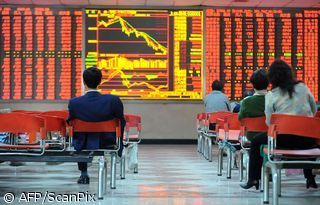 As banks tumble like bowling pins and confidence plummets, Thursday sees MEPs consider whether to back wider financial regulation.
more »
As banks tumble like bowling pins and confidence plummets, Thursday sees MEPs consider whether to back wider financial regulation.
more »
 On 6 October, the Embassy of Latvia to Lithuania received a reply to the note of Latvian Ministry of Foreign Affairs regarding the ruling of Vilnius District Court pertaining to the Latvian company airBaltic and Riga’s airport on the basis of the request of the Lithuanian company flyLAL.
more »
On 6 October, the Embassy of Latvia to Lithuania received a reply to the note of Latvian Ministry of Foreign Affairs regarding the ruling of Vilnius District Court pertaining to the Latvian company airBaltic and Riga’s airport on the basis of the request of the Lithuanian company flyLAL.
more »
 Lithianian Development Agency in cooperation with the Lithuanian Embassy to the United Kingdom of Great Britain and Northern Ireland as well as Alro Group, a real estate investment consultant, based in London, present “The Lithuanian Economic Forum” which will take place on October 8 in London.
more »
Lithianian Development Agency in cooperation with the Lithuanian Embassy to the United Kingdom of Great Britain and Northern Ireland as well as Alro Group, a real estate investment consultant, based in London, present “The Lithuanian Economic Forum” which will take place on October 8 in London.
more »
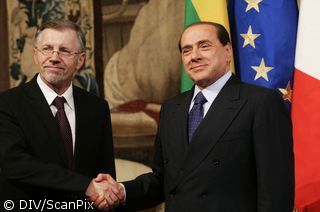 Italian Prime Minister Silvio Berlusconi thinks that the closedown of Ignalina NPP might be postponed and affirmed this opinion to Lithuanian Prime Minister Gediminas Kirkilas who is presently on a working visit to Rome.
more »
Italian Prime Minister Silvio Berlusconi thinks that the closedown of Ignalina NPP might be postponed and affirmed this opinion to Lithuanian Prime Minister Gediminas Kirkilas who is presently on a working visit to Rome.
more »
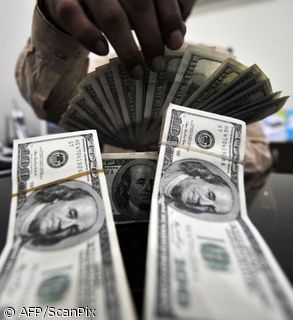 Open Collaboration Portfolio Integrates Cisco Unified Communications, Cisco TelePresence and Cisco WebEx.
more »
Open Collaboration Portfolio Integrates Cisco Unified Communications, Cisco TelePresence and Cisco WebEx.
more »
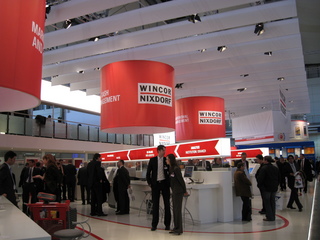 Wincor Nixdorf's portfolio of software solutions for the branch business of postal services providers, PC/E Postal Solution Suite, has been newly structured and expanded to include additional functionalities.
more »
Wincor Nixdorf's portfolio of software solutions for the branch business of postal services providers, PC/E Postal Solution Suite, has been newly structured and expanded to include additional functionalities.
more »
 Session to Focus on How Enterprises Can Proactively Reduce Risk.
more »
Session to Focus on How Enterprises Can Proactively Reduce Risk.
more »
 The revised GDP growth rate in II quarter 2008 equalled 5.2 per cent.
more »
The revised GDP growth rate in II quarter 2008 equalled 5.2 per cent.
more »