OLAF and Europol strengthen cooperation in combating financial crime
Published:
9 April 2004 y., Friday
OLAF - The European Anti-fraud Office - and Europol - the European Police Office - shall sign an administrative arrangement putting in place the modalities for their practical co-operation.
Mr Jürgen Storbeck, Europol's Director and Mr Franz-Hermann Brüner, Director General of OLAF shall tomorrow, in Brussels, sign an administrative arrangement regarding co-operation between Europol and OLAF in order to fight fraud, corruption or any other criminal offence or illegal activity in the framework of international organised crime affecting the European Community's financial interests.
In order to step up the fight against fraud, corruption and any other illegal activity affecting the financial interests of the European Community, the European Anti-Fraud Office established by Commission Decision 1999/352/EC, ECSC, Euratom exercises the powers of investigation conferred on the Commission by the Community rules and Regulations and agreements in force in those areas.
The Office provides the Member States with assistance from the Commission in organising close and regular cooperation between their competent authorities in order to coordinate their activities for the purpose of protecting the European Community's financial interests against fraud.
The Treaty of the European Union mentions (art. 29 and 30) Europol as an important instrument of the Union's efforts to prevent and fight against organised crime in order to achieve the objective of providing its citizens with a high level of safety within an area of freedom, security and justice. Europol aims to improve the effectiveness and co operation between the competent authorities of the Member States in preventing and combating serious international organised crime. The mission of Europol is to make a significant contribution to the European Union's law enforcement action against organised crime, with an emphasis on targeting criminal organisations.
Based in The Hague, The Netherlands, Europol started limited operations on 3 January 1994 in the form of the Europol Drugs Unit (EDU) fighting against drugs. The Europol Convention was ratified by all Member States and came into force on 1 October 1998. Following a number of legal acts related to the Convention, Europol commenced its full activities on 1 July 1999.
Šaltinis:
europa.eu.int
Copying, publishing, announcing any information from the News.lt portal without written permission of News.lt editorial office is prohibited.
The most popular articles
 Motorola, Inc. today reported sales of $7.5 billion in the third quarter of 2008.
more »
Motorola, Inc. today reported sales of $7.5 billion in the third quarter of 2008.
more »
 The global financial crisis has already battered many European banks. Now it is hitting the EU auto industry, the world’s largest producer of motor vehicles.
more »
The global financial crisis has already battered many European banks. Now it is hitting the EU auto industry, the world’s largest producer of motor vehicles.
more »
 The European Commission has approved, under EC Treaty state aid rules, a German rescue package intended to stabilise financial markets by providing capital and guarantees to eligible financial institutions.
more »
The European Commission has approved, under EC Treaty state aid rules, a German rescue package intended to stabilise financial markets by providing capital and guarantees to eligible financial institutions.
more »
 A new report by the European Commission has assessed the competitiveness of the European Union in the global economy at the end of a decade of rapid economic change.
more »
A new report by the European Commission has assessed the competitiveness of the European Union in the global economy at the end of a decade of rapid economic change.
more »
 Revenue surpasses $15 billion with healthy sales of enterprise software and Xbox 360 consoles.
more »
Revenue surpasses $15 billion with healthy sales of enterprise software and Xbox 360 consoles.
more »
 Airport charges are one of the hidden costs of flying and usually they are passed on from airlines to passengers.
more »
Airport charges are one of the hidden costs of flying and usually they are passed on from airlines to passengers.
more »
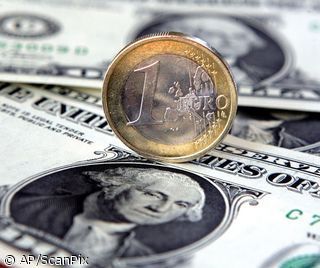 US and European leaders agree to series of summits on world finance.
more »
US and European leaders agree to series of summits on world finance.
more »
 On Monday MEPs will debate a recovery plan for cod stocks in the North Sea and West Scotland. With over 70% of the world’s fish species already fully exploited or depleted, fisheries faces a crisis.
more »
On Monday MEPs will debate a recovery plan for cod stocks in the North Sea and West Scotland. With over 70% of the world’s fish species already fully exploited or depleted, fisheries faces a crisis.
more »
 A new study released by the European Commission today confirms the trend towards more private pension provision in the EU but highlights the need for inclusive coverage and adequate pension levels.
more »
A new study released by the European Commission today confirms the trend towards more private pension provision in the EU but highlights the need for inclusive coverage and adequate pension levels.
more »
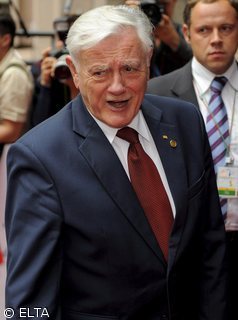 Thursday, October 16, Brussels. President of the Republic of Lithuania Valdas Adamkus attended the second day session of the European Council meeting.
more »
Thursday, October 16, Brussels. President of the Republic of Lithuania Valdas Adamkus attended the second day session of the European Council meeting.
more »