OLAF and Europol strengthen cooperation in combating financial crime
Published:
9 April 2004 y., Friday
OLAF - The European Anti-fraud Office - and Europol - the European Police Office - shall sign an administrative arrangement putting in place the modalities for their practical co-operation.
Mr Jürgen Storbeck, Europol's Director and Mr Franz-Hermann Brüner, Director General of OLAF shall tomorrow, in Brussels, sign an administrative arrangement regarding co-operation between Europol and OLAF in order to fight fraud, corruption or any other criminal offence or illegal activity in the framework of international organised crime affecting the European Community's financial interests.
In order to step up the fight against fraud, corruption and any other illegal activity affecting the financial interests of the European Community, the European Anti-Fraud Office established by Commission Decision 1999/352/EC, ECSC, Euratom exercises the powers of investigation conferred on the Commission by the Community rules and Regulations and agreements in force in those areas.
The Office provides the Member States with assistance from the Commission in organising close and regular cooperation between their competent authorities in order to coordinate their activities for the purpose of protecting the European Community's financial interests against fraud.
The Treaty of the European Union mentions (art. 29 and 30) Europol as an important instrument of the Union's efforts to prevent and fight against organised crime in order to achieve the objective of providing its citizens with a high level of safety within an area of freedom, security and justice. Europol aims to improve the effectiveness and co operation between the competent authorities of the Member States in preventing and combating serious international organised crime. The mission of Europol is to make a significant contribution to the European Union's law enforcement action against organised crime, with an emphasis on targeting criminal organisations.
Based in The Hague, The Netherlands, Europol started limited operations on 3 January 1994 in the form of the Europol Drugs Unit (EDU) fighting against drugs. The Europol Convention was ratified by all Member States and came into force on 1 October 1998. Following a number of legal acts related to the Convention, Europol commenced its full activities on 1 July 1999.
Šaltinis:
europa.eu.int
Copying, publishing, announcing any information from the News.lt portal without written permission of News.lt editorial office is prohibited.
The most popular articles
 Statistics Lithuania informs that based on provisional data as of 1 April 2008 foreign direct investment (FDI) made LTL 33.63 billion, or by 2.8 per cent less than on 1 January 2008.
more »
Statistics Lithuania informs that based on provisional data as of 1 April 2008 foreign direct investment (FDI) made LTL 33.63 billion, or by 2.8 per cent less than on 1 January 2008.
more »
 Boston-based Celent LLC has published a new report about the state of the Turkish credit-card market, which has developed rapidly over the last decade and is expected to represent a high-growth opportunity.
more »
Boston-based Celent LLC has published a new report about the state of the Turkish credit-card market, which has developed rapidly over the last decade and is expected to represent a high-growth opportunity.
more »
 Fastest annual revenue growth since 1999 fuels 32% increase in earnings per share.
more »
Fastest annual revenue growth since 1999 fuels 32% increase in earnings per share.
more »
First Data Shareholders to Receive $34 per Share in Cash;
Transaction Valued at $29 Billion
more »
 Belarus' international reserves decreased by 3.8 percent in January 2007 to $1,329.9 million as of February 1, according to the National Bank of Belarus (NBB).
more »
Belarus' international reserves decreased by 3.8 percent in January 2007 to $1,329.9 million as of February 1, according to the National Bank of Belarus (NBB).
more »
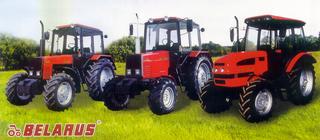 The Minsk Tractor Works (MTZ) manufactured nearly 172 billion rubels worth of industrial products in the first month of 2007, which was a 19.8-percent year-on-year increase.
more »
The Minsk Tractor Works (MTZ) manufactured nearly 172 billion rubels worth of industrial products in the first month of 2007, which was a 19.8-percent year-on-year increase.
more »
 The Belarusian government plans to borrow up to $1 billion abroad this year to cushion the effects of a sharp hike in the price of energy resources.
more »
The Belarusian government plans to borrow up to $1 billion abroad this year to cushion the effects of a sharp hike in the price of energy resources.
more »
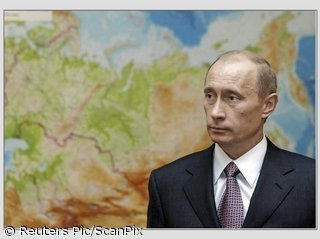 Russia's Audit Chamber has suggested reviewing all economy agreements between Belarus and Russia, Andrei Kokoshin, head of the standing committee on CIS affairs in the State Duma (Russia's lower parliamentary house), said on Thursday.
more »
Russia's Audit Chamber has suggested reviewing all economy agreements between Belarus and Russia, Andrei Kokoshin, head of the standing committee on CIS affairs in the State Duma (Russia's lower parliamentary house), said on Thursday.
more »
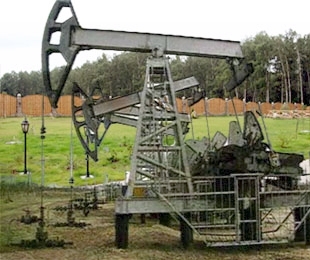 Belarus is contemplating the purchase of two oil wells in Russia, a senior executive at the Belneftekhim state-controlled petrochemical concern said Tuesday.
more »
Belarus is contemplating the purchase of two oil wells in Russia, a senior executive at the Belneftekhim state-controlled petrochemical concern said Tuesday.
more »
 Aleksandr Lukashenko warned that a slowdown of Belarus' economic development pace could undermine public confidence in the government and damage the country's image in the international arena.
more »
Aleksandr Lukashenko warned that a slowdown of Belarus' economic development pace could undermine public confidence in the government and damage the country's image in the international arena.
more »