The traditional consumer "float" -- the time between writing a check and when it actually clears the bank -- will be shrinking if Congress approves legislation
Published:
29 March 2003 y., Saturday
The traditional consumer "float" -- the time between writing a check and when it actually clears the bank -- will be shrinking if Congress approves legislation introduced Thursday that would permit banks to exchange checks by electronic image.
The banking industry says the bill will benefit consumers by speeding up check clearing and making the electronic images -- front and back -- quickly available to customers. Most banks currently physically move the paper checks through intermediaries before actually drawing on the funds, a process that can take several days or longer.
With most online accounts, digital images of a customer's checks are available for 60-90 days at no charge, but consumers without Web accounts must wait a month or longer to see when their checks cleared. To get an actual copy of the cancelled check, all customers must go to the bank holding the check.
Sponsored by Rep. Melissa Hart (R.-Pa.), the bill would make the digital image as legal as the actual check.
Consumer benefits aside, the banking industry could save up to $2 billion a year with electronic imaging and save hundreds of customer service hours if consumers can retrieve their own checks.
With the support of bank trade associations, the Federal Reserve and lawmakers from both sides of the aisle, the bill -- the Check Clearing for the 21st Century Act � is expected to easily pass both the House and Senate and could become law by the end of the year.
Šaltinis:
dc.internet.com
Copying, publishing, announcing any information from the News.lt portal without written permission of News.lt editorial office is prohibited.
The most popular articles
 An International Monetary Fund mission led by Mr. Paulo Drummond visited Bissau during January 12-27, 2010, to discuss the government’s medium-term economic program that could be supported by the IMF under the Extended Credit Facility.
more »
An International Monetary Fund mission led by Mr. Paulo Drummond visited Bissau during January 12-27, 2010, to discuss the government’s medium-term economic program that could be supported by the IMF under the Extended Credit Facility.
more »
 The International Monetary Fund (IMF) and the World Bank's International Development Association (IDA) have agreed to support US$1.9 billion in debt relief for the Republic of Congo, which includes US$255.2 million of debt relief from the two institutions.
more »
The International Monetary Fund (IMF) and the World Bank's International Development Association (IDA) have agreed to support US$1.9 billion in debt relief for the Republic of Congo, which includes US$255.2 million of debt relief from the two institutions.
more »
 In 2009, net external assets of Monetary Financial Institutions remained negative but increased by LTL 9.3 billion.
more »
In 2009, net external assets of Monetary Financial Institutions remained negative but increased by LTL 9.3 billion.
more »
 Spain's Minister for Science and Innovation, Cristina Garmendia, supports making R&D+i at the heart of Europe as a key to economic recovery.
more »
Spain's Minister for Science and Innovation, Cristina Garmendia, supports making R&D+i at the heart of Europe as a key to economic recovery.
more »
 Lithuania and Malta granted reprieve on budget deficits; Hungary and Latvia on track to meet deadlines.
more »
Lithuania and Malta granted reprieve on budget deficits; Hungary and Latvia on track to meet deadlines.
more »
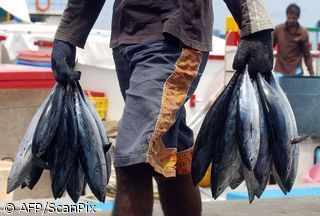 More responsibility for fishermen, rules favouring good fishing practice and adjusting fisheries management models to complement and improve the traditional quota system should be among the key aims of common fisheries policy reform, say MEPs in an own-initiative report approved by the Fisheries Committee on Wednesday.
more »
More responsibility for fishermen, rules favouring good fishing practice and adjusting fisheries management models to complement and improve the traditional quota system should be among the key aims of common fisheries policy reform, say MEPs in an own-initiative report approved by the Fisheries Committee on Wednesday.
more »
 On January 8, 2010, the Executive Board of the International Monetary Fund (IMF) concluded the Article IV consultation with Yemen.
more »
On January 8, 2010, the Executive Board of the International Monetary Fund (IMF) concluded the Article IV consultation with Yemen.
more »
 On January 22, 2010, the Executive Board of the International Monetary Fund (IMF) concluded the Article IV consultation with Norway.
more »
On January 22, 2010, the Executive Board of the International Monetary Fund (IMF) concluded the Article IV consultation with Norway.
more »
 Agriculture can help to slow climate change, but should be ready to adapt to the impact of global warming, said Agriculture Committee MEPs and scientists at a public hearing on Wednesday.
more »
Agriculture can help to slow climate change, but should be ready to adapt to the impact of global warming, said Agriculture Committee MEPs and scientists at a public hearing on Wednesday.
more »
 The Ministers for Employment of the European Union are holding an informal council on Thursday 28 and Friday 29 January which will lay the foundations for drawing up the common policies in the area of employment which the European Union will adopt over the next ten years as part of the “2020 Strategy”.
more »
The Ministers for Employment of the European Union are holding an informal council on Thursday 28 and Friday 29 January which will lay the foundations for drawing up the common policies in the area of employment which the European Union will adopt over the next ten years as part of the “2020 Strategy”.
more »