The traditional consumer "float" -- the time between writing a check and when it actually clears the bank -- will be shrinking if Congress approves legislation
Published:
29 March 2003 y., Saturday
The traditional consumer "float" -- the time between writing a check and when it actually clears the bank -- will be shrinking if Congress approves legislation introduced Thursday that would permit banks to exchange checks by electronic image.
The banking industry says the bill will benefit consumers by speeding up check clearing and making the electronic images -- front and back -- quickly available to customers. Most banks currently physically move the paper checks through intermediaries before actually drawing on the funds, a process that can take several days or longer.
With most online accounts, digital images of a customer's checks are available for 60-90 days at no charge, but consumers without Web accounts must wait a month or longer to see when their checks cleared. To get an actual copy of the cancelled check, all customers must go to the bank holding the check.
Sponsored by Rep. Melissa Hart (R.-Pa.), the bill would make the digital image as legal as the actual check.
Consumer benefits aside, the banking industry could save up to $2 billion a year with electronic imaging and save hundreds of customer service hours if consumers can retrieve their own checks.
With the support of bank trade associations, the Federal Reserve and lawmakers from both sides of the aisle, the bill -- the Check Clearing for the 21st Century Act � is expected to easily pass both the House and Senate and could become law by the end of the year.
Šaltinis:
dc.internet.com
Copying, publishing, announcing any information from the News.lt portal without written permission of News.lt editorial office is prohibited.
The most popular articles
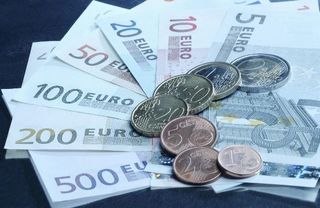 Both women and men have been hit by job losses in the downturn, says a new report adopted by the European Commission today.
more »
Both women and men have been hit by job losses in the downturn, says a new report adopted by the European Commission today.
more »
 Unemployed car and construction workers in Sweden, Austria, and the Netherlands will get €15.9 million in EU Globalisation Adjustment Fund aid for training, self-employment and professional orientation services under a plan endorsed by Parliament in plenary on Wednesday.
more »
Unemployed car and construction workers in Sweden, Austria, and the Netherlands will get €15.9 million in EU Globalisation Adjustment Fund aid for training, self-employment and professional orientation services under a plan endorsed by Parliament in plenary on Wednesday.
more »
 As the economy recovers, EU countries will need to phase out crisis measures. The question is when?
more »
As the economy recovers, EU countries will need to phase out crisis measures. The question is when?
more »
 The European Commission has endorsed, under EU state aid rules, a Polish scheme intended to compensate the Polish Post for net losses incurred in discharging its public service obligations between 2006 and 2011.
more »
The European Commission has endorsed, under EU state aid rules, a Polish scheme intended to compensate the Polish Post for net losses incurred in discharging its public service obligations between 2006 and 2011.
more »
 The European Commission reports good progress in the implementation of the Small Business Act (SBA) in 2009.
more »
The European Commission reports good progress in the implementation of the Small Business Act (SBA) in 2009.
more »
 The European Commission approved the first financing decisions in favour of eleven African and two Caribbean countries for a total of € 230 million, including € 215 million under the so-called Vulnerability FLEX mechanism (V-FLEX).
more »
The European Commission approved the first financing decisions in favour of eleven African and two Caribbean countries for a total of € 230 million, including € 215 million under the so-called Vulnerability FLEX mechanism (V-FLEX).
more »
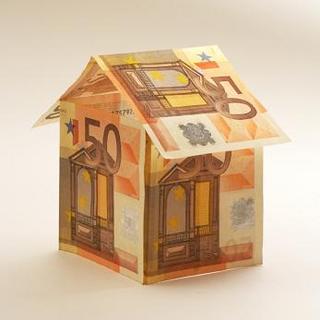 Legal measures to make it easier for people who have lost or risk losing their jobs to get credit to start up their own businesses were backed by the European Parliament on Tuesday.
more »
Legal measures to make it easier for people who have lost or risk losing their jobs to get credit to start up their own businesses were backed by the European Parliament on Tuesday.
more »
 How can companies and industry help to stop climate change? This is one of the questions on the table when Sweden’s Minister for Enterprise and Energy Maud Olofsson attends the climate change conference in Copenhagen on Monday and participates in a panel discussion organised by Businesseurope.
more »
How can companies and industry help to stop climate change? This is one of the questions on the table when Sweden’s Minister for Enterprise and Energy Maud Olofsson attends the climate change conference in Copenhagen on Monday and participates in a panel discussion organised by Businesseurope.
more »
 In a meeting held today in Brussels, the Gas Coordination Group, under the chairmanship of the Commission, has discussed with Russian Gas Company Gazprom the gas supply and demand outlook and investment strategy of the company in both Russia and the EU.
more »
In a meeting held today in Brussels, the Gas Coordination Group, under the chairmanship of the Commission, has discussed with Russian Gas Company Gazprom the gas supply and demand outlook and investment strategy of the company in both Russia and the EU.
more »
 The European Commission has approved under EU state aid rules the impaired asset relief measure and the restructuring plan of Royal Bank of Scotland (RBS).
more »
The European Commission has approved under EU state aid rules the impaired asset relief measure and the restructuring plan of Royal Bank of Scotland (RBS).
more »