Hungary's government has pushed through a law to undermine the independence of the central bank
Published:
30 November 2004 y., Tuesday
Hungary's government has pushed through a law to undermine the independence of the central bank. The clear intention is to force down central Europe's highest interest rates, even though the politicisation of monetary policy runs contrary to the principles of the euro zone – which Hungary is obliged to join. Yet it is unlikely to cause the country any more problems in its tortuous progress towards adopting the single currency.
The National Bank of Hungary (NBH, the central bank) said on November 24th it would challenge in the Constitutional Court a law passed by parliament to dilute the NBH's independence. Currently, the governor of the NBH and three deputy governors sit on the interest rate-setting Monetary Council; 3-5 other members are nominated by the governor and named by the state president with the approval of the prime minister.
Under the new law, approved on November 22nd, two deputy governors will lose their place on the Monetary Council, the governor will have the right to nominate four other members and the president will directly appoint the remainder (3-5). Because the government has backed away from dismissing any of the deputy governors immediately, all three will remain until their mandates expire in 2007. However, the government (formally the president) will have the right to appoint up to four members immediately. Assuming that this happens, the Monetary Council could have 13 members until 2007, when the number would fall to 11.
Šaltinis:
viewswire.com
Copying, publishing, announcing any information from the News.lt portal without written permission of News.lt editorial office is prohibited.
The most popular articles
 Today, the Commission published a Communication which outlines the most serious tax problems that EU citizens face in cross-border situations and announces plans for solutions.
more »
Today, the Commission published a Communication which outlines the most serious tax problems that EU citizens face in cross-border situations and announces plans for solutions.
more »
 The European Commission has opened a formal investigation under EU state aid rules to examine a number of support measures, including several capital injections and shareholder loans, that the Hungarian authorities granted to Malév-Hungarian Airlines in the context of its privatisation and subsequent renationalisation.
more »
The European Commission has opened a formal investigation under EU state aid rules to examine a number of support measures, including several capital injections and shareholder loans, that the Hungarian authorities granted to Malév-Hungarian Airlines in the context of its privatisation and subsequent renationalisation.
more »
 Internet and lax customs enforcement drive growth of 600 billion US dollar counterfeit goods industry.
more »
Internet and lax customs enforcement drive growth of 600 billion US dollar counterfeit goods industry.
more »
 350 million people rose out of poverty in the past decade, but 1.4 billion are still extremely poor, says the latest report into rural poverty.
more »
350 million people rose out of poverty in the past decade, but 1.4 billion are still extremely poor, says the latest report into rural poverty.
more »
 New plan sets out action to reach 75% employment target for the EU by 2020.
more »
New plan sets out action to reach 75% employment target for the EU by 2020.
more »
 Research Ministers of the EU Member States and Associated Countries, together with the European Commission, are announcing in Brussels today three new pan–European energy research infrastructures.
more »
Research Ministers of the EU Member States and Associated Countries, together with the European Commission, are announcing in Brussels today three new pan–European energy research infrastructures.
more »
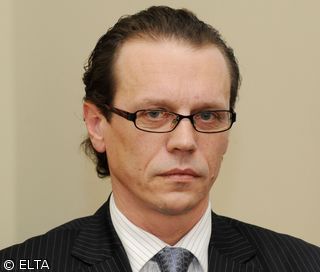 Algirdas Šemeta, Commissioner for Taxation, Customs, Audit and Anti-fraud, is visiting Moscow today to discuss ways in which customs cooperation between the EU and Russia can be reinforced.
more »
Algirdas Šemeta, Commissioner for Taxation, Customs, Audit and Anti-fraud, is visiting Moscow today to discuss ways in which customs cooperation between the EU and Russia can be reinforced.
more »
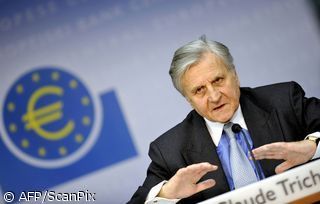 Following on from Monday's debate with ECB President Jean-Claude Trichet, MEPs on Tuesday adopted a resolution, by a show of hands, gauging the ECB's performance in 2009 and suggesting actions to be taken in view of the economic situation.
more »
Following on from Monday's debate with ECB President Jean-Claude Trichet, MEPs on Tuesday adopted a resolution, by a show of hands, gauging the ECB's performance in 2009 and suggesting actions to be taken in view of the economic situation.
more »
 The European Parliament today approved €10.5 million in European Globalisation Adjustment Fund aid to over 3,000 people in the Netherlands who lost their printing and publishing sector jobs last year, due to the economic crisis.
more »
The European Parliament today approved €10.5 million in European Globalisation Adjustment Fund aid to over 3,000 people in the Netherlands who lost their printing and publishing sector jobs last year, due to the economic crisis.
more »
 A diamond-studded gold coin engraved with a picture of the Taj Mahal and worth 100,000 euros is unveiled at the Paris mint.
more »
A diamond-studded gold coin engraved with a picture of the Taj Mahal and worth 100,000 euros is unveiled at the Paris mint.
more »