The Danish DFDS Tor Lines has warned the Lithuanian Government it may suspend the LISCO acquisition deal in case the Government insists on applying to it the amendments to the Bill on transactions with securities.
Published:
24 June 2001 y., Sunday
In accordance with the recently adopted amendments the Danish company will have to officially offer the minority LISCO shareholders to buy the remaining stock at a price no less than paid for the shares in the state ownership.
Kestutis Glaveckas, Chairman of the Lithuanian Seim budget and finance committee, communicated the Government received on June 15 a letter wherein the DFDS Tor Lines management requests the from Government permission to lift the amendments for the LISCO deal as the company intends to independently negotiate the solution with the minority stockholders.
The state owned 80% of LISCO, a shipping monopoly operating on the Lithuania - West Europe routes. In accordance with the agreement of April 23, 2001, between the state property Fund and DFDS Tor Lines, 76.36% of this stock was sold for $47.6 million.
20% of the stock remained in the hands of minority shareholders and financial brokers. The latter demand the Danish company buy their shares for the same price the state-owned stock was sold for - $1.2 per share. However, DFDS Tor Lines does not show any intention of doing so.
The privatization plan provides for two companies to be established. One of them, Lisco Baltic service, a ferry operator, will own 70% of the LISCO property. DFDS Tor Lines will hold a 76.36% stake in this company, the state will get 3.4%, and minority shareholders - slightly over 20%.
Šaltinis:
SeaNews
Copying, publishing, announcing any information from the News.lt portal without written permission of News.lt editorial office is prohibited.
The most popular articles
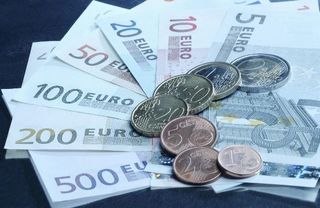 The European Commission has decided to grant an extension of the deadline for the divestment of Fortis' corporate banking business, consisting of Hollandsche Bank Unie N.V. (HBU), two corporate client departments, 13 "Advieskantoren" and ABN AMRO's Dutch factoring activities to Deutsche Bank.
more »
The European Commission has decided to grant an extension of the deadline for the divestment of Fortis' corporate banking business, consisting of Hollandsche Bank Unie N.V. (HBU), two corporate client departments, 13 "Advieskantoren" and ABN AMRO's Dutch factoring activities to Deutsche Bank.
more »
 MEPs will vote on an emergency plan to help the crisis-stricken sector dairy sector on Thursday after the Agriculture Committee approved the Commission's proposal on Monday evening in Strasbourg.
more »
MEPs will vote on an emergency plan to help the crisis-stricken sector dairy sector on Thursday after the Agriculture Committee approved the Commission's proposal on Monday evening in Strasbourg.
more »
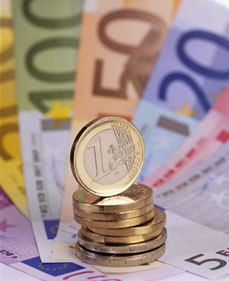 The EBRD is boosting competition in the Montenegrin retail sector with a loan to expand the supermarket network of one of the leading retailers in the country.
more »
The EBRD is boosting competition in the Montenegrin retail sector with a loan to expand the supermarket network of one of the leading retailers in the country.
more »
 Redmond, Wash. — Oct. 16, 2009— On Oct. 19, Microsoft CEO Steve Ballmer heads to the sold-out Microsoft sharepoint Conference in Las Vegas where he will address more than 7,000 sharepoint customers, partners and developers.
more »
Redmond, Wash. — Oct. 16, 2009— On Oct. 19, Microsoft CEO Steve Ballmer heads to the sold-out Microsoft sharepoint Conference in Las Vegas where he will address more than 7,000 sharepoint customers, partners and developers.
more »
 Proposals tabled for collaboration on sea surveillance, bigger EU role in global maritime affairs and sustainable fishing.
more »
Proposals tabled for collaboration on sea surveillance, bigger EU role in global maritime affairs and sustainable fishing.
more »
 $50 million financing package for agricultural commodities operator.
more »
$50 million financing package for agricultural commodities operator.
more »
 Seeking to increase sheet-metal production volumes, Stansefabrikken decided to move all company’s production from Lillesand (Norway) to Stansefabrikken’s successfully operating factories in Lithuania.
more »
Seeking to increase sheet-metal production volumes, Stansefabrikken decided to move all company’s production from Lillesand (Norway) to Stansefabrikken’s successfully operating factories in Lithuania.
more »
 The European Economic and Social Committee (EESC) and the European Commission Representation in Finland jointly organise a conference in Helsinki on 22 and 23 October on "The Baltic Sea Region: the best place to work and do business".
more »
The European Economic and Social Committee (EESC) and the European Commission Representation in Finland jointly organise a conference in Helsinki on 22 and 23 October on "The Baltic Sea Region: the best place to work and do business".
more »
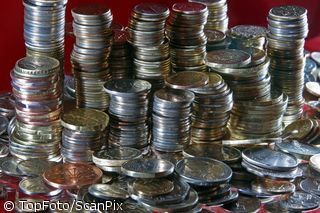 Why did economy rise drastically turn into painful decline and what price will every of us have to pay for that?
more »
Why did economy rise drastically turn into painful decline and what price will every of us have to pay for that?
more »
 The economies of central and eastern Europe are expected to contract by an average of 6.3 per cent in 2009 following steep output declines in the first half of the year.
more »
The economies of central and eastern Europe are expected to contract by an average of 6.3 per cent in 2009 following steep output declines in the first half of the year.
more »