The Georgian government and the International Monetary Fund remain at odds over ways to close the Caucasus country’s widening budget deficit, and over other measures to improve economic policy
Published:
20 July 2003 y., Sunday
The IMF has given Georgian officials until mid August to implement reforms in several specified areas. At stake for Tbilisi is not only direct IMF assistance, but also the Georgian government’s ability to reschedule its Paris Club debt.
An IMF delegation wrapped up a fact-finding mission to Georgia on July 7. At the conclusion of the visit, IMF representatives issued a memorandum stating that its ability to complete a final review of a nearly three-year-old Poverty Reduction and Growth Facility (PRGF) was dependent on the Georgian government’s willingness to carry out targeted reforms. The IMF set August 15 as the deadline for Tbilisi for reforms, including: trimming roughly 100 million lari (about $47 million) from the state budget; improving tax collection while simplifying the tax code; raising energy tariffs; and settling arrears to the state pension system.
If Georgia is unable to implement the changes, the IMF is likely to withhold the final tranche of a $31 million loan under the PRGF. Of far greater importance for Georgia, the IMF has threatened to withdraw its support for Tbilisi’s efforts to get its Paris Club debt rescheduled. Talks between Georgia and the Paris Club of creditor nations are scheduled to occur in September. If Tbilisi is unable to reschedule the debt, it faces a potentially budget-busting $50 million payment by the end of 2003.
"We’ve been trying to complete this [PRGF] review since November," IMF Resident Representative to Georgia Jonathan Dunn told EurasiaNet. However, Dunn stressed that the IMF "has left the door cracked open" for Georgia to make the demanded policy changes.
The IMF stance creates a quandary for Georgia’s government, as parliamentary elections loom in November. [For background see the Eurasia Insight archives]. Implementation of the IMF-mandated reforms could stir popular dissatisfaction, possibly costing President Eduard Shevardnadze supporters at the polls in November. Conversely, inaction by the government, especially concerning the Paris Club debt rescheduling, could create an even bigger public backlash. Either way, Georgia seems to be facing its last opportunity to implement reforms and avoid severe fiscal strain, possibly even default.
Šaltinis:
eurasianet.org
Copying, publishing, announcing any information from the News.lt portal without written permission of News.lt editorial office is prohibited.
The most popular articles
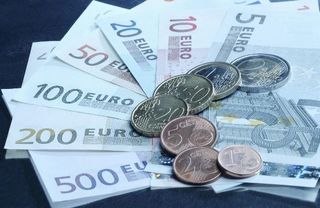 Both women and men have been hit by job losses in the downturn, says a new report adopted by the European Commission today.
more »
Both women and men have been hit by job losses in the downturn, says a new report adopted by the European Commission today.
more »
 Unemployed car and construction workers in Sweden, Austria, and the Netherlands will get €15.9 million in EU Globalisation Adjustment Fund aid for training, self-employment and professional orientation services under a plan endorsed by Parliament in plenary on Wednesday.
more »
Unemployed car and construction workers in Sweden, Austria, and the Netherlands will get €15.9 million in EU Globalisation Adjustment Fund aid for training, self-employment and professional orientation services under a plan endorsed by Parliament in plenary on Wednesday.
more »
 As the economy recovers, EU countries will need to phase out crisis measures. The question is when?
more »
As the economy recovers, EU countries will need to phase out crisis measures. The question is when?
more »
 The European Commission has endorsed, under EU state aid rules, a Polish scheme intended to compensate the Polish Post for net losses incurred in discharging its public service obligations between 2006 and 2011.
more »
The European Commission has endorsed, under EU state aid rules, a Polish scheme intended to compensate the Polish Post for net losses incurred in discharging its public service obligations between 2006 and 2011.
more »
 The European Commission reports good progress in the implementation of the Small Business Act (SBA) in 2009.
more »
The European Commission reports good progress in the implementation of the Small Business Act (SBA) in 2009.
more »
 The European Commission approved the first financing decisions in favour of eleven African and two Caribbean countries for a total of € 230 million, including € 215 million under the so-called Vulnerability FLEX mechanism (V-FLEX).
more »
The European Commission approved the first financing decisions in favour of eleven African and two Caribbean countries for a total of € 230 million, including € 215 million under the so-called Vulnerability FLEX mechanism (V-FLEX).
more »
 Legal measures to make it easier for people who have lost or risk losing their jobs to get credit to start up their own businesses were backed by the European Parliament on Tuesday.
more »
Legal measures to make it easier for people who have lost or risk losing their jobs to get credit to start up their own businesses were backed by the European Parliament on Tuesday.
more »
 How can companies and industry help to stop climate change? This is one of the questions on the table when Sweden’s Minister for Enterprise and Energy Maud Olofsson attends the climate change conference in Copenhagen on Monday and participates in a panel discussion organised by Businesseurope.
more »
How can companies and industry help to stop climate change? This is one of the questions on the table when Sweden’s Minister for Enterprise and Energy Maud Olofsson attends the climate change conference in Copenhagen on Monday and participates in a panel discussion organised by Businesseurope.
more »
 In a meeting held today in Brussels, the Gas Coordination Group, under the chairmanship of the Commission, has discussed with Russian Gas Company Gazprom the gas supply and demand outlook and investment strategy of the company in both Russia and the EU.
more »
In a meeting held today in Brussels, the Gas Coordination Group, under the chairmanship of the Commission, has discussed with Russian Gas Company Gazprom the gas supply and demand outlook and investment strategy of the company in both Russia and the EU.
more »
 The European Commission has approved under EU state aid rules the impaired asset relief measure and the restructuring plan of Royal Bank of Scotland (RBS).
more »
The European Commission has approved under EU state aid rules the impaired asset relief measure and the restructuring plan of Royal Bank of Scotland (RBS).
more »