Criminals disguising illicit earnings stay ahead of police efforts to crack down
Published:
28 March 2003 y., Friday
Chinese restaurants that stand empty day and night. Jewelry shops with no customers. Nightclubs without dancers. Travel agencies that don't organize travel.
These are all businesses known at times to launder money -- typically by disguising illicitly generated cash as legal earnings and passing the money through the mainstream banking system.
"There are businesses where it is easier to hide money. I know that Czechs like to travel, but you have a huge amount of travel agencies in Prague," said John Mottram, a European Union accession adviser working on money-laundering policy at the Interior Ministry. "There are also lots of restaurants and bars. I'm sure a number of those businesses are covers for criminal groups, even if the employees there don't realize it."
These days, however, such firms are at the low end of vehicles used to hide sources of ill-gotten gains, observers say. Financial authorities, forensic specialists and bank security officials said money launderers are increasingly using legal and accountancy services, modern computer and Internet technology, stock market transactions and shadowy shell companies in an effort to stay ahead of investigators. As a result, these observers say, authorities are having a harder time than ever finding and prosecuting offenders, even as lawmakers institute EU-compliant laws and banks become more watchful.
Šaltinis:
The Prague Post
Copying, publishing, announcing any information from the News.lt portal without written permission of News.lt editorial office is prohibited.
The most popular articles
 According to the data presented by the Ministry of Finance, in end-January central government debt made up LTL26, 310.8 million or 28% of projected GDP for 2010 (LTL 93, 819 million).
more »
According to the data presented by the Ministry of Finance, in end-January central government debt made up LTL26, 310.8 million or 28% of projected GDP for 2010 (LTL 93, 819 million).
more »
 As far as countries affected by the economic crisis, China fared extremely well.
more »
As far as countries affected by the economic crisis, China fared extremely well.
more »
 The European Commission has authorised today a Slovak scheme with a budget of approximately €3.32 million which aims at supporting farmers in Slovakia who encounter difficulties as a result of the current economic crisis.
more »
The European Commission has authorised today a Slovak scheme with a budget of approximately €3.32 million which aims at supporting farmers in Slovakia who encounter difficulties as a result of the current economic crisis.
more »
 Commission sets out a 10-year strategy for reviving the European economy, casting a vision of ‘smart, sustainable, inclusive' growth rooted in greater coordination of national and European policy.
more »
Commission sets out a 10-year strategy for reviving the European economy, casting a vision of ‘smart, sustainable, inclusive' growth rooted in greater coordination of national and European policy.
more »
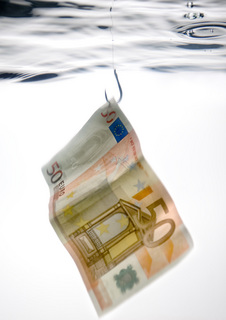 The European Commission has launched today the Europe 2020 Strategy to go out of the crisis and prepare EU economy for the next decade. The Commission identifies three key drivers for growth, to be implemented through concrete actions at EU and national levels.
more »
The European Commission has launched today the Europe 2020 Strategy to go out of the crisis and prepare EU economy for the next decade. The Commission identifies three key drivers for growth, to be implemented through concrete actions at EU and national levels.
more »
 Launching of the “SCHOOLS’ initiative for innovation and changes” Grant scheme.
more »
Launching of the “SCHOOLS’ initiative for innovation and changes” Grant scheme.
more »
 EU Member States must not only deliver on their international aid pledges, but also bring in a financial transactions tax and a temporary debt moratorium, to help developing countries to cope with the effects of the global financial and economic crisis, said the Development Committee on Monday.
more »
EU Member States must not only deliver on their international aid pledges, but also bring in a financial transactions tax and a temporary debt moratorium, to help developing countries to cope with the effects of the global financial and economic crisis, said the Development Committee on Monday.
more »
 The EBRD is increasing its commitments to promote sustainable energy projects in Slovakia with a new €90 million funding under the existing Slovakia Sustainable Energy Finance Facility (SLOVSEFF) to ensure continuous implementation of energy efficiency and small renewable energy projects.
more »
The EBRD is increasing its commitments to promote sustainable energy projects in Slovakia with a new €90 million funding under the existing Slovakia Sustainable Energy Finance Facility (SLOVSEFF) to ensure continuous implementation of energy efficiency and small renewable energy projects.
more »
 According to the unaudited data, in 2009 AB Bank SNORAS earned LTL 8.7 million profit. The bank’s assets grew by 11 per cent up to LTL 6.342 billion during 2009 and were by LTL 647.8 million larger than at the beginning of 2009.
more »
According to the unaudited data, in 2009 AB Bank SNORAS earned LTL 8.7 million profit. The bank’s assets grew by 11 per cent up to LTL 6.342 billion during 2009 and were by LTL 647.8 million larger than at the beginning of 2009.
more »
 Aviation security measures that go beyond common EU requirements should be paid for by Member States, not by passengers, said Transport Committee MEPs in a vote on Monday that could put Parliament on a collision course with the Council of Ministers.
more »
Aviation security measures that go beyond common EU requirements should be paid for by Member States, not by passengers, said Transport Committee MEPs in a vote on Monday that could put Parliament on a collision course with the Council of Ministers.
more »