Criminals disguising illicit earnings stay ahead of police efforts to crack down
Published:
28 March 2003 y., Friday
Chinese restaurants that stand empty day and night. Jewelry shops with no customers. Nightclubs without dancers. Travel agencies that don't organize travel.
These are all businesses known at times to launder money -- typically by disguising illicitly generated cash as legal earnings and passing the money through the mainstream banking system.
"There are businesses where it is easier to hide money. I know that Czechs like to travel, but you have a huge amount of travel agencies in Prague," said John Mottram, a European Union accession adviser working on money-laundering policy at the Interior Ministry. "There are also lots of restaurants and bars. I'm sure a number of those businesses are covers for criminal groups, even if the employees there don't realize it."
These days, however, such firms are at the low end of vehicles used to hide sources of ill-gotten gains, observers say. Financial authorities, forensic specialists and bank security officials said money launderers are increasingly using legal and accountancy services, modern computer and Internet technology, stock market transactions and shadowy shell companies in an effort to stay ahead of investigators. As a result, these observers say, authorities are having a harder time than ever finding and prosecuting offenders, even as lawmakers institute EU-compliant laws and banks become more watchful.
Šaltinis:
The Prague Post
Copying, publishing, announcing any information from the News.lt portal without written permission of News.lt editorial office is prohibited.
The most popular articles
 An International Monetary Fund (IMF) mission led by Mr. Hunter Monroe of the IMF’s Western Hemisphere Department visited Dominica during January 18-28 for the annual Article IV discussions on economic developments and macroeconomic policies.
more »
An International Monetary Fund (IMF) mission led by Mr. Hunter Monroe of the IMF’s Western Hemisphere Department visited Dominica during January 18-28 for the annual Article IV discussions on economic developments and macroeconomic policies.
more »
 Experts in agriculture and government authorities coincided in requesting new management mechanisms and market regulation to protect the farming sector from the price crisis and enable generational changeover in rural areas at the European Congress of Young Farmers, organised by the ASAJA-Seville agricultural organisation.
more »
Experts in agriculture and government authorities coincided in requesting new management mechanisms and market regulation to protect the farming sector from the price crisis and enable generational changeover in rural areas at the European Congress of Young Farmers, organised by the ASAJA-Seville agricultural organisation.
more »
 Immediate action is required to solve Europe's skills deficiencies and give Europeans a better chance of labour market success in the future, says an independent expert report published by the European Commission today.
more »
Immediate action is required to solve Europe's skills deficiencies and give Europeans a better chance of labour market success in the future, says an independent expert report published by the European Commission today.
more »
 The European Investment Bank (EIB) is lending EUR 15.5 million to upgrade water supply and wastewater treatment in the City of Mykolayiv (southern Ukraine) and EUR 100 million to finance small and medium-sized investments in the areas of SMEs, energy efficiency and the environment in Ukraine.
more »
The European Investment Bank (EIB) is lending EUR 15.5 million to upgrade water supply and wastewater treatment in the City of Mykolayiv (southern Ukraine) and EUR 100 million to finance small and medium-sized investments in the areas of SMEs, energy efficiency and the environment in Ukraine.
more »
 The European Commission can confirm that on 20 January 2010 Commission officials carried out targeted inspections at the premises of producers of Flexible Alternating Current Transmission Systems (FACTS).
more »
The European Commission can confirm that on 20 January 2010 Commission officials carried out targeted inspections at the premises of producers of Flexible Alternating Current Transmission Systems (FACTS).
more »
 The European Commission has authorised today under the State aid rules a Lithuanian scheme worth LTL 10 million (approximately EUR 2.9 million) aimed at supporting farmers who encounter difficulties as a result of the current economic crisis.
more »
The European Commission has authorised today under the State aid rules a Lithuanian scheme worth LTL 10 million (approximately EUR 2.9 million) aimed at supporting farmers who encounter difficulties as a result of the current economic crisis.
more »
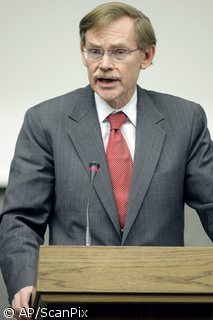 The effects of the global food, fuel and economic crisis would be felt by Africa’s people for some time yet and it was important to persist with efforts to protect the most vulnerable while laying the foundations for future productivity and growth, World Bank Group President Robert B. Zoellick said Tuesday.
more »
The effects of the global food, fuel and economic crisis would be felt by Africa’s people for some time yet and it was important to persist with efforts to protect the most vulnerable while laying the foundations for future productivity and growth, World Bank Group President Robert B. Zoellick said Tuesday.
more »
 Mongolia’s herders have learnt a hard lesson this winter; a lesson that can perhaps be applied to managing Mongolia’s economy.
more »
Mongolia’s herders have learnt a hard lesson this winter; a lesson that can perhaps be applied to managing Mongolia’s economy.
more »
 DnB NORD Bankas, the leader of the country’s in investment products market, raises initial margin ratio for repurchase deals for most actively traded Lithuanian and Estionian shares.
more »
DnB NORD Bankas, the leader of the country’s in investment products market, raises initial margin ratio for repurchase deals for most actively traded Lithuanian and Estionian shares.
more »
 With over 23 million unemployed in the Europe Union and the jobless figure having risen in every member state since last year, how Europe is coping with the crisis and the effect on pension systems were discussed on Thursday 28 January.
more »
With over 23 million unemployed in the Europe Union and the jobless figure having risen in every member state since last year, how Europe is coping with the crisis and the effect on pension systems were discussed on Thursday 28 January.
more »