Criminals disguising illicit earnings stay ahead of police efforts to crack down
Published:
28 March 2003 y., Friday
Chinese restaurants that stand empty day and night. Jewelry shops with no customers. Nightclubs without dancers. Travel agencies that don't organize travel.
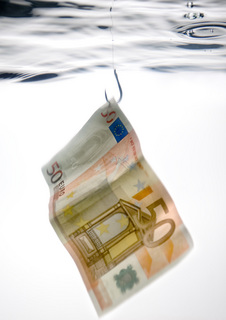
These are all businesses known at times to launder money -- typically by disguising illicitly generated cash as legal earnings and passing the money through the mainstream banking system.
"There are businesses where it is easier to hide money. I know that Czechs like to travel, but you have a huge amount of travel agencies in Prague," said John Mottram, a European Union accession adviser working on money-laundering policy at the Interior Ministry. "There are also lots of restaurants and bars. I'm sure a number of those businesses are covers for criminal groups, even if the employees there don't realize it."
These days, however, such firms are at the low end of vehicles used to hide sources of ill-gotten gains, observers say. Financial authorities, forensic specialists and bank security officials said money launderers are increasingly using legal and accountancy services, modern computer and Internet technology, stock market transactions and shadowy shell companies in an effort to stay ahead of investigators. As a result, these observers say, authorities are having a harder time than ever finding and prosecuting offenders, even as lawmakers institute EU-compliant laws and banks become more watchful.
Šaltinis:
The Prague Post
Copying, publishing, announcing any information from the News.lt portal without written permission of News.lt editorial office is prohibited.
The most popular articles
 How will economic policies adapt in 2020 when a quarter of the EU population is over 65? Can economics better predict how banks will react to credit crunches in the future, and what their impact will be on the wider economy?
more »
How will economic policies adapt in 2020 when a quarter of the EU population is over 65? Can economics better predict how banks will react to credit crunches in the future, and what their impact will be on the wider economy?
more »
 The EBRD is supporting the development of one of the first modern food retail chains in Turkmenistan with a $1.9 million equity investment in Ak Enar.
more »
The EBRD is supporting the development of one of the first modern food retail chains in Turkmenistan with a $1.9 million equity investment in Ak Enar.
more »
 While on a working visit to Ukraine, President of the Republic of Lithuania Dalia Grybauskaitė has underlined that Ukraine might become a very important energy partner for Lithuania and for the whole European Union but only transparent and open relations will lead to success in this area.
more »
While on a working visit to Ukraine, President of the Republic of Lithuania Dalia Grybauskaitė has underlined that Ukraine might become a very important energy partner for Lithuania and for the whole European Union but only transparent and open relations will lead to success in this area.
more »
 On 25 November in Vilnius, Lithuania’s Vice-Minister of Foreign Affairs and President of the Nordic Investment Bank discussed the issues of the Northern Dimension Partnership on Transport and Logistics (the secretariat of which is being established at the Bank), issues of the NIB cooperation with Lithuania and perspectives of the NIB’s activities in the country.
more »
On 25 November in Vilnius, Lithuania’s Vice-Minister of Foreign Affairs and President of the Nordic Investment Bank discussed the issues of the Northern Dimension Partnership on Transport and Logistics (the secretariat of which is being established at the Bank), issues of the NIB cooperation with Lithuania and perspectives of the NIB’s activities in the country.
more »
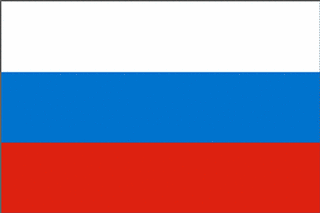 The European Bank for Reconstruction and Development has adopted a new strategy for the Russian Federation.
more »
The European Bank for Reconstruction and Development has adopted a new strategy for the Russian Federation.
more »
 Consumer protection requires transparent and consistent trade rules, believe MEPs.
more »
Consumer protection requires transparent and consistent trade rules, believe MEPs.
more »
 The European Investment Bank (EIB) is lending CZK 2 billion (approx. EUR 76 million) to the South Moravia Region for co-financing the Region’s priority infrastructure projects supported by the EU Structural and Cohesion Funds over the period 2007 – 2013.
more »
The European Investment Bank (EIB) is lending CZK 2 billion (approx. EUR 76 million) to the South Moravia Region for co-financing the Region’s priority infrastructure projects supported by the EU Structural and Cohesion Funds over the period 2007 – 2013.
more »
 Seeking to strengthen business partnership between Israel and Lithuania the Israel and Lithuania Chamber of Commerce has been recently established in Lithuania.
more »
Seeking to strengthen business partnership between Israel and Lithuania the Israel and Lithuania Chamber of Commerce has been recently established in Lithuania.
more »
 AB DnB NORD Bankas, notifies that on 24 November 2009, the member of the Management Board and Executive Vice-president of AB DnB NORD Bankas dr. Jekaterina Titarenko has been appointed as Chief Financial Officer of Bank DnB NORD Group.
more »
AB DnB NORD Bankas, notifies that on 24 November 2009, the member of the Management Board and Executive Vice-president of AB DnB NORD Bankas dr. Jekaterina Titarenko has been appointed as Chief Financial Officer of Bank DnB NORD Group.
more »
 Parliament gave its backing on Tuesday for €400 million-plus in budget aid to Serbia, Bosnia and Herzegovina, Armenia and Georgia.
more »
Parliament gave its backing on Tuesday for €400 million-plus in budget aid to Serbia, Bosnia and Herzegovina, Armenia and Georgia.
more »