Criminals disguising illicit earnings stay ahead of police efforts to crack down
Published:
28 March 2003 y., Friday
Chinese restaurants that stand empty day and night. Jewelry shops with no customers. Nightclubs without dancers. Travel agencies that don't organize travel.
These are all businesses known at times to launder money -- typically by disguising illicitly generated cash as legal earnings and passing the money through the mainstream banking system.
"There are businesses where it is easier to hide money. I know that Czechs like to travel, but you have a huge amount of travel agencies in Prague," said John Mottram, a European Union accession adviser working on money-laundering policy at the Interior Ministry. "There are also lots of restaurants and bars. I'm sure a number of those businesses are covers for criminal groups, even if the employees there don't realize it."
These days, however, such firms are at the low end of vehicles used to hide sources of ill-gotten gains, observers say. Financial authorities, forensic specialists and bank security officials said money launderers are increasingly using legal and accountancy services, modern computer and Internet technology, stock market transactions and shadowy shell companies in an effort to stay ahead of investigators. As a result, these observers say, authorities are having a harder time than ever finding and prosecuting offenders, even as lawmakers institute EU-compliant laws and banks become more watchful.
Šaltinis:
The Prague Post
Copying, publishing, announcing any information from the News.lt portal without written permission of News.lt editorial office is prohibited.
The most popular articles
 During the meeting, which took place on 3 September 2009 the Bank of Lithuania approved the transaction, according to which AB Bank SNORAS will acquire 100 percent of the shares of AB “Finasta įmonių finansai” owning AB bank “Finasta”.
more »
During the meeting, which took place on 3 September 2009 the Bank of Lithuania approved the transaction, according to which AB Bank SNORAS will acquire 100 percent of the shares of AB “Finasta įmonių finansai” owning AB bank “Finasta”.
more »
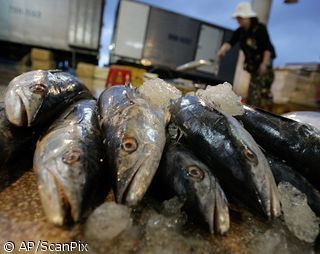 The European Commission tabled yesterday its proposal on fishing possibilities for fish stocks in the Baltic Sea for 2010.
more »
The European Commission tabled yesterday its proposal on fishing possibilities for fish stocks in the Baltic Sea for 2010.
more »
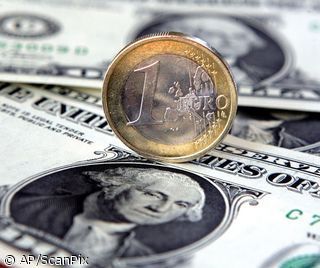 Members of the Civil Liberties Committee voiced concern on Thursday over the interim agreement under negotiation between the EU and the United States on data transfers via the SWIFT network.
more »
Members of the Civil Liberties Committee voiced concern on Thursday over the interim agreement under negotiation between the EU and the United States on data transfers via the SWIFT network.
more »
 Consumers in Cyprus, the Czech Republic, Hungary, Poland, Romania and Slovenia now have access to consumer magazines and websites, which provide independent, comparative testing of consumer products, following a three-year EU project co-financed by the European Commission.
more »
Consumers in Cyprus, the Czech Republic, Hungary, Poland, Romania and Slovenia now have access to consumer magazines and websites, which provide independent, comparative testing of consumer products, following a three-year EU project co-financed by the European Commission.
more »
 Funds management company “SNORAS Asset Management” will establish the first alternative investment fund in Lithuania - “SAM Renewable Energy Fund”.
more »
Funds management company “SNORAS Asset Management” will establish the first alternative investment fund in Lithuania - “SAM Renewable Energy Fund”.
more »
 The re-launched Lisbon Partnership for growth and jobs has put innovation and entrepreneurship at the centre and called for decisive and more coherent action by the Community and the Member States in view of mastering the shift towards knowledge based low carbon economy.
more »
The re-launched Lisbon Partnership for growth and jobs has put innovation and entrepreneurship at the centre and called for decisive and more coherent action by the Community and the Member States in view of mastering the shift towards knowledge based low carbon economy.
more »
 Helping dairy farmers now, as well as restructuring the dairy sector in the long run, is the way out of the current milk market crisis, Agriculture Committee MEPs told Agriculture Commissioner Mariann Fischer Boel in a debate on Tuesday.
more »
Helping dairy farmers now, as well as restructuring the dairy sector in the long run, is the way out of the current milk market crisis, Agriculture Committee MEPs told Agriculture Commissioner Mariann Fischer Boel in a debate on Tuesday.
more »
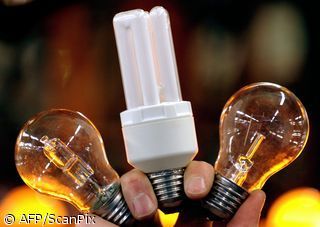 The EU is phasing out traditional light bulbs over the next three years in favour of a new generation of energy-efficient lighting.
more »
The EU is phasing out traditional light bulbs over the next three years in favour of a new generation of energy-efficient lighting.
more »
 Lithuania increases the VAT rate from 19 % to 21 % from September 1, 2009.
more »
Lithuania increases the VAT rate from 19 % to 21 % from September 1, 2009.
more »
 Two recent joint missions from three development finance institutions helped Thailand identify low carbon projects that could be eligible for Clean Technology Fund financing.
more »
Two recent joint missions from three development finance institutions helped Thailand identify low carbon projects that could be eligible for Clean Technology Fund financing.
more »