Criminals disguising illicit earnings stay ahead of police efforts to crack down
Published:
28 March 2003 y., Friday
Chinese restaurants that stand empty day and night. Jewelry shops with no customers. Nightclubs without dancers. Travel agencies that don't organize travel.
These are all businesses known at times to launder money -- typically by disguising illicitly generated cash as legal earnings and passing the money through the mainstream banking system.
"There are businesses where it is easier to hide money. I know that Czechs like to travel, but you have a huge amount of travel agencies in Prague," said John Mottram, a European Union accession adviser working on money-laundering policy at the Interior Ministry. "There are also lots of restaurants and bars. I'm sure a number of those businesses are covers for criminal groups, even if the employees there don't realize it."
These days, however, such firms are at the low end of vehicles used to hide sources of ill-gotten gains, observers say. Financial authorities, forensic specialists and bank security officials said money launderers are increasingly using legal and accountancy services, modern computer and Internet technology, stock market transactions and shadowy shell companies in an effort to stay ahead of investigators. As a result, these observers say, authorities are having a harder time than ever finding and prosecuting offenders, even as lawmakers institute EU-compliant laws and banks become more watchful.
Šaltinis:
The Prague Post
Copying, publishing, announcing any information from the News.lt portal without written permission of News.lt editorial office is prohibited.
The most popular articles
 Standard & Poor's (S&P) affirmed Lithuania's long-term investment grade sovereign foreign currency BBB credit rating and removed it from a CreditWatch negative position, citing government commitments to address deteriorating public finances.
more »
Standard & Poor's (S&P) affirmed Lithuania's long-term investment grade sovereign foreign currency BBB credit rating and removed it from a CreditWatch negative position, citing government commitments to address deteriorating public finances.
more »
 The EBRD-EIB Multilateral Carbon Credit Fund (MCCF) and Azerenerji Joint Stock Company are collaborating in order to promote energy-efficient power generation in Azerbaijan.
more »
The EBRD-EIB Multilateral Carbon Credit Fund (MCCF) and Azerenerji Joint Stock Company are collaborating in order to promote energy-efficient power generation in Azerbaijan.
more »
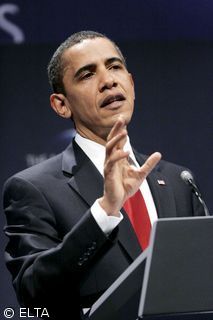 U.S. President Barack Obama, meeting with the leaders of Mexico and Canada, called on all three nations hit by the global recession to avoid resorting to protectionism.
more »
U.S. President Barack Obama, meeting with the leaders of Mexico and Canada, called on all three nations hit by the global recession to avoid resorting to protectionism.
more »
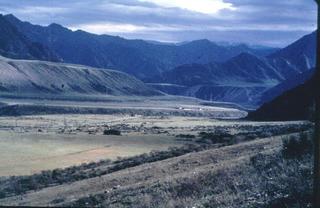 A 10-year $75 million EBRD loan will finance the construction of a combined heat and power plant in the east Siberian city of Krasnoyarsk which is expected to improve energy efficiency and cut pollution by 14 percent thanks to the use of more environmentally-friendly technologies.
more »
A 10-year $75 million EBRD loan will finance the construction of a combined heat and power plant in the east Siberian city of Krasnoyarsk which is expected to improve energy efficiency and cut pollution by 14 percent thanks to the use of more environmentally-friendly technologies.
more »
 The Directorate-General for Competition has issued a review of the aid schemes introduced by Member States and approved by the Commission during the financial crisis.
more »
The Directorate-General for Competition has issued a review of the aid schemes introduced by Member States and approved by the Commission during the financial crisis.
more »
 Rescue planes from New Zealand have been taking part in a massive search for passengers after a ferry sank off the coast of Tonga. At least 27 people are missing.
more »
Rescue planes from New Zealand have been taking part in a massive search for passengers after a ferry sank off the coast of Tonga. At least 27 people are missing.
more »
 Courtney Adams has always loved cooking. As a kid she baked brownies for her friends and in college her apartment was the place to go to for a home-cooked meal. But she never thought she'd cook for a living.
more »
Courtney Adams has always loved cooking. As a kid she baked brownies for her friends and in college her apartment was the place to go to for a home-cooked meal. But she never thought she'd cook for a living.
more »
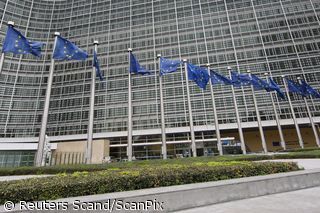 The European Commission has authorised, under EC Treaty state aid rules, a scheme offering reduced-interest loans to businesses investing in the production of environmentally friendly products, as part of the German package to tackle the current economic crisis.
more »
The European Commission has authorised, under EC Treaty state aid rules, a scheme offering reduced-interest loans to businesses investing in the production of environmentally friendly products, as part of the German package to tackle the current economic crisis.
more »
 Ramūnas Bičiulaitis, former board member and financial director of AB LEO LT, starts working as head of the Finance Department of Danske Bankas.
more »
Ramūnas Bičiulaitis, former board member and financial director of AB LEO LT, starts working as head of the Finance Department of Danske Bankas.
more »
 The EBRD has kept up a rapid pace in the syndicated loans market, defying difficult market conditions and pulling together nine deals so far this year, worth a total €1.2 billion.
more »
The EBRD has kept up a rapid pace in the syndicated loans market, defying difficult market conditions and pulling together nine deals so far this year, worth a total €1.2 billion.
more »