Criminals disguising illicit earnings stay ahead of police efforts to crack down
Published:
28 March 2003 y., Friday
Chinese restaurants that stand empty day and night. Jewelry shops with no customers. Nightclubs without dancers. Travel agencies that don't organize travel.
These are all businesses known at times to launder money -- typically by disguising illicitly generated cash as legal earnings and passing the money through the mainstream banking system.
"There are businesses where it is easier to hide money. I know that Czechs like to travel, but you have a huge amount of travel agencies in Prague," said John Mottram, a European Union accession adviser working on money-laundering policy at the Interior Ministry. "There are also lots of restaurants and bars. I'm sure a number of those businesses are covers for criminal groups, even if the employees there don't realize it."
These days, however, such firms are at the low end of vehicles used to hide sources of ill-gotten gains, observers say. Financial authorities, forensic specialists and bank security officials said money launderers are increasingly using legal and accountancy services, modern computer and Internet technology, stock market transactions and shadowy shell companies in an effort to stay ahead of investigators. As a result, these observers say, authorities are having a harder time than ever finding and prosecuting offenders, even as lawmakers institute EU-compliant laws and banks become more watchful.
Šaltinis:
The Prague Post
Copying, publishing, announcing any information from the News.lt portal without written permission of News.lt editorial office is prohibited.
The most popular articles
 When you fill up your car with petrol you often find that your hand will reek of petrol unless you have worn gloves.
more »
When you fill up your car with petrol you often find that your hand will reek of petrol unless you have worn gloves.
more »
 The EU is going through its worst recession since WWII. Inflation has slowed, but employment and public finances are hard hit. The situation should stabilise in 2010.
more »
The EU is going through its worst recession since WWII. Inflation has slowed, but employment and public finances are hard hit. The situation should stabilise in 2010.
more »
 In the current economic environment, banks should carefully analyze the current and future total cost of ownership of their technology assets, and evaluate the outsourcing alternative.
more »
In the current economic environment, banks should carefully analyze the current and future total cost of ownership of their technology assets, and evaluate the outsourcing alternative.
more »
 Commission proposes first EU law on hedge funds and issues guidelines on bank pay practices.
more »
Commission proposes first EU law on hedge funds and issues guidelines on bank pay practices.
more »
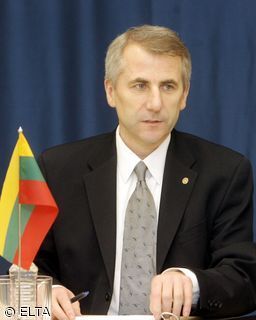 On 30 April, Lithuania’s Minister of Foreign Affairs Vygaudas Ušackas took part in the round table discussion “The European Union’s External Trade Policy and Lithuania’s Positions: Threats and Possibilities for the Lithuanian Industry”.
more »
On 30 April, Lithuania’s Minister of Foreign Affairs Vygaudas Ušackas took part in the round table discussion “The European Union’s External Trade Policy and Lithuania’s Positions: Threats and Possibilities for the Lithuanian Industry”.
more »
 Since 28 April this year, the clients of AB Bank SNORAS will be able to process their financial matters in a clearer and more user-friendly environment of “Internet Bank+” system.
more »
Since 28 April this year, the clients of AB Bank SNORAS will be able to process their financial matters in a clearer and more user-friendly environment of “Internet Bank+” system.
more »
 2009 ageing report: Europe tackling the challenge of an ageing population but the recession threatens a setback.
more »
2009 ageing report: Europe tackling the challenge of an ageing population but the recession threatens a setback.
more »
 More choice, investment and security of supply lie at the heart of the 3rd energy package.
more »
More choice, investment and security of supply lie at the heart of the 3rd energy package.
more »
 Swine flu, a new strain of influenza, has so far left more than a hundred dead. But in one sector, the illness could have huge benefits.
more »
Swine flu, a new strain of influenza, has so far left more than a hundred dead. But in one sector, the illness could have huge benefits.
more »
 Central European bargain hunters are crossing borders for the best buys. Slovakian shoppers in Hungary are making the most of their new eurozone membership.
more »
Central European bargain hunters are crossing borders for the best buys. Slovakian shoppers in Hungary are making the most of their new eurozone membership.
more »