Criminals disguising illicit earnings stay ahead of police efforts to crack down
Published:
28 March 2003 y., Friday
Chinese restaurants that stand empty day and night. Jewelry shops with no customers. Nightclubs without dancers. Travel agencies that don't organize travel.
These are all businesses known at times to launder money -- typically by disguising illicitly generated cash as legal earnings and passing the money through the mainstream banking system.
"There are businesses where it is easier to hide money. I know that Czechs like to travel, but you have a huge amount of travel agencies in Prague," said John Mottram, a European Union accession adviser working on money-laundering policy at the Interior Ministry. "There are also lots of restaurants and bars. I'm sure a number of those businesses are covers for criminal groups, even if the employees there don't realize it."
These days, however, such firms are at the low end of vehicles used to hide sources of ill-gotten gains, observers say. Financial authorities, forensic specialists and bank security officials said money launderers are increasingly using legal and accountancy services, modern computer and Internet technology, stock market transactions and shadowy shell companies in an effort to stay ahead of investigators. As a result, these observers say, authorities are having a harder time than ever finding and prosecuting offenders, even as lawmakers institute EU-compliant laws and banks become more watchful.
Šaltinis:
The Prague Post
Copying, publishing, announcing any information from the News.lt portal without written permission of News.lt editorial office is prohibited.
The most popular articles
 The European Commission has approved under EC Treaty state aid rules a Latvian support scheme to stabilise financial markets by providing guarantees to eligible banks to ensure their access to financing.
more »
The European Commission has approved under EC Treaty state aid rules a Latvian support scheme to stabilise financial markets by providing guarantees to eligible banks to ensure their access to financing.
more »
 Gathering in Beijing, China's political elite gather to celebrate three decades of China's economic reform and market liberalisation.
more »
Gathering in Beijing, China's political elite gather to celebrate three decades of China's economic reform and market liberalisation.
more »
 After two days of intense negotiations, European leaders reached agreement on how to achieve the EU’s ambitious climate change goals and endorsed a €200bn plan to revive the flagging EU economy.
more »
After two days of intense negotiations, European leaders reached agreement on how to achieve the EU’s ambitious climate change goals and endorsed a €200bn plan to revive the flagging EU economy.
more »
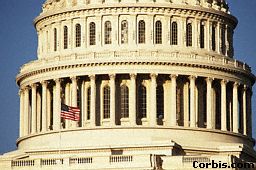 Detroit won't get its bailout, as the U.S. Senate blocked the measure to rescue America's big three car makers.
more »
Detroit won't get its bailout, as the U.S. Senate blocked the measure to rescue America's big three car makers.
more »
 The world is facing “an acute food crisis”. That was the verdict of a report adopted by MEPs in the Agriculture Committee on 8 December.
more »
The world is facing “an acute food crisis”. That was the verdict of a report adopted by MEPs in the Agriculture Committee on 8 December.
more »
 The European Commission has agreed a Communication that aims to improve the functioning of the food supply chain in order to lower prices for consumers.
more »
The European Commission has agreed a Communication that aims to improve the functioning of the food supply chain in order to lower prices for consumers.
more »
 The World Bank's 2009 Global Economic Prospects report is projecting world growth will shrink to 0.9 percent next year.
more »
The World Bank's 2009 Global Economic Prospects report is projecting world growth will shrink to 0.9 percent next year.
more »
 Prospects for a federal aid package to help the US auto industry advanced on Monday.
more »
Prospects for a federal aid package to help the US auto industry advanced on Monday.
more »
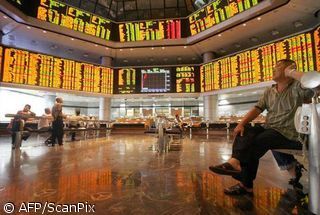 A new report from Aite Group LLC explores possible regulatory and legislative responses to the current financial crisis, with particular attention paid to three key topics: consumer lending, risk management and deposit relationships.
more »
A new report from Aite Group LLC explores possible regulatory and legislative responses to the current financial crisis, with particular attention paid to three key topics: consumer lending, risk management and deposit relationships.
more »
 A new report from Mercator Advisory Group's Retail Banking Practice focuses on the ATM and the multifaceted role it plays in the retail banking market.
more »
A new report from Mercator Advisory Group's Retail Banking Practice focuses on the ATM and the multifaceted role it plays in the retail banking market.
more »