Criminals disguising illicit earnings stay ahead of police efforts to crack down
Published:
28 March 2003 y., Friday
Chinese restaurants that stand empty day and night. Jewelry shops with no customers. Nightclubs without dancers. Travel agencies that don't organize travel.
These are all businesses known at times to launder money -- typically by disguising illicitly generated cash as legal earnings and passing the money through the mainstream banking system.
"There are businesses where it is easier to hide money. I know that Czechs like to travel, but you have a huge amount of travel agencies in Prague," said John Mottram, a European Union accession adviser working on money-laundering policy at the Interior Ministry. "There are also lots of restaurants and bars. I'm sure a number of those businesses are covers for criminal groups, even if the employees there don't realize it."
These days, however, such firms are at the low end of vehicles used to hide sources of ill-gotten gains, observers say. Financial authorities, forensic specialists and bank security officials said money launderers are increasingly using legal and accountancy services, modern computer and Internet technology, stock market transactions and shadowy shell companies in an effort to stay ahead of investigators. As a result, these observers say, authorities are having a harder time than ever finding and prosecuting offenders, even as lawmakers institute EU-compliant laws and banks become more watchful.
Šaltinis:
The Prague Post
Copying, publishing, announcing any information from the News.lt portal without written permission of News.lt editorial office is prohibited.
The most popular articles
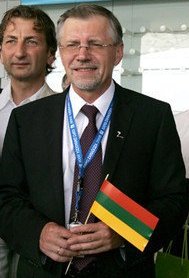 In Brussels, Prime Minister Gediminas Kirkilas participated in the meeting of Nordic and Baltic (NB6) Prime Ministers which focused on the pressing topics on the agenda of the European Council: global finance crisis, energy, climate change, EU-Russia relations, and financial situation in Iceland.
more »
In Brussels, Prime Minister Gediminas Kirkilas participated in the meeting of Nordic and Baltic (NB6) Prime Ministers which focused on the pressing topics on the agenda of the European Council: global finance crisis, energy, climate change, EU-Russia relations, and financial situation in Iceland.
more »
 Prime Minister Gediminas Kirkilas attended the working dinner with President of the European Commission José Manuel Barroso, Danish, Estonian, Finnish, Latvian, Polish Prime Ministers – Anders Fogh Rasmussen, Andrus Ansip, Matti Vanhanen, Ivars Godmanis, Donald Tusk – and Swedish Minister of Foreign Affairs Carl Bildt.
more »
Prime Minister Gediminas Kirkilas attended the working dinner with President of the European Commission José Manuel Barroso, Danish, Estonian, Finnish, Latvian, Polish Prime Ministers – Anders Fogh Rasmussen, Andrus Ansip, Matti Vanhanen, Ivars Godmanis, Donald Tusk – and Swedish Minister of Foreign Affairs Carl Bildt.
more »
 The European Commission has put forward a revision of EU rules on deposit guarantee schemes that puts into action the commitments made by EU Finance Ministers on 7 October.
more »
The European Commission has put forward a revision of EU rules on deposit guarantee schemes that puts into action the commitments made by EU Finance Ministers on 7 October.
more »
 The United States began releasing long-awaited details of its $700 billion rescue plan.
more »
The United States began releasing long-awaited details of its $700 billion rescue plan.
more »
 Australia's Prime Minister announces plans for the government to guarantee bank deposits for the next three years.
more »
Australia's Prime Minister announces plans for the government to guarantee bank deposits for the next three years.
more »
 Ethical bank, Triodos, says it is offering customers an alternative way to invest their funds.
more »
Ethical bank, Triodos, says it is offering customers an alternative way to invest their funds.
more »
 Energy security was the dominant theme during the meeting between Lithuanian Prime Minister Gediminas Kirkilas and Latvian Prime Minister Ivars Godmanis.
more »
Energy security was the dominant theme during the meeting between Lithuanian Prime Minister Gediminas Kirkilas and Latvian Prime Minister Ivars Godmanis.
more »
 The draft law would require utilities to separate – or unbundle – the distribution of electricity and gas from production.
more »
The draft law would require utilities to separate – or unbundle – the distribution of electricity and gas from production.
more »
 A holistic approach to eradicating poverty, which seeks to ensure adequate incomes, quality jobs and better access to social services, is advocated by the EP in an own-initiative report.
more »
A holistic approach to eradicating poverty, which seeks to ensure adequate incomes, quality jobs and better access to social services, is advocated by the EP in an own-initiative report.
more »
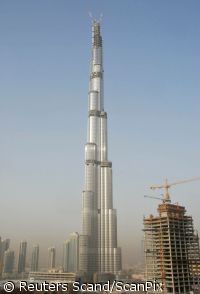 Dubai showcases multi-billion dollar development projects at the annual Cityscape exhibition.
more »
Dubai showcases multi-billion dollar development projects at the annual Cityscape exhibition.
more »