Lithuania's troubled initial public offering of a 25 percent stake in Lithuanian Telecom has gone from bad to worse.
Published:
10 July 2000 y., Monday
Lithuania had high hopes that the IPO, the largest in the nation's history, would be a rousing success, with the government initially expecting to snare some 300 million dollars from the sale.
But wariness about tech stocks worldwide and a weak economy at home forced the government to lower the initial share price from 4 litas ($1) to 3.15 litas ($0.78), so it netted just $160 million from the sale. That price has fallen more than 10 percent since the initial offering three weeks ago.
Analysts said disappointed shareholders were now dumping their holdings in Lithuanian Telecom, which was causing a loss of confidence across the board on the fledgling Lithuanian National Stock Exchange.
Lithuanian Telecom says it won't be adversely affected. The country's monopoly telephone company is already majority foreign owned and is considered financially sound and well run.
A 60 percent stake in Lithuanian Telecom was sold two years ago for some $500 million to Sweden's Telia and Finland's Sonera.
Many Lithuanian officials have been left scratching their heads about why the IPO went so wrong. Lithuanian Telecom has only fixed-line services, which many analysts say made it less attractive to investors looking at the booming mobile phone market.
Critics say the government should have delayed the offering until the economy improved and confidence in tech stocks was restored.
Šaltinis:
Copying, publishing, announcing any information from the News.lt portal without written permission of News.lt editorial office is prohibited.
The most popular articles
 The European Commission has authorised under EU state aid rules a €550 million capital injection and a €400 million guarantee in favour of the Austrian bank BAWAG. P.S.K. The Commission found the measures to be in line with EU state aid rules.
more »
The European Commission has authorised under EU state aid rules a €550 million capital injection and a €400 million guarantee in favour of the Austrian bank BAWAG. P.S.K. The Commission found the measures to be in line with EU state aid rules.
more »
 EUROSTAT has reported that the sharpest annual decrease in hourly labour costs of -10.9% was observed in Lithuania in the 3rd quarter of 2009.
more »
EUROSTAT has reported that the sharpest annual decrease in hourly labour costs of -10.9% was observed in Lithuania in the 3rd quarter of 2009.
more »
 Statistics Lithuania informs that, according to the Labour Force Survey data, the number of the unemployed in III quarter 2009 made 228.1 thousand.
more »
Statistics Lithuania informs that, according to the Labour Force Survey data, the number of the unemployed in III quarter 2009 made 228.1 thousand.
more »
 What has come to be termed as the "Great Recession" seems to have come to an end in the third quarter of 2009.
more »
What has come to be termed as the "Great Recession" seems to have come to an end in the third quarter of 2009.
more »
 The European Commission has authorised, under EU State aid rules, a measure adopted by Lithuania to limit the adverse impact of the current financial crisis on exporting firms.
more »
The European Commission has authorised, under EU State aid rules, a measure adopted by Lithuania to limit the adverse impact of the current financial crisis on exporting firms.
more »
 The schedule of Vilnius International Airport (VIA) is supplemented with 3 more new directions; the airline company airBaltic starts regular flights to Paris today, to Munich tomorrow, and to Berlin on Monday.
more »
The schedule of Vilnius International Airport (VIA) is supplemented with 3 more new directions; the airline company airBaltic starts regular flights to Paris today, to Munich tomorrow, and to Berlin on Monday.
more »
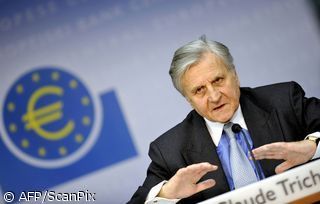 The Governing Council of the European Central Bank (ECB) has decided to start the main construction works for its new premises in spring 2010.
more »
The Governing Council of the European Central Bank (ECB) has decided to start the main construction works for its new premises in spring 2010.
more »
 AB Bank SNORAS was granted the award from NASDAQ OMX Baltic Stock Exchange for the jubilee 15-year listing of the bank’s shares on NASDAQ OMX Vilnius Stock Exchange.
more »
AB Bank SNORAS was granted the award from NASDAQ OMX Baltic Stock Exchange for the jubilee 15-year listing of the bank’s shares on NASDAQ OMX Vilnius Stock Exchange.
more »
 Parex banka has established a subsidiary, SIA NIF, which will professionally manage assets that are not related to the Bank’s core business.
more »
Parex banka has established a subsidiary, SIA NIF, which will professionally manage assets that are not related to the Bank’s core business.
more »
 Mariann Fischer Boel, European Commissioner for Agriculture and Rural Development, today put forward a plan to ensure that Greece will put in place the systems necessary to allow EU aid payments to be made to farmers.
more »
Mariann Fischer Boel, European Commissioner for Agriculture and Rural Development, today put forward a plan to ensure that Greece will put in place the systems necessary to allow EU aid payments to be made to farmers.
more »