The euro's painful plunge to uncharted lows Tuesday bloodied the already bruised forecasts of euro bulls who have steadfastly predicted a brighter 2000 for the single currency.
Published:
3 May 2000 y., Wednesday
"Obviously things haven't played out for the euro the way many people, ourselves included, had anticipated. We were obviously looking for a better performance," said Bob Lynch, currency strategist for Banque Paribas in New York.
The euro crumbled around 2 percent to record floors against the dollar, yen, and British pound, pounding market players who have been hunting for strategic points to buy euros on dips. After slumping around 15 percent in its first year of life in 1999, the euro staged a sharp rally on the first trading day of 2000 amid rosy forecasts for European economic growth and a belief the red-hot U.S. economy would cool. But by the end of January, the euro slumped convincingly below the psychologically important $1 level. In February, when the currency spiked to an all-time low near 94 cents, many market players cautiously ventured the euro may have hit a bottom.
During the past month, euro bulls voiced confidence the dollar would at last begin to lose its shine as U.S. equities, especially high-flying technology shares, began a severe sell-off and stock volatility gripped Wall Street. But on Tuesday, the euro's downward spiral deepened. Analysts say the euro has been unable to keep pace with the dollar as U.S. economic growth blisters ahead of earlier expectations and eclipsed improved European prospects. U.S. first quarter gross domestic product data due this week is expected to register a scorching 5.9 percent on an annualized basis, outstripping a 3.1 percent forecast made just three months ago. The European Commission, meanwhile, forecasts Europe will grow by 3.4 percent this year.
Copying, publishing, announcing any information from the News.lt portal without written permission of News.lt editorial office is prohibited.
The most popular articles
 When you fill up your car with petrol you often find that your hand will reek of petrol unless you have worn gloves.
more »
When you fill up your car with petrol you often find that your hand will reek of petrol unless you have worn gloves.
more »
 The EU is going through its worst recession since WWII. Inflation has slowed, but employment and public finances are hard hit. The situation should stabilise in 2010.
more »
The EU is going through its worst recession since WWII. Inflation has slowed, but employment and public finances are hard hit. The situation should stabilise in 2010.
more »
 In the current economic environment, banks should carefully analyze the current and future total cost of ownership of their technology assets, and evaluate the outsourcing alternative.
more »
In the current economic environment, banks should carefully analyze the current and future total cost of ownership of their technology assets, and evaluate the outsourcing alternative.
more »
 Commission proposes first EU law on hedge funds and issues guidelines on bank pay practices.
more »
Commission proposes first EU law on hedge funds and issues guidelines on bank pay practices.
more »
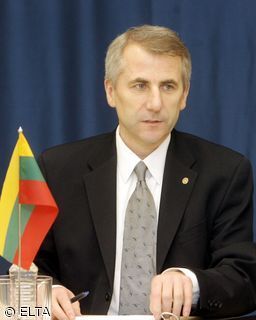 On 30 April, Lithuania’s Minister of Foreign Affairs Vygaudas Ušackas took part in the round table discussion “The European Union’s External Trade Policy and Lithuania’s Positions: Threats and Possibilities for the Lithuanian Industry”.
more »
On 30 April, Lithuania’s Minister of Foreign Affairs Vygaudas Ušackas took part in the round table discussion “The European Union’s External Trade Policy and Lithuania’s Positions: Threats and Possibilities for the Lithuanian Industry”.
more »
 Since 28 April this year, the clients of AB Bank SNORAS will be able to process their financial matters in a clearer and more user-friendly environment of “Internet Bank+” system.
more »
Since 28 April this year, the clients of AB Bank SNORAS will be able to process their financial matters in a clearer and more user-friendly environment of “Internet Bank+” system.
more »
 2009 ageing report: Europe tackling the challenge of an ageing population but the recession threatens a setback.
more »
2009 ageing report: Europe tackling the challenge of an ageing population but the recession threatens a setback.
more »
 More choice, investment and security of supply lie at the heart of the 3rd energy package.
more »
More choice, investment and security of supply lie at the heart of the 3rd energy package.
more »
 Swine flu, a new strain of influenza, has so far left more than a hundred dead. But in one sector, the illness could have huge benefits.
more »
Swine flu, a new strain of influenza, has so far left more than a hundred dead. But in one sector, the illness could have huge benefits.
more »
 Central European bargain hunters are crossing borders for the best buys. Slovakian shoppers in Hungary are making the most of their new eurozone membership.
more »
Central European bargain hunters are crossing borders for the best buys. Slovakian shoppers in Hungary are making the most of their new eurozone membership.
more »