Despite Soaring Euro and Growth Worries, European Central Bank Leaves Key Interest Rate Untouched
Published:
13 January 2004 y., Tuesday
The European Central Bank left its key interest rate untouched Thursday, even as a soaring euro made some economists worry about prospects for growth in the 12 countries that use the currency.
The bank's 18-member governing council left the refinancing rate at 2 percent, where it has been since a half-point cut in June.
The Bank of England also left its benchmark lending rate unchanged Thursday at 3.75 percent.
The European Central Bank's decision was widely expected, shifting the attention to any statements that bank President Jean-Claude Trichet might make afterward on the euro, which hit an all-time record of $1.2812 on Tuesday.
So far Trichet has not expressed great concern that the stronger euro will hurt the economy by dampening exports, and put pressure on the bank to cut rates. But the rally has quickly outrun many economists' predictions and raised questions about what the bank thinks now.
The bank's potential quandary is this: It's already cut interest rates to near rock-bottom levels, but the stronger euro could hurt growth by making European exports more expensive compared to competing goods from foreign producers. A rate cut could provide economic stimulus.
The bank's main goal, however, isn't growth but curbing inflation, which could be worsened by a cut at the wrong time. And its inflation projection for next year has crept up from around 1.3 percent to around 1.8 percent.
Šaltinis:
abcnews.go.com
Copying, publishing, announcing any information from the News.lt portal without written permission of News.lt editorial office is prohibited.
The most popular articles
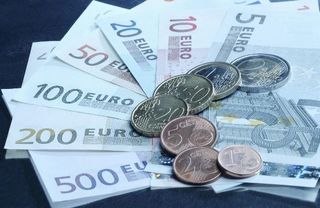 The European Commission has decided to grant an extension of the deadline for the divestment of Fortis' corporate banking business, consisting of Hollandsche Bank Unie N.V. (HBU), two corporate client departments, 13 "Advieskantoren" and ABN AMRO's Dutch factoring activities to Deutsche Bank.
more »
The European Commission has decided to grant an extension of the deadline for the divestment of Fortis' corporate banking business, consisting of Hollandsche Bank Unie N.V. (HBU), two corporate client departments, 13 "Advieskantoren" and ABN AMRO's Dutch factoring activities to Deutsche Bank.
more »
 MEPs will vote on an emergency plan to help the crisis-stricken sector dairy sector on Thursday after the Agriculture Committee approved the Commission's proposal on Monday evening in Strasbourg.
more »
MEPs will vote on an emergency plan to help the crisis-stricken sector dairy sector on Thursday after the Agriculture Committee approved the Commission's proposal on Monday evening in Strasbourg.
more »
 The EBRD is boosting competition in the Montenegrin retail sector with a loan to expand the supermarket network of one of the leading retailers in the country.
more »
The EBRD is boosting competition in the Montenegrin retail sector with a loan to expand the supermarket network of one of the leading retailers in the country.
more »
 Redmond, Wash. — Oct. 16, 2009— On Oct. 19, Microsoft CEO Steve Ballmer heads to the sold-out Microsoft sharepoint Conference in Las Vegas where he will address more than 7,000 sharepoint customers, partners and developers.
more »
Redmond, Wash. — Oct. 16, 2009— On Oct. 19, Microsoft CEO Steve Ballmer heads to the sold-out Microsoft sharepoint Conference in Las Vegas where he will address more than 7,000 sharepoint customers, partners and developers.
more »
 Proposals tabled for collaboration on sea surveillance, bigger EU role in global maritime affairs and sustainable fishing.
more »
Proposals tabled for collaboration on sea surveillance, bigger EU role in global maritime affairs and sustainable fishing.
more »
 $50 million financing package for agricultural commodities operator.
more »
$50 million financing package for agricultural commodities operator.
more »
 Seeking to increase sheet-metal production volumes, Stansefabrikken decided to move all company’s production from Lillesand (Norway) to Stansefabrikken’s successfully operating factories in Lithuania.
more »
Seeking to increase sheet-metal production volumes, Stansefabrikken decided to move all company’s production from Lillesand (Norway) to Stansefabrikken’s successfully operating factories in Lithuania.
more »
 The European Economic and Social Committee (EESC) and the European Commission Representation in Finland jointly organise a conference in Helsinki on 22 and 23 October on "The Baltic Sea Region: the best place to work and do business".
more »
The European Economic and Social Committee (EESC) and the European Commission Representation in Finland jointly organise a conference in Helsinki on 22 and 23 October on "The Baltic Sea Region: the best place to work and do business".
more »
 Why did economy rise drastically turn into painful decline and what price will every of us have to pay for that?
more »
Why did economy rise drastically turn into painful decline and what price will every of us have to pay for that?
more »
 The economies of central and eastern Europe are expected to contract by an average of 6.3 per cent in 2009 following steep output declines in the first half of the year.
more »
The economies of central and eastern Europe are expected to contract by an average of 6.3 per cent in 2009 following steep output declines in the first half of the year.
more »