Four former Soviet republics agreed on Wednesday to improve transport links and create a free trade zone which has eluded the larger Commonwealth of Independent States since its inception.
Published:
9 September 2000 y., Saturday
Four former Soviet republics agreed on Wednesday to improve transport links and create a free trade zone which has eluded the larger Commonwealth of Independent States since its inception.
Leaders of Georgia, Uzbekistan, Azerbaijan and Moldova agreed at a meeting alongside the U.N. Millennium Summit to beef up their organisation, known informally for the past three years as GUAM, by holding regular meetings.
They also pledged to work towards restoring the centuries-old "silk route" trade link enabling the free movement of goods, people and capital between Europe, the Caucasus region and Asia.
"Things have truly changed. We have grown and it is now time to form something concrete," Ukrainian President Leonid Kuchma told a news conference.
Kuchma has been among leaders of ex-Soviet republics most critical of the performance of the 12-nation CIS, saying nearly all of the hundreds of decisions is has adopted since the 1991 collapse of the Soviet Union remain mere pieces of paper.
The four countries formed GUAM as an informal group to find points in common outside the CIS, which they view as dominated by Russia -- by far the largest former Soviet republic. But GUAM, too, has remained largely an informal body with little political or economic clout. Sources close to the talks said the leaders approved a memorandum for the countries' presidents to hold annual meetings and for their foreign ministers to meet twice yearly.
Šaltinis:
Gazeta.ru
Copying, publishing, announcing any information from the News.lt portal without written permission of News.lt editorial office is prohibited.
The most popular articles
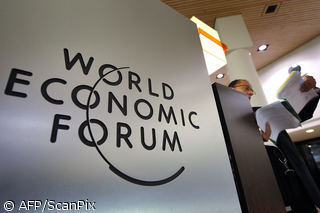 Reform of the banking system was one of the key themes at this year's World Economic Forum in Davos, with bankers coming in for a lot of criticism.
more »
Reform of the banking system was one of the key themes at this year's World Economic Forum in Davos, with bankers coming in for a lot of criticism.
more »
 Small firms have been hard hit by the economic crisis, and so must be given incentives and support, including easier access to credit, help with innovation, tax breaks and less red tape, MEPs on Parliament's Special Committee on the Financial, Economic and Social Crisis (CRIS), and experts agreed at a workshop on Monday.
more »
Small firms have been hard hit by the economic crisis, and so must be given incentives and support, including easier access to credit, help with innovation, tax breaks and less red tape, MEPs on Parliament's Special Committee on the Financial, Economic and Social Crisis (CRIS), and experts agreed at a workshop on Monday.
more »
 The elections and investiture of Porfirio Lobo as President of Honduras have cleared the way for the EU to restore normal relations with the Central American country and negotiations for signing a bi-regional Association Agreement may soon resume.
more »
The elections and investiture of Porfirio Lobo as President of Honduras have cleared the way for the EU to restore normal relations with the Central American country and negotiations for signing a bi-regional Association Agreement may soon resume.
more »
The European Commission has approved applications from Lithuania for assistance under the European Globalisation Adjustment Fund (EGF).
more »
 The European Commission has decided to refer Italy to the European Court of Justice (ECJ) on the basis of Article 108(2) of the Treaty on the Functioning of the European Union (TFEU) for failing to comply with a Commission decision of July 2008.
more »
The European Commission has decided to refer Italy to the European Court of Justice (ECJ) on the basis of Article 108(2) of the Treaty on the Functioning of the European Union (TFEU) for failing to comply with a Commission decision of July 2008.
more »
 The EBRD is helping to strengthen the financial sector in Bosnia-Herzegovina (BiH) with a €50 million credit line to the Deposit Insurance Agency of Bosnia and Herzegovina (DIA), the Bank’s first investment in a deposit insurance entity.
more »
The EBRD is helping to strengthen the financial sector in Bosnia-Herzegovina (BiH) with a €50 million credit line to the Deposit Insurance Agency of Bosnia and Herzegovina (DIA), the Bank’s first investment in a deposit insurance entity.
more »
 In its first investment in the natural resources sector in Bosnia and Herzegovina, the EBRD is providing a €17 million sovereign loan to finance the gasification of the Central Bosnia Canton.
more »
In its first investment in the natural resources sector in Bosnia and Herzegovina, the EBRD is providing a €17 million sovereign loan to finance the gasification of the Central Bosnia Canton.
more »
 The EBRD is increasing the availability of financing to private businesses in Armenia with a $5 million credit line and a $3 million trade finance facility to ArmSwissBank for small and medium companies (SMEs).
more »
The EBRD is increasing the availability of financing to private businesses in Armenia with a $5 million credit line and a $3 million trade finance facility to ArmSwissBank for small and medium companies (SMEs).
more »
 On January 27 the European Commission assessed the action taken by Lithuania, Malta, Latvia and Hungary in response to recommendations proposed by the Commission and endorsed by the Council in July 2009 in respect to the correction of their respective budget deficits.
more »
On January 27 the European Commission assessed the action taken by Lithuania, Malta, Latvia and Hungary in response to recommendations proposed by the Commission and endorsed by the Council in July 2009 in respect to the correction of their respective budget deficits.
more »
 EUROSTAT announced that Lithuania’s GDP rose by 6.1 % in the 3rd quarter of 2009 versus the previous quarter.
more »
EUROSTAT announced that Lithuania’s GDP rose by 6.1 % in the 3rd quarter of 2009 versus the previous quarter.
more »