The international rating agency Fitch Ratings upgraded the long-term foreign-currency ratings of seven states joining the European Union
Published:
13 November 2003 y., Thursday
The international rating agency Fitch Ratings upgraded the long-term foreign-currency ratings of seven states joining the European Union: Cyprus (A+), Latvia (BBB+), Lithuania (BBB), Malta (A), Poland (BBB+), Slovakia (BBB) and Slovenia (A+). Fitch expects that the ratings of the countries scheduled to join the EU will increase by 2-3 points over the present level after these countries adopt the euro. Full membership in the euro zone will reduce the risk resulting from unbalanced payments and sudden external changes.
Raising the rating for Poland to BBB+ means that, in the opinion of Fitch, the budget bill and medium-term financial strategy will not influence the evaluation of Polish debt in zlotys and foreign currencies, and that there is no danger of lowering the rating of the country's credibility.
Thus, it was quite a surprise that S&P agency decided Nov. 5 to lower the long-term rating for Polish Treasury bonds issued in domestic currency from A to A-. At the same time, the agency maintained its previous rating for foreign currency debt at BBB+. According to S&P analysts, the main reasons behind the decision include the growing budget deficit and public debt.
Šaltinis:
warsawvoice.pl
Copying, publishing, announcing any information from the News.lt portal without written permission of News.lt editorial office is prohibited.
The most popular articles
 In another move to strengthen the financial system, the Commission is proposing controls on credit rating agencies - private companies that evaluate financial risks for investors.
more »
In another move to strengthen the financial system, the Commission is proposing controls on credit rating agencies - private companies that evaluate financial risks for investors.
more »
 Monday 10 November saw a large report land on the desk of MEPs in the Budgetary Control Committee.
more »
Monday 10 November saw a large report land on the desk of MEPs in the Budgetary Control Committee.
more »
 EU wants G20 meeting to pave the way for reform of the international financial system.
more »
EU wants G20 meeting to pave the way for reform of the international financial system.
more »
 New Yorkers reflect on the election of Barack Obama as the 44th President of the United States.
more »
New Yorkers reflect on the election of Barack Obama as the 44th President of the United States.
more »
 The ability of the EU's common agriculture policy (CAP) to cope with the challenges of affordable food and climate change was discussed in Brussels 3-4 November.
more »
The ability of the EU's common agriculture policy (CAP) to cope with the challenges of affordable food and climate change was discussed in Brussels 3-4 November.
more »
 European Union economic growth should be 1.4% in 2008, half what it was in 2007, and drop even more sharply in 2009 to 0.2% before recovering gradually to 1.1% in 2010 (1.2%, 0.1% and 0.9%, respectively, for the euro area).
more »
European Union economic growth should be 1.4% in 2008, half what it was in 2007, and drop even more sharply in 2009 to 0.2% before recovering gradually to 1.1% in 2010 (1.2%, 0.1% and 0.9%, respectively, for the euro area).
more »
 There are an estimated 4-8 million immigrants working illegally in the European Union.
more »
There are an estimated 4-8 million immigrants working illegally in the European Union.
more »
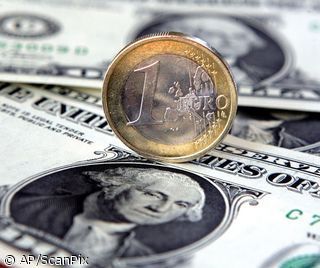 Hit by economic turmoil and the sharp global downturn, growth in the EU slows almost to a halt.
more »
Hit by economic turmoil and the sharp global downturn, growth in the EU slows almost to a halt.
more »
 The top priority is to cushion the impact of the financial crisis on jobs, purchasing power and prosperity of EU citizens.
more »
The top priority is to cushion the impact of the financial crisis on jobs, purchasing power and prosperity of EU citizens.
more »
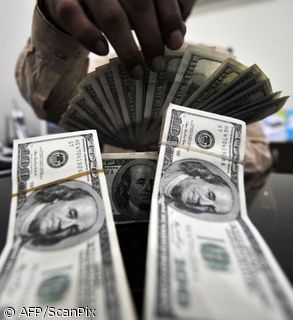 The International Monetary Fund has approved short-term financing to help emerging market economies weather the global financial storm.
more »
The International Monetary Fund has approved short-term financing to help emerging market economies weather the global financial storm.
more »