Russian Guta Bank is temporary unable to take money on deposit from individuals and make payments from such deposits, according to a notice posted on the doors of several of the bank’s offices
Published:
7 July 2004 y., Wednesday
Russian Guta Bank is temporary unable to take money on deposit from individuals and make payments from such deposits, according to a notice posted on the doors of several of the bank’s offices.
The situation at Guta Bank was discussed at a meeting of the Moscow Main Territorial Department of the Central Bank of Russia on Tuesday.
Guta Bank’s press service refused to comment on the issue, saying that the bank’s official position would be announced later.
A number of the bank’s clients said they could not make the necessary payments, Echo of Moscow radio reported. According to the radio station, the depositors cannot get access to their accounts using the Telebank and Teleinfo systems.
The wave of distrust toward the bank was triggered by media reports about document seizures at the bank, the Novye Izvestia newspaper says. According to some reports, Guta Bank has been concealing some interbank payments since July 1, and since July 5, the bank’s clients have had problems withdrawing their money through ATM machines. According to Novye Izvestia, several of Guta Bank’s key partners, including Vneshtorgbank, Alfa Bank, MDM Bank and the Bank of Moscow, refused to provide loans to Guta Bank at the end of last week.
Guta Bank is one of Russia’s 15 largest banks in terms of capital, and one of the country’s 20 top banks in terms of assets. Its authorized capital was RUR 3.357bn (about $115.76m) as of March 2004.
Šaltinis:
rbcnews.com
Copying, publishing, announcing any information from the News.lt portal without written permission of News.lt editorial office is prohibited.
The most popular articles
 On 11 February, heads of state or government of European Union member states will meet in Brussels to seek a commitment towards implementing a revitalised economic strategy to boost employment and growth in the EU.
more »
On 11 February, heads of state or government of European Union member states will meet in Brussels to seek a commitment towards implementing a revitalised economic strategy to boost employment and growth in the EU.
more »
 International Monetary Fund forecasts that Lithuania’s economy will grow 1.6 % this year, making it “the only one of the three Baltic economies expected to be in the positive territory in 2010”.
more »
International Monetary Fund forecasts that Lithuania’s economy will grow 1.6 % this year, making it “the only one of the three Baltic economies expected to be in the positive territory in 2010”.
more »
 Raynair announced it would open its 40th and 1st Central European base at Kaunas, Lithuania’s second largest city, in May with 2 based aircraft and 18 routes.
more »
Raynair announced it would open its 40th and 1st Central European base at Kaunas, Lithuania’s second largest city, in May with 2 based aircraft and 18 routes.
more »
 A new Partnership Strategy for Morocco has been approved by the Board of Executive Directors of the World Bank.
more »
A new Partnership Strategy for Morocco has been approved by the Board of Executive Directors of the World Bank.
more »
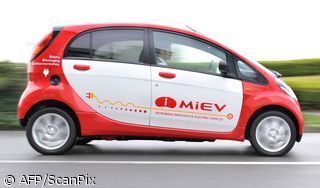 The electric car is an opportunity for European industry.
more »
The electric car is an opportunity for European industry.
more »
 The EBRD’s Board of Directors has adopted a new strategy for Kazakhstan, which reinforces the Bank’s commitment to further support the Kazakh economy and sets out the priorities for its activities in the country over the next three years.
more »
The EBRD’s Board of Directors has adopted a new strategy for Kazakhstan, which reinforces the Bank’s commitment to further support the Kazakh economy and sets out the priorities for its activities in the country over the next three years.
more »
 The European Commission has authorised, under EU state aid rules, plans notified by Sweden to provide a guarantee that would enable Saab Automobile AB to access a loan from the European Investment Bank (EIB).
more »
The European Commission has authorised, under EU state aid rules, plans notified by Sweden to provide a guarantee that would enable Saab Automobile AB to access a loan from the European Investment Bank (EIB).
more »
 At the informal meeting of the Ministers of Competitiveness (Science and Industry), to be held between 7 and 9 February in San Sebastian, the issues on the table will include placing science at the top of the EU agenda and showcasing its role in economic recovery, as well taking the debate on the electric vehicle to EU level.
more »
At the informal meeting of the Ministers of Competitiveness (Science and Industry), to be held between 7 and 9 February in San Sebastian, the issues on the table will include placing science at the top of the EU agenda and showcasing its role in economic recovery, as well taking the debate on the electric vehicle to EU level.
more »
 The Executive Board of the International Monetary Fund (IMF) today approved a 27-month Stand-By Arrangement with Jamaica in the amount of SDR 820.5 million (about US$1.27 billion) to support the country’s economic reforms and help it cope with the consequences of the global downturn.
more »
The Executive Board of the International Monetary Fund (IMF) today approved a 27-month Stand-By Arrangement with Jamaica in the amount of SDR 820.5 million (about US$1.27 billion) to support the country’s economic reforms and help it cope with the consequences of the global downturn.
more »
 Mr. Nadeem Ilahi, chief of an International Monetary Fund (IMF) staff mission to the Kyrgyz Republic, issued the following statement today in Bishkek.
more »
Mr. Nadeem Ilahi, chief of an International Monetary Fund (IMF) staff mission to the Kyrgyz Republic, issued the following statement today in Bishkek.
more »