Financial espionage is growing because of e-commerce.
Published:
3 February 1999 y., Wednesday
According to Pilot Network Services, an Internet service provider that specializes in securing corporate clients against hacker attacks , there has been a steady rise of questionable activity since 1995, when the company was formed. Last year, Pilot denied about 30 million packets per month from hackers attempting to enter its customers_ systems. That number will increase over the next few years as more companies move toward e-commerce sites that open the door to outsiders. What could a hacker possibly want from your company? Well, according to Marketta Silvera, president and CEO of Pilot, they will go after a financial database, pricing strategies or a list of customer contacts. "Financial espionage is growing because of e-commerce," Silvera said. And the hackers are getting more sophisticated. That is where Pilot comes in, with a defensive network infrastructure based on its own security utility. It isolates all traffic before it reaches the client network, then separates the packets for filtering and analysis. If it finds an anomaly, entry into the network is denied. But Pilot offers more than just a tool. This is a service, and probably one of the best value-added ISP services. Pilot_s technology is sophisticated enough to pinpoint where the attack originated. Silvera calls her company the "CIA of online services," and she told how members of the Pilot team were able to call a hacker on the phone while he was attempting to break into a Pilot customer site.
Šaltinis:
PC Week Online
Copying, publishing, announcing any information from the News.lt portal without written permission of News.lt editorial office is prohibited.
The most popular articles
 An International Monetary Fund mission led by Mr. Paulo Drummond visited Bissau during January 12-27, 2010, to discuss the government’s medium-term economic program that could be supported by the IMF under the Extended Credit Facility.
more »
An International Monetary Fund mission led by Mr. Paulo Drummond visited Bissau during January 12-27, 2010, to discuss the government’s medium-term economic program that could be supported by the IMF under the Extended Credit Facility.
more »
 The International Monetary Fund (IMF) and the World Bank's International Development Association (IDA) have agreed to support US$1.9 billion in debt relief for the Republic of Congo, which includes US$255.2 million of debt relief from the two institutions.
more »
The International Monetary Fund (IMF) and the World Bank's International Development Association (IDA) have agreed to support US$1.9 billion in debt relief for the Republic of Congo, which includes US$255.2 million of debt relief from the two institutions.
more »
 In 2009, net external assets of Monetary Financial Institutions remained negative but increased by LTL 9.3 billion.
more »
In 2009, net external assets of Monetary Financial Institutions remained negative but increased by LTL 9.3 billion.
more »
 Spain's Minister for Science and Innovation, Cristina Garmendia, supports making R&D+i at the heart of Europe as a key to economic recovery.
more »
Spain's Minister for Science and Innovation, Cristina Garmendia, supports making R&D+i at the heart of Europe as a key to economic recovery.
more »
 Lithuania and Malta granted reprieve on budget deficits; Hungary and Latvia on track to meet deadlines.
more »
Lithuania and Malta granted reprieve on budget deficits; Hungary and Latvia on track to meet deadlines.
more »
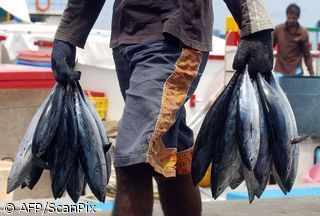 More responsibility for fishermen, rules favouring good fishing practice and adjusting fisheries management models to complement and improve the traditional quota system should be among the key aims of common fisheries policy reform, say MEPs in an own-initiative report approved by the Fisheries Committee on Wednesday.
more »
More responsibility for fishermen, rules favouring good fishing practice and adjusting fisheries management models to complement and improve the traditional quota system should be among the key aims of common fisheries policy reform, say MEPs in an own-initiative report approved by the Fisheries Committee on Wednesday.
more »
 On January 8, 2010, the Executive Board of the International Monetary Fund (IMF) concluded the Article IV consultation with Yemen.
more »
On January 8, 2010, the Executive Board of the International Monetary Fund (IMF) concluded the Article IV consultation with Yemen.
more »
 On January 22, 2010, the Executive Board of the International Monetary Fund (IMF) concluded the Article IV consultation with Norway.
more »
On January 22, 2010, the Executive Board of the International Monetary Fund (IMF) concluded the Article IV consultation with Norway.
more »
 Agriculture can help to slow climate change, but should be ready to adapt to the impact of global warming, said Agriculture Committee MEPs and scientists at a public hearing on Wednesday.
more »
Agriculture can help to slow climate change, but should be ready to adapt to the impact of global warming, said Agriculture Committee MEPs and scientists at a public hearing on Wednesday.
more »
 The Ministers for Employment of the European Union are holding an informal council on Thursday 28 and Friday 29 January which will lay the foundations for drawing up the common policies in the area of employment which the European Union will adopt over the next ten years as part of the “2020 Strategy”.
more »
The Ministers for Employment of the European Union are holding an informal council on Thursday 28 and Friday 29 January which will lay the foundations for drawing up the common policies in the area of employment which the European Union will adopt over the next ten years as part of the “2020 Strategy”.
more »