The Baltic states have announced record high unemployment rates this week, but said they expect the figures to improve during 2000.
Published:
1 February 2000 y., Tuesday
Lithuania reported a 10% unemployment rate, its highest figure since independence in 1991. Unemployment in Latvia now stands at around 9%, and 5% in Estonia. Before the collapse of the Russian market, unemployment hovered around 6% in Lithuania and Latvia, and around 2% in Estonia.
Unemployment in the countryside and in industrial areas is especially severe. In the rural Akmene district, in northern Lithuania, unemployment has hit 20%, compared to a 7% jobless rate in the Lithuanian capital, Vilnius. The pro-West, open-market Baltic states are considered the most economically advanced nations of the former Soviet Union. After implementing tough market reforms in the early _90s, they experienced strong growth until early 1998.
But regional farmers and producers were hit hard later that year by the deepening economic crisis in neighboring Russia, which had been one of their main export markets. With falling orders, many industries laid off workers. Analysts say higher growth this year, spurred on partly by the successful reorientation of many exporters to new Western markets, should help bring jobless rates back down. Officials in all three Baltic states forecast that their economies will expand by at least 3-4 percent in 2000.
Šaltinis:
Internet
Copying, publishing, announcing any information from the News.lt portal without written permission of News.lt editorial office is prohibited.
The most popular articles
 In another move to strengthen the financial system, the Commission is proposing controls on credit rating agencies - private companies that evaluate financial risks for investors.
more »
In another move to strengthen the financial system, the Commission is proposing controls on credit rating agencies - private companies that evaluate financial risks for investors.
more »
 Monday 10 November saw a large report land on the desk of MEPs in the Budgetary Control Committee.
more »
Monday 10 November saw a large report land on the desk of MEPs in the Budgetary Control Committee.
more »
 EU wants G20 meeting to pave the way for reform of the international financial system.
more »
EU wants G20 meeting to pave the way for reform of the international financial system.
more »
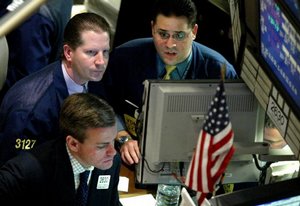 New Yorkers reflect on the election of Barack Obama as the 44th President of the United States.
more »
New Yorkers reflect on the election of Barack Obama as the 44th President of the United States.
more »
 The ability of the EU's common agriculture policy (CAP) to cope with the challenges of affordable food and climate change was discussed in Brussels 3-4 November.
more »
The ability of the EU's common agriculture policy (CAP) to cope with the challenges of affordable food and climate change was discussed in Brussels 3-4 November.
more »
 European Union economic growth should be 1.4% in 2008, half what it was in 2007, and drop even more sharply in 2009 to 0.2% before recovering gradually to 1.1% in 2010 (1.2%, 0.1% and 0.9%, respectively, for the euro area).
more »
European Union economic growth should be 1.4% in 2008, half what it was in 2007, and drop even more sharply in 2009 to 0.2% before recovering gradually to 1.1% in 2010 (1.2%, 0.1% and 0.9%, respectively, for the euro area).
more »
 There are an estimated 4-8 million immigrants working illegally in the European Union.
more »
There are an estimated 4-8 million immigrants working illegally in the European Union.
more »
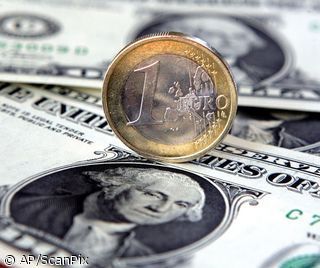 Hit by economic turmoil and the sharp global downturn, growth in the EU slows almost to a halt.
more »
Hit by economic turmoil and the sharp global downturn, growth in the EU slows almost to a halt.
more »
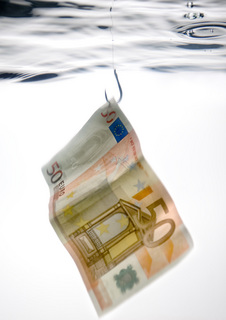 The top priority is to cushion the impact of the financial crisis on jobs, purchasing power and prosperity of EU citizens.
more »
The top priority is to cushion the impact of the financial crisis on jobs, purchasing power and prosperity of EU citizens.
more »
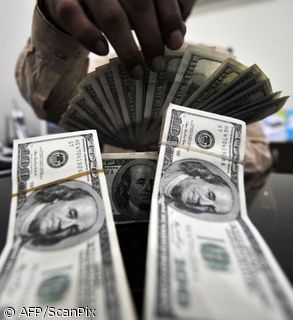 The International Monetary Fund has approved short-term financing to help emerging market economies weather the global financial storm.
more »
The International Monetary Fund has approved short-term financing to help emerging market economies weather the global financial storm.
more »