Finance Minister Csaba László met with Hungarian International Press Association journalists last week to discuss government steps taken to avoid another currency crisis
Published:
1 January 2004 y., Thursday
"In the past couple of weeks and months," László began, "it was clear that the market was becoming nervous." He explained that the main issues of economic policy had been decided in the past two to three months and that the inflation target risk was higher than it should be.
He continued that the finance ministry had "many discussions with the central bank (The Hungarian National Bank or MNB), the prime minister and government." László said that the ministry had to "initiate some measures" which had, according to the minister, the clear support of government and the MNB.
László commented that a number of savings would have to be made and was hoping to cut Ft80 billion ($369.9 million) from the national deficit next year. While the finance ministry was considering savings within government departments, László said that last year, the total value of housing loans increased by Ft700 billion ($3.25 billion) which was roughly 3-4% of GDP. He believed that this "directly affected the current account deficit".
"Tough measures" were to be introduced, László said. "We believe that Ft300 billion ($1.39 billion) less in housing loans could be drawn by the public," László commented, adding that the difference could be made up by the banking sector.
Šaltinis:
budapestsun.com
Copying, publishing, announcing any information from the News.lt portal without written permission of News.lt editorial office is prohibited.
The most popular articles
 On 11 February, heads of state or government of European Union member states will meet in Brussels to seek a commitment towards implementing a revitalised economic strategy to boost employment and growth in the EU.
more »
On 11 February, heads of state or government of European Union member states will meet in Brussels to seek a commitment towards implementing a revitalised economic strategy to boost employment and growth in the EU.
more »
 International Monetary Fund forecasts that Lithuania’s economy will grow 1.6 % this year, making it “the only one of the three Baltic economies expected to be in the positive territory in 2010”.
more »
International Monetary Fund forecasts that Lithuania’s economy will grow 1.6 % this year, making it “the only one of the three Baltic economies expected to be in the positive territory in 2010”.
more »
 Raynair announced it would open its 40th and 1st Central European base at Kaunas, Lithuania’s second largest city, in May with 2 based aircraft and 18 routes.
more »
Raynair announced it would open its 40th and 1st Central European base at Kaunas, Lithuania’s second largest city, in May with 2 based aircraft and 18 routes.
more »
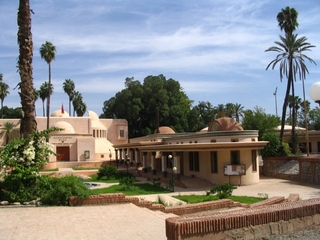 A new Partnership Strategy for Morocco has been approved by the Board of Executive Directors of the World Bank.
more »
A new Partnership Strategy for Morocco has been approved by the Board of Executive Directors of the World Bank.
more »
 The electric car is an opportunity for European industry.
more »
The electric car is an opportunity for European industry.
more »
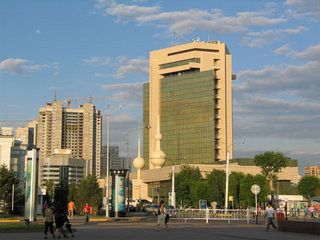 The EBRD’s Board of Directors has adopted a new strategy for Kazakhstan, which reinforces the Bank’s commitment to further support the Kazakh economy and sets out the priorities for its activities in the country over the next three years.
more »
The EBRD’s Board of Directors has adopted a new strategy for Kazakhstan, which reinforces the Bank’s commitment to further support the Kazakh economy and sets out the priorities for its activities in the country over the next three years.
more »
 The European Commission has authorised, under EU state aid rules, plans notified by Sweden to provide a guarantee that would enable Saab Automobile AB to access a loan from the European Investment Bank (EIB).
more »
The European Commission has authorised, under EU state aid rules, plans notified by Sweden to provide a guarantee that would enable Saab Automobile AB to access a loan from the European Investment Bank (EIB).
more »
 At the informal meeting of the Ministers of Competitiveness (Science and Industry), to be held between 7 and 9 February in San Sebastian, the issues on the table will include placing science at the top of the EU agenda and showcasing its role in economic recovery, as well taking the debate on the electric vehicle to EU level.
more »
At the informal meeting of the Ministers of Competitiveness (Science and Industry), to be held between 7 and 9 February in San Sebastian, the issues on the table will include placing science at the top of the EU agenda and showcasing its role in economic recovery, as well taking the debate on the electric vehicle to EU level.
more »
 The Executive Board of the International Monetary Fund (IMF) today approved a 27-month Stand-By Arrangement with Jamaica in the amount of SDR 820.5 million (about US$1.27 billion) to support the country’s economic reforms and help it cope with the consequences of the global downturn.
more »
The Executive Board of the International Monetary Fund (IMF) today approved a 27-month Stand-By Arrangement with Jamaica in the amount of SDR 820.5 million (about US$1.27 billion) to support the country’s economic reforms and help it cope with the consequences of the global downturn.
more »
 Mr. Nadeem Ilahi, chief of an International Monetary Fund (IMF) staff mission to the Kyrgyz Republic, issued the following statement today in Bishkek.
more »
Mr. Nadeem Ilahi, chief of an International Monetary Fund (IMF) staff mission to the Kyrgyz Republic, issued the following statement today in Bishkek.
more »