Finance Minister Csaba László met with Hungarian International Press Association journalists last week to discuss government steps taken to avoid another currency crisis
Published:
1 January 2004 y., Thursday
"In the past couple of weeks and months," László began, "it was clear that the market was becoming nervous." He explained that the main issues of economic policy had been decided in the past two to three months and that the inflation target risk was higher than it should be.
He continued that the finance ministry had "many discussions with the central bank (The Hungarian National Bank or MNB), the prime minister and government." László said that the ministry had to "initiate some measures" which had, according to the minister, the clear support of government and the MNB.
László commented that a number of savings would have to be made and was hoping to cut Ft80 billion ($369.9 million) from the national deficit next year. While the finance ministry was considering savings within government departments, László said that last year, the total value of housing loans increased by Ft700 billion ($3.25 billion) which was roughly 3-4% of GDP. He believed that this "directly affected the current account deficit".
"Tough measures" were to be introduced, László said. "We believe that Ft300 billion ($1.39 billion) less in housing loans could be drawn by the public," László commented, adding that the difference could be made up by the banking sector.
Šaltinis:
budapestsun.com
Copying, publishing, announcing any information from the News.lt portal without written permission of News.lt editorial office is prohibited.
The most popular articles
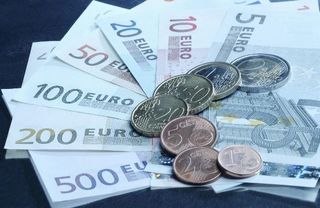 Both women and men have been hit by job losses in the downturn, says a new report adopted by the European Commission today.
more »
Both women and men have been hit by job losses in the downturn, says a new report adopted by the European Commission today.
more »
 Unemployed car and construction workers in Sweden, Austria, and the Netherlands will get €15.9 million in EU Globalisation Adjustment Fund aid for training, self-employment and professional orientation services under a plan endorsed by Parliament in plenary on Wednesday.
more »
Unemployed car and construction workers in Sweden, Austria, and the Netherlands will get €15.9 million in EU Globalisation Adjustment Fund aid for training, self-employment and professional orientation services under a plan endorsed by Parliament in plenary on Wednesday.
more »
 As the economy recovers, EU countries will need to phase out crisis measures. The question is when?
more »
As the economy recovers, EU countries will need to phase out crisis measures. The question is when?
more »
 The European Commission has endorsed, under EU state aid rules, a Polish scheme intended to compensate the Polish Post for net losses incurred in discharging its public service obligations between 2006 and 2011.
more »
The European Commission has endorsed, under EU state aid rules, a Polish scheme intended to compensate the Polish Post for net losses incurred in discharging its public service obligations between 2006 and 2011.
more »
 The European Commission reports good progress in the implementation of the Small Business Act (SBA) in 2009.
more »
The European Commission reports good progress in the implementation of the Small Business Act (SBA) in 2009.
more »
 The European Commission approved the first financing decisions in favour of eleven African and two Caribbean countries for a total of € 230 million, including € 215 million under the so-called Vulnerability FLEX mechanism (V-FLEX).
more »
The European Commission approved the first financing decisions in favour of eleven African and two Caribbean countries for a total of € 230 million, including € 215 million under the so-called Vulnerability FLEX mechanism (V-FLEX).
more »
 Legal measures to make it easier for people who have lost or risk losing their jobs to get credit to start up their own businesses were backed by the European Parliament on Tuesday.
more »
Legal measures to make it easier for people who have lost or risk losing their jobs to get credit to start up their own businesses were backed by the European Parliament on Tuesday.
more »
 How can companies and industry help to stop climate change? This is one of the questions on the table when Sweden’s Minister for Enterprise and Energy Maud Olofsson attends the climate change conference in Copenhagen on Monday and participates in a panel discussion organised by Businesseurope.
more »
How can companies and industry help to stop climate change? This is one of the questions on the table when Sweden’s Minister for Enterprise and Energy Maud Olofsson attends the climate change conference in Copenhagen on Monday and participates in a panel discussion organised by Businesseurope.
more »
 In a meeting held today in Brussels, the Gas Coordination Group, under the chairmanship of the Commission, has discussed with Russian Gas Company Gazprom the gas supply and demand outlook and investment strategy of the company in both Russia and the EU.
more »
In a meeting held today in Brussels, the Gas Coordination Group, under the chairmanship of the Commission, has discussed with Russian Gas Company Gazprom the gas supply and demand outlook and investment strategy of the company in both Russia and the EU.
more »
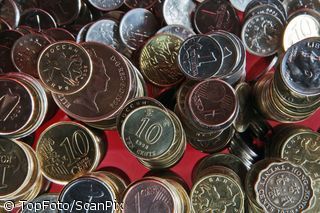 The European Commission has approved under EU state aid rules the impaired asset relief measure and the restructuring plan of Royal Bank of Scotland (RBS).
more »
The European Commission has approved under EU state aid rules the impaired asset relief measure and the restructuring plan of Royal Bank of Scotland (RBS).
more »