If you_re looking to cash in on the Web, start thinking about privacy for your customers.
Published:
14 November 1999 y., Sunday
Customers are demanding their e-business vendors proactively shape procedures to protect their privacy during online shopping. That_s what a recently released IBM Multi-National Consumer Privacy Study indicates. IBM this week posted some of the findings of the 300-hundred page report on its Web site. Big Blue says its survey, conducted by Internet marketing research firm Harris Interactive, measured consumer attitudes towards privacy for day to day business transactions. IBM's study of 3,000 consumers in the U.S., the U.K. and Germany revealed a "universal" interest in keeping personal information confidential. In turn, those online companies that provide sound privacy policies are going to have the edge in online commerce over those companies that don_t. Among the more interesting claims is one that Internet consumers who typically have a higher level of education and more disposable income than regular consumers, as well as some high-tech know-how, are more likely to be concerned about privacy and will be defensive about releasing personal data. Some of the other findings:
*Almost half the U.S and the U.K. respondents want their e-commerce vendors to post a privacy statement on their Web sites. This statement would define explicitly how any information gathered, be it names, item purchased or money spent - is used. Sixty-three percent of the Internet respondents say they refused to give information to a Web site when there was no policy and they feared personal information would be vulnerable.
*Forty percent of the Web users polled say they decided not buy something because of privacy fears.
*Internet businesses were less trusted than traditional ones to protect confidential data.
*Consumers want a privacy policy in place online, despite whatever the law of their particular country demands for e-commerce.
Moreover, IBM is conducting another survey of executives in the health care, financial services, insurance and retail industries. The preliminary data indicates that customers have less confidence that their privacy is being protected than executives in these industries realize, IBM says. Additionally, these executives underestimate just how far online consumers will go to protect their privacy. IBM has been one of the more vocal proponents of strict privacy policies. The company has posted a privacy policy statement on its Web site that states the company won_t use any information collected from the customer without the customer_s consent. Typically, IBMwould take the data and share it with its business partners to help improve services or to gather warranty information.
Copying, publishing, announcing any information from the News.lt portal without written permission of News.lt editorial office is prohibited.
The most popular articles
 During the meeting, which took place on 3 September 2009 the Bank of Lithuania approved the transaction, according to which AB Bank SNORAS will acquire 100 percent of the shares of AB “Finasta įmonių finansai” owning AB bank “Finasta”.
more »
During the meeting, which took place on 3 September 2009 the Bank of Lithuania approved the transaction, according to which AB Bank SNORAS will acquire 100 percent of the shares of AB “Finasta įmonių finansai” owning AB bank “Finasta”.
more »
 The European Commission tabled yesterday its proposal on fishing possibilities for fish stocks in the Baltic Sea for 2010.
more »
The European Commission tabled yesterday its proposal on fishing possibilities for fish stocks in the Baltic Sea for 2010.
more »
 Members of the Civil Liberties Committee voiced concern on Thursday over the interim agreement under negotiation between the EU and the United States on data transfers via the SWIFT network.
more »
Members of the Civil Liberties Committee voiced concern on Thursday over the interim agreement under negotiation between the EU and the United States on data transfers via the SWIFT network.
more »
 Consumers in Cyprus, the Czech Republic, Hungary, Poland, Romania and Slovenia now have access to consumer magazines and websites, which provide independent, comparative testing of consumer products, following a three-year EU project co-financed by the European Commission.
more »
Consumers in Cyprus, the Czech Republic, Hungary, Poland, Romania and Slovenia now have access to consumer magazines and websites, which provide independent, comparative testing of consumer products, following a three-year EU project co-financed by the European Commission.
more »
 Funds management company “SNORAS Asset Management” will establish the first alternative investment fund in Lithuania - “SAM Renewable Energy Fund”.
more »
Funds management company “SNORAS Asset Management” will establish the first alternative investment fund in Lithuania - “SAM Renewable Energy Fund”.
more »
 The re-launched Lisbon Partnership for growth and jobs has put innovation and entrepreneurship at the centre and called for decisive and more coherent action by the Community and the Member States in view of mastering the shift towards knowledge based low carbon economy.
more »
The re-launched Lisbon Partnership for growth and jobs has put innovation and entrepreneurship at the centre and called for decisive and more coherent action by the Community and the Member States in view of mastering the shift towards knowledge based low carbon economy.
more »
 Helping dairy farmers now, as well as restructuring the dairy sector in the long run, is the way out of the current milk market crisis, Agriculture Committee MEPs told Agriculture Commissioner Mariann Fischer Boel in a debate on Tuesday.
more »
Helping dairy farmers now, as well as restructuring the dairy sector in the long run, is the way out of the current milk market crisis, Agriculture Committee MEPs told Agriculture Commissioner Mariann Fischer Boel in a debate on Tuesday.
more »
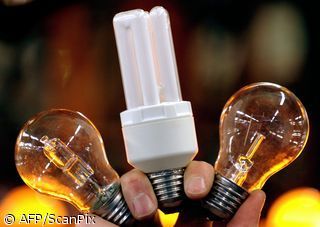 The EU is phasing out traditional light bulbs over the next three years in favour of a new generation of energy-efficient lighting.
more »
The EU is phasing out traditional light bulbs over the next three years in favour of a new generation of energy-efficient lighting.
more »
 Lithuania increases the VAT rate from 19 % to 21 % from September 1, 2009.
more »
Lithuania increases the VAT rate from 19 % to 21 % from September 1, 2009.
more »
 Two recent joint missions from three development finance institutions helped Thailand identify low carbon projects that could be eligible for Clean Technology Fund financing.
more »
Two recent joint missions from three development finance institutions helped Thailand identify low carbon projects that could be eligible for Clean Technology Fund financing.
more »