The recent improvement in some statistical indicators does not necessarily mean that the Polish economy is recovering
Published:
1 March 2003 y., Saturday
The search for signs of recovery in the economy is like looking for signs of spring after a long, cold winter. Optimists welcome good figures in Polish exports despite unfavorable trends in Germany, Poland's main commercial partner. Domestic demand is less encouraging.
Pessimists note that even though industrial production has been growing from one month to the next, its rate of growth in January, 4.2 percent in year-on-year terms, was slower than in December 2002. Inflation, on the other hand, dropped in January to a record low of 0.4 percent, against 3.4 percent in January 2002 and more than 7 percent in January 2001. Some analysts fear deflation, or a general reduction in the prices of goods and services, accompanied by reduced production and higher unemployment due to a decreased influx of money into the economy.
That fact that inflation has been kept in check fuels expectations that, at its next monthly meeting, the Monetary Policy Council (RPP) will cut interest rates still further. However, despite calculations by those supporting radical rate cuts and hoping that this could boost economic growth, the first tangible results of rate cuts-in the form of concrete investment decisions made by entrepreneurs-may only be visible after several months at the earliest. In their day-to-day operations, investors are especially plagued by high taxes and bureaucracy.
Šaltinis:
warsawvoice.pl
Copying, publishing, announcing any information from the News.lt portal without written permission of News.lt editorial office is prohibited.
The most popular articles
 In European sustainable energy week 2010, new EU energy commissioner presents strategy to reduce Europe’s dependence on fossil fuel.
more »
In European sustainable energy week 2010, new EU energy commissioner presents strategy to reduce Europe’s dependence on fossil fuel.
more »
 The EBRD is launching a Project Complaint Mechanism, which is expected to enhance the accountability and transparency of the Bank’s operations.
more »
The EBRD is launching a Project Complaint Mechanism, which is expected to enhance the accountability and transparency of the Bank’s operations.
more »
 The EBRD is boosting the availability of local currency financing in Armenia with a synthetic loan in Armenian Drams (AMD) worth $4 million to FINCA UCO CJSC for on-lending to local micro and small enterprises (MSEs).
more »
The EBRD is boosting the availability of local currency financing in Armenia with a synthetic loan in Armenian Drams (AMD) worth $4 million to FINCA UCO CJSC for on-lending to local micro and small enterprises (MSEs).
more »
 This year is the UN year of biodiversity and it brings endangered species into the spotlight.
more »
This year is the UN year of biodiversity and it brings endangered species into the spotlight.
more »
 The World Bank Board of Directors today approved a US$65 million project to support the recovery of Haiti’s critical infrastructure as well as the reestablishment of basic State functions following the devastating 7.0 magnitude earthquake on January 12, 2010.
more »
The World Bank Board of Directors today approved a US$65 million project to support the recovery of Haiti’s critical infrastructure as well as the reestablishment of basic State functions following the devastating 7.0 magnitude earthquake on January 12, 2010.
more »
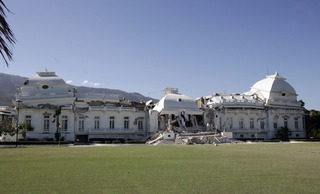 Haiti’s arduous reconstruction and recovery process jolted forward today following fresh commitments to help the Caribbean nation rebuild in the wake of its devastating January 12 earthquake.
more »
Haiti’s arduous reconstruction and recovery process jolted forward today following fresh commitments to help the Caribbean nation rebuild in the wake of its devastating January 12 earthquake.
more »
 A mission from the African Department of the International Monetary Fund (IMF) visited Uganda during March 4-17, 2010, to conduct the seventh and final review under Uganda’s Policy Support Instrument (PSI) and reach understandings on a policy framework for a new three-year PSI to cover the period 2010 to 2013.
more »
A mission from the African Department of the International Monetary Fund (IMF) visited Uganda during March 4-17, 2010, to conduct the seventh and final review under Uganda’s Policy Support Instrument (PSI) and reach understandings on a policy framework for a new three-year PSI to cover the period 2010 to 2013.
more »
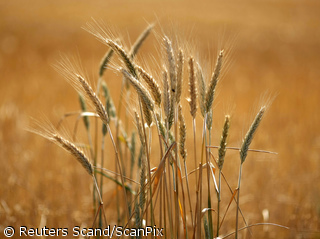 The European Economic and Social Committee (EESC), as the first EU institution, rose to the challenge of providing a comprehensive vision for the future of the Common Agriculture Policy (CAP), in advance of the European Commission's papers on the matter, due to be issued later this year and in 2011.
more »
The European Economic and Social Committee (EESC), as the first EU institution, rose to the challenge of providing a comprehensive vision for the future of the Common Agriculture Policy (CAP), in advance of the European Commission's papers on the matter, due to be issued later this year and in 2011.
more »
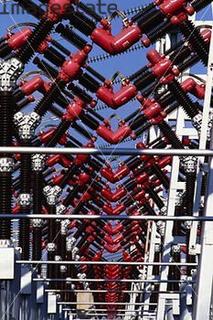 The outlook for primary energy supplies, heat, and electricity is questionable for the Eastern Europe and Central Asia region, despite Russia and Central Asia’s current role as a major energy supplier to both Eastern and Western Europe.
more »
The outlook for primary energy supplies, heat, and electricity is questionable for the Eastern Europe and Central Asia region, despite Russia and Central Asia’s current role as a major energy supplier to both Eastern and Western Europe.
more »
 The Executive Board of the International Monetary Fund (IMF) today approved a 36-month, SDR 513.9 million (about US$790 million) Stand-By Arrangement (SBA) for El Salvador to help the country mitigate the adverse effects of the global crisis.
more »
The Executive Board of the International Monetary Fund (IMF) today approved a 36-month, SDR 513.9 million (about US$790 million) Stand-By Arrangement (SBA) for El Salvador to help the country mitigate the adverse effects of the global crisis.
more »