Motorola has notified customers of Iridium, the financially troubled satellite telephone system it bankrolled, that service would end March 17 unless a buyer for Iridium comes forward.
Published:
16 March 2000 y., Thursday
In a letter sent last week to customers who bought Iridium phones directly from Motorola, the Schaumburg, Ill.-based telecommunications company said it would continue support for Iridium until March 17, when Iridium_s last-ditch financing runs out. Motorola was the primary backer of Iridium and owns a
stake in the company, which filed for Chapter 11 bankruptcy protection last August. "Unless a qualified buyer comes forward and provides additional funding by March 15, 2000, we do not expect Iridium service to be available after 11:59 p.m. EST on March 17, 2000," Motorola_s cellular service division said in the letter dated March 6. If Iridium does not find a buyer in time, it will dismantle the satellite system, leaving Iridium subscribers with useless phones. Motorola said the phones would not work with other satellite telephone systems. Iridium, which allows customers to make phone calls from anywhere in the world via a network of orbiting satellites, struggled to sign up subscribers to its pricey service. Critics said the phones, which cost as much as $3,000, were too bulky and required a separate antenna for use indoors or in cars.
Copying, publishing, announcing any information from the News.lt portal without written permission of News.lt editorial office is prohibited.
The most popular articles
 The EU needs a strategy by 2011 to encourage the creation of green jobs, says a draft resolution by the Employment and Social Affairs Committee that was adopted on Wednesday.
more »
The EU needs a strategy by 2011 to encourage the creation of green jobs, says a draft resolution by the Employment and Social Affairs Committee that was adopted on Wednesday.
more »
 Householders should not have to go without gas due to a gas-supply crisis, and such crises should be better managed, thanks to EU-wide co-ordination procedures and interconnection requirements laid down in draft legislation agreed informally with the Council at the end of June and approved by the Industry Committee on Tuesday.
more »
Householders should not have to go without gas due to a gas-supply crisis, and such crises should be better managed, thanks to EU-wide co-ordination procedures and interconnection requirements laid down in draft legislation agreed informally with the Council at the end of June and approved by the Industry Committee on Tuesday.
more »
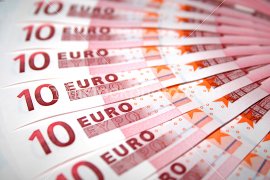 Today the Council has taken the formal decision which will pave the way for the introduction of the euro in Estonia as of 1 January 2011 and will become the 17th European Union country to share the euro currency.
more »
Today the Council has taken the formal decision which will pave the way for the introduction of the euro in Estonia as of 1 January 2011 and will become the 17th European Union country to share the euro currency.
more »
 Proposals to improve protection for bank account holders and retail investors, and set up similar schemes for insurance policies.
more »
Proposals to improve protection for bank account holders and retail investors, and set up similar schemes for insurance policies.
more »
 How should the EU's farm policy be reshaped and how should it be funded after 2013?
more »
How should the EU's farm policy be reshaped and how should it be funded after 2013?
more »
 MEPs on Wednesday approved some of the strictest rules in the world on bankers' bonuses.
more »
MEPs on Wednesday approved some of the strictest rules in the world on bankers' bonuses.
more »
 Long before the financial crisis the European Parliament regularly pointed out the significant failures in the EU’s supervision of ever more integrated financial markets.
more »
Long before the financial crisis the European Parliament regularly pointed out the significant failures in the EU’s supervision of ever more integrated financial markets.
more »
 New strategy for stimulating tourism in Europe – to realise the full potential of an industry that already plays an important role in the economy.
more »
New strategy for stimulating tourism in Europe – to realise the full potential of an industry that already plays an important role in the economy.
more »
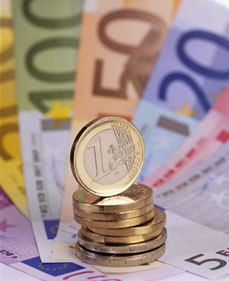 The European Commission has disclosed who in 2009 received EU funds in policy areas like research, education and culture, energy and transport or external aid.
more »
The European Commission has disclosed who in 2009 received EU funds in policy areas like research, education and culture, energy and transport or external aid.
more »
The European Commission has approved 19 programmes in 14 Member States (Austria, Belgium, Czech Republic, Denmark, Germany, France, Greece, Italy, Ireland, the Netherlands, Poland, Slovenia, Spain and the United Kingdom) to provide information on and to promote agricultural products in the European Union.
more »