The starring role in European most exciting financial theatrics.
Published:
5 April 1999 y., Monday
Ruggiero Magnoni, the 48-year-old co-head of European corporate finance at Lehman Brothers Inc.,
has been preparing all his life for his current starring role in some of Europe_s most exciting financial
theatrics. Born in Barcelona but bred in Milan, Magnoni got an MBA at Columbia University and in the mid- _70s joined the old Wall Street firm of Kuhn Loeb. During those years of political violence in Italy, New York seemed a good bet. Shortly after he signed on, Kuhn Loeb was snapped up by Lehman Brothers, and Magnoni rose to be head of international private placements. In the early 1980s, that meant Japan. Magnoni was soon taking the red-eye to Tokyo as often as once a week to help guide the flow of Japanese investment into U.S. real estate and equities. But by the mid-1980s, Europe was starting to stir. Lehman had become part of the American Express Co.-owned Shearson Lehman empire, and AmEx_ James D. Robinson III and Shearson_s Peter Cohen presciently chose Italy, with its backward business culture but high savings rate, as a place of potential. Magnoni took on Italian operations, based in Milan. Italy was soon booming, and Magnoni was cutting deals with magnates such as Carlo De Benedetti, in whose varied businesses Shearson ultimately invested more than $100 million. Magnoni is one of the only people in the world to have worked with both De Benedetti and his bitter political and business rival, media mogul-turned-politician Silvio Berlusconi. In 1995, Magnoni
structured the $1 billion deal that allowed Berlusconi to take his media group Mediaset public, a move
that smoothed the magnate_s push into politics.
Šaltinis:
Businessweek
Copying, publishing, announcing any information from the News.lt portal without written permission of News.lt editorial office is prohibited.
The most popular articles
 On 11 February, heads of state or government of European Union member states will meet in Brussels to seek a commitment towards implementing a revitalised economic strategy to boost employment and growth in the EU.
more »
On 11 February, heads of state or government of European Union member states will meet in Brussels to seek a commitment towards implementing a revitalised economic strategy to boost employment and growth in the EU.
more »
 International Monetary Fund forecasts that Lithuania’s economy will grow 1.6 % this year, making it “the only one of the three Baltic economies expected to be in the positive territory in 2010”.
more »
International Monetary Fund forecasts that Lithuania’s economy will grow 1.6 % this year, making it “the only one of the three Baltic economies expected to be in the positive territory in 2010”.
more »
 Raynair announced it would open its 40th and 1st Central European base at Kaunas, Lithuania’s second largest city, in May with 2 based aircraft and 18 routes.
more »
Raynair announced it would open its 40th and 1st Central European base at Kaunas, Lithuania’s second largest city, in May with 2 based aircraft and 18 routes.
more »
 A new Partnership Strategy for Morocco has been approved by the Board of Executive Directors of the World Bank.
more »
A new Partnership Strategy for Morocco has been approved by the Board of Executive Directors of the World Bank.
more »
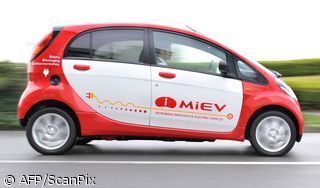 The electric car is an opportunity for European industry.
more »
The electric car is an opportunity for European industry.
more »
 The EBRD’s Board of Directors has adopted a new strategy for Kazakhstan, which reinforces the Bank’s commitment to further support the Kazakh economy and sets out the priorities for its activities in the country over the next three years.
more »
The EBRD’s Board of Directors has adopted a new strategy for Kazakhstan, which reinforces the Bank’s commitment to further support the Kazakh economy and sets out the priorities for its activities in the country over the next three years.
more »
 The European Commission has authorised, under EU state aid rules, plans notified by Sweden to provide a guarantee that would enable Saab Automobile AB to access a loan from the European Investment Bank (EIB).
more »
The European Commission has authorised, under EU state aid rules, plans notified by Sweden to provide a guarantee that would enable Saab Automobile AB to access a loan from the European Investment Bank (EIB).
more »
 At the informal meeting of the Ministers of Competitiveness (Science and Industry), to be held between 7 and 9 February in San Sebastian, the issues on the table will include placing science at the top of the EU agenda and showcasing its role in economic recovery, as well taking the debate on the electric vehicle to EU level.
more »
At the informal meeting of the Ministers of Competitiveness (Science and Industry), to be held between 7 and 9 February in San Sebastian, the issues on the table will include placing science at the top of the EU agenda and showcasing its role in economic recovery, as well taking the debate on the electric vehicle to EU level.
more »
 The Executive Board of the International Monetary Fund (IMF) today approved a 27-month Stand-By Arrangement with Jamaica in the amount of SDR 820.5 million (about US$1.27 billion) to support the country’s economic reforms and help it cope with the consequences of the global downturn.
more »
The Executive Board of the International Monetary Fund (IMF) today approved a 27-month Stand-By Arrangement with Jamaica in the amount of SDR 820.5 million (about US$1.27 billion) to support the country’s economic reforms and help it cope with the consequences of the global downturn.
more »
 Mr. Nadeem Ilahi, chief of an International Monetary Fund (IMF) staff mission to the Kyrgyz Republic, issued the following statement today in Bishkek.
more »
Mr. Nadeem Ilahi, chief of an International Monetary Fund (IMF) staff mission to the Kyrgyz Republic, issued the following statement today in Bishkek.
more »