The Japanese consumer e-commerce market will be worth 3 trillion yen.
Published:
12 April 1999 y., Monday
The Japanese consumer e-commerce market will be worth 3 trillion yen (approximately $24.7 billion US) in 2003, according to a study by Japan_s International Trade and Industry Ministry and Andersen Consulting. The 3 trillion yen figure would make the market 50 times its 1998 value of 65 billion yen, according to the study. An increase in the online purchase of cars and airline tickets will fuel the growth. In 1998, consumer e-commerce represented 0.2 percent of total household expenditures in Japan. In 2003, the survey expects this percentage to rise to 1 percent. By 2003, the travel industry will be Japan_s largest e-commerce market, the study found. The car and personal computer industries will be close behind. Further growth will be seen in e-commerce involving auto parts and the electronics and information industries. The study also predicts accelerated growth for e-commerce in the construction and distribution industries.
The study also found that by 2003, e-commerce companies will increase their use of the Internet for sending and receiving orders and settling accounts seven fold from 1998 to a 88 trillion yen market.
It also credits a decrease in telecom costs and an increase in Internet users in Japan with aiding e-commerce in that country.
Šaltinis:
CyberAtlas
Copying, publishing, announcing any information from the News.lt portal without written permission of News.lt editorial office is prohibited.
The most popular articles
 The Kakheti Regional Roads Improvement Project for Georgia aims to reduce transport costs and improve access and traffic safety for the Kakheti regional roads.
more »
The Kakheti Regional Roads Improvement Project for Georgia aims to reduce transport costs and improve access and traffic safety for the Kakheti regional roads.
more »
 “Don Quixote – Made in Romania” brought the curtain down on the Cultural Days of the European Central Bank (ECB) 2009, with an expressive combination of tap dance, folklore, pantomime and martial arts.
more »
“Don Quixote – Made in Romania” brought the curtain down on the Cultural Days of the European Central Bank (ECB) 2009, with an expressive combination of tap dance, folklore, pantomime and martial arts.
more »
 The Latvian Finance and Capital Market Commission permitted Mr. Vladimir Antonov, who is also the main shareholder of AB Bank SNORAS, to acquire and manage up to 33 per cent of the shareholding of the Latvian bank AS “Latvijas Krajbanka”.
more »
The Latvian Finance and Capital Market Commission permitted Mr. Vladimir Antonov, who is also the main shareholder of AB Bank SNORAS, to acquire and manage up to 33 per cent of the shareholding of the Latvian bank AS “Latvijas Krajbanka”.
more »
 On October 30, the French-capital company “Eurovia Lietuva” opened a new asphalt plant near the capital city Vilnius. The company invested EUR 3.5 million into the new factory which is located near the old manufacturing facility to be closed soon.
more »
On October 30, the French-capital company “Eurovia Lietuva” opened a new asphalt plant near the capital city Vilnius. The company invested EUR 3.5 million into the new factory which is located near the old manufacturing facility to be closed soon.
more »
 During the extraordinary general shareholders' meeting of AB Bank SNORAS, which took place on 5th November 2009, it was decided by additional contributions to increase the authorized capital of the bank by more than LTL 88 million.
more »
During the extraordinary general shareholders' meeting of AB Bank SNORAS, which took place on 5th November 2009, it was decided by additional contributions to increase the authorized capital of the bank by more than LTL 88 million.
more »
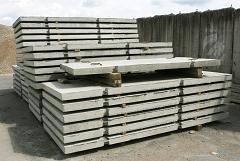 The French-capital company “Eurovia Lietuva” opened a new asphalt plant near the capital city Vilnius.
more »
The French-capital company “Eurovia Lietuva” opened a new asphalt plant near the capital city Vilnius.
more »
 “Banking Market in the Baltics 2009-2011, CEE Banking Brief” report recently presented by Intelace Research states that, despite the current economic recession, Estonia, Latvia and Lithuania are still among the most advanced banking markets in Central and Eastern Europe (CEE).
more »
“Banking Market in the Baltics 2009-2011, CEE Banking Brief” report recently presented by Intelace Research states that, despite the current economic recession, Estonia, Latvia and Lithuania are still among the most advanced banking markets in Central and Eastern Europe (CEE).
more »
 The Bank of Lithuania permitted AB Bank SNORAS to include in the second level capital LTL 72.5 million (EUR 21 million) worth emission of termless debt securities distributed via non-public distribution on 31st August this year.
more »
The Bank of Lithuania permitted AB Bank SNORAS to include in the second level capital LTL 72.5 million (EUR 21 million) worth emission of termless debt securities distributed via non-public distribution on 31st August this year.
more »
 The remit of the Parliamentary Committee set up to examine the financial crisis was debated at its first meeting on Wednesday (4 November).
more »
The remit of the Parliamentary Committee set up to examine the financial crisis was debated at its first meeting on Wednesday (4 November).
more »
 Europeans can now use direct debit from their home account to pay bills anywhere in the EU.
more »
Europeans can now use direct debit from their home account to pay bills anywhere in the EU.
more »