Kazakhstan's Prime Minister Kasymzhomart Tokaev tried to assure foreign investors last week that their assets will not be nationalized under a new law.
Published:
13 June 2001 y., Wednesday
But business fears are growing following a report that a commission may review past contracts. Concern is rising over political pressures on investors in Kazakhstan as the country pushes ahead with a series of changes in its laws.
On 8 June, Prime Minister Kasymzhomart Tokaev sought to reassure foreign companies that their holdings will not be taken over as the result of a new investment statute.
Tokaev's comment may calm some of the fears over the draft law, which is set to replace Kazakhstan's 1994 investment code at the start of next year. But it may also be seen as a measure of how far the worries have spread through the business community.The new law would end preferential tax breaks for foreign ventures, while making it easier to nationalize their assets. It would also make it harder to take disputes to international arbitration.
The concerns were compounded in recent days when the Kazakhstan Press agency reported that a new special commission on subsurface development could review past agreements "with an eye on canceling those contracts deemed 'disadvantageous' for Kazakhstan." The report was relayed by the BISNIS commercial service of the U.S. Commerce Department last week.The outcome could have huge importance both for business and Kazakhstan, which has attracted some $13 billion in foreign investment in the past decade. The country has been a center for energy development with two of the world's biggest discoveries at the Tengiz and Kashagan oil fields.
It is unclear whether any actions will be taken against foreign investors, but the new law and the commission could give President Nursultan Nazarbaev the tools to act if he chooses to do so. Industry analysts say that apprehension is running high, but foreign companies are reluctant to speak out for fear of making matters worse.
Šaltinis:
caspian.ru
Copying, publishing, announcing any information from the News.lt portal without written permission of News.lt editorial office is prohibited.
The most popular articles
 New legislation for pan-European supervision of credit rating agencies and a public debate on how financial institutions are managed.
more »
New legislation for pan-European supervision of credit rating agencies and a public debate on how financial institutions are managed.
more »
 On 2 June in Vilnius, Lithuania‘s Vice-Minister of Foreign Affairs Asta Skaisgirytė Liauškienė and Deputy Director General of the World Trade Organization Rufus H. Yerxa discussed the main issues on the international trade policy agenda, Russia‘s WTO accession and the changing role of China in the world economy.
more »
On 2 June in Vilnius, Lithuania‘s Vice-Minister of Foreign Affairs Asta Skaisgirytė Liauškienė and Deputy Director General of the World Trade Organization Rufus H. Yerxa discussed the main issues on the international trade policy agenda, Russia‘s WTO accession and the changing role of China in the world economy.
more »
 2157 former construction workers in Spain and 598 ex-employees at the Irish crystal glass company Waterford Crystal with suppliers could get €11 million in EU globalisation adjustment fund aid for training, self-employment and professional orientation under plans approved by the Budgets Committee on Wednesday.
more »
2157 former construction workers in Spain and 598 ex-employees at the Irish crystal glass company Waterford Crystal with suppliers could get €11 million in EU globalisation adjustment fund aid for training, self-employment and professional orientation under plans approved by the Budgets Committee on Wednesday.
more »
 Companies from the UK, Belgium, Germany and Spain have won the 2010 European Business Awards for the Environment.
more »
Companies from the UK, Belgium, Germany and Spain have won the 2010 European Business Awards for the Environment.
more »
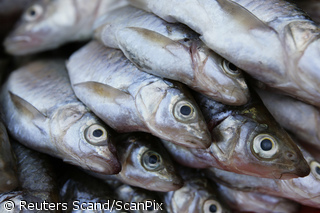 The planned overhaul of EU fisheries policy should devolve more powers to regions, protect small coastal fleets and boost aquaculture, said MEPs and members of national parliaments on Tuesday.
more »
The planned overhaul of EU fisheries policy should devolve more powers to regions, protect small coastal fleets and boost aquaculture, said MEPs and members of national parliaments on Tuesday.
more »
 The first in a series of loan agreements for energy efficiency investments in multi-apartment buildings was signed today between the European Investment Bank (EIB), as manager of the JESSICA holding fund in Lithuania, and Šiaulių bankas.
more »
The first in a series of loan agreements for energy efficiency investments in multi-apartment buildings was signed today between the European Investment Bank (EIB), as manager of the JESSICA holding fund in Lithuania, and Šiaulių bankas.
more »
 Despite the current economic crisis and tensions in the euro, Estonia is set to adopt the single currency in January.
more »
Despite the current economic crisis and tensions in the euro, Estonia is set to adopt the single currency in January.
more »
 Commission proposes a bank tax to cover the costs of winding down banks that go bust.
more »
Commission proposes a bank tax to cover the costs of winding down banks that go bust.
more »
The European Investment Bank will provide a total of EUR 400 million to Hellenic Petroleum SA in order to increase the production of cleaner fuels via the upgrading of the Elefsina refinery.
more »
 European ministers meet on Tuesday and Wednesday in Brussels at the final Competitiveness Council to be held during the six months of the Spanish Presidency, which has an agenda laden with important issues such as the electric vehicle, the European patent system and national R+D investment goals.
more »
European ministers meet on Tuesday and Wednesday in Brussels at the final Competitiveness Council to be held during the six months of the Spanish Presidency, which has an agenda laden with important issues such as the electric vehicle, the European patent system and national R+D investment goals.
more »