Kazakhstan's Prime Minister Kasymzhomart Tokaev tried to assure foreign investors last week that their assets will not be nationalized under a new law.
Published:
13 June 2001 y., Wednesday
But business fears are growing following a report that a commission may review past contracts. Concern is rising over political pressures on investors in Kazakhstan as the country pushes ahead with a series of changes in its laws.
On 8 June, Prime Minister Kasymzhomart Tokaev sought to reassure foreign companies that their holdings will not be taken over as the result of a new investment statute.
Tokaev's comment may calm some of the fears over the draft law, which is set to replace Kazakhstan's 1994 investment code at the start of next year. But it may also be seen as a measure of how far the worries have spread through the business community.The new law would end preferential tax breaks for foreign ventures, while making it easier to nationalize their assets. It would also make it harder to take disputes to international arbitration.
The concerns were compounded in recent days when the Kazakhstan Press agency reported that a new special commission on subsurface development could review past agreements "with an eye on canceling those contracts deemed 'disadvantageous' for Kazakhstan." The report was relayed by the BISNIS commercial service of the U.S. Commerce Department last week.The outcome could have huge importance both for business and Kazakhstan, which has attracted some $13 billion in foreign investment in the past decade. The country has been a center for energy development with two of the world's biggest discoveries at the Tengiz and Kashagan oil fields.
It is unclear whether any actions will be taken against foreign investors, but the new law and the commission could give President Nursultan Nazarbaev the tools to act if he chooses to do so. Industry analysts say that apprehension is running high, but foreign companies are reluctant to speak out for fear of making matters worse.
Šaltinis:
caspian.ru
Copying, publishing, announcing any information from the News.lt portal without written permission of News.lt editorial office is prohibited.
The most popular articles
 In European sustainable energy week 2010, new EU energy commissioner presents strategy to reduce Europe’s dependence on fossil fuel.
more »
In European sustainable energy week 2010, new EU energy commissioner presents strategy to reduce Europe’s dependence on fossil fuel.
more »
 The EBRD is launching a Project Complaint Mechanism, which is expected to enhance the accountability and transparency of the Bank’s operations.
more »
The EBRD is launching a Project Complaint Mechanism, which is expected to enhance the accountability and transparency of the Bank’s operations.
more »
 The EBRD is boosting the availability of local currency financing in Armenia with a synthetic loan in Armenian Drams (AMD) worth $4 million to FINCA UCO CJSC for on-lending to local micro and small enterprises (MSEs).
more »
The EBRD is boosting the availability of local currency financing in Armenia with a synthetic loan in Armenian Drams (AMD) worth $4 million to FINCA UCO CJSC for on-lending to local micro and small enterprises (MSEs).
more »
 This year is the UN year of biodiversity and it brings endangered species into the spotlight.
more »
This year is the UN year of biodiversity and it brings endangered species into the spotlight.
more »
 The World Bank Board of Directors today approved a US$65 million project to support the recovery of Haiti’s critical infrastructure as well as the reestablishment of basic State functions following the devastating 7.0 magnitude earthquake on January 12, 2010.
more »
The World Bank Board of Directors today approved a US$65 million project to support the recovery of Haiti’s critical infrastructure as well as the reestablishment of basic State functions following the devastating 7.0 magnitude earthquake on January 12, 2010.
more »
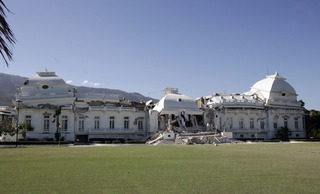 Haiti’s arduous reconstruction and recovery process jolted forward today following fresh commitments to help the Caribbean nation rebuild in the wake of its devastating January 12 earthquake.
more »
Haiti’s arduous reconstruction and recovery process jolted forward today following fresh commitments to help the Caribbean nation rebuild in the wake of its devastating January 12 earthquake.
more »
 A mission from the African Department of the International Monetary Fund (IMF) visited Uganda during March 4-17, 2010, to conduct the seventh and final review under Uganda’s Policy Support Instrument (PSI) and reach understandings on a policy framework for a new three-year PSI to cover the period 2010 to 2013.
more »
A mission from the African Department of the International Monetary Fund (IMF) visited Uganda during March 4-17, 2010, to conduct the seventh and final review under Uganda’s Policy Support Instrument (PSI) and reach understandings on a policy framework for a new three-year PSI to cover the period 2010 to 2013.
more »
 The European Economic and Social Committee (EESC), as the first EU institution, rose to the challenge of providing a comprehensive vision for the future of the Common Agriculture Policy (CAP), in advance of the European Commission's papers on the matter, due to be issued later this year and in 2011.
more »
The European Economic and Social Committee (EESC), as the first EU institution, rose to the challenge of providing a comprehensive vision for the future of the Common Agriculture Policy (CAP), in advance of the European Commission's papers on the matter, due to be issued later this year and in 2011.
more »
 The outlook for primary energy supplies, heat, and electricity is questionable for the Eastern Europe and Central Asia region, despite Russia and Central Asia’s current role as a major energy supplier to both Eastern and Western Europe.
more »
The outlook for primary energy supplies, heat, and electricity is questionable for the Eastern Europe and Central Asia region, despite Russia and Central Asia’s current role as a major energy supplier to both Eastern and Western Europe.
more »
 The Executive Board of the International Monetary Fund (IMF) today approved a 36-month, SDR 513.9 million (about US$790 million) Stand-By Arrangement (SBA) for El Salvador to help the country mitigate the adverse effects of the global crisis.
more »
The Executive Board of the International Monetary Fund (IMF) today approved a 36-month, SDR 513.9 million (about US$790 million) Stand-By Arrangement (SBA) for El Salvador to help the country mitigate the adverse effects of the global crisis.
more »