Kazakhstan's Prime Minister Kasymzhomart Tokaev tried to assure foreign investors last week that their assets will not be nationalized under a new law.
Published:
13 June 2001 y., Wednesday
But business fears are growing following a report that a commission may review past contracts. Concern is rising over political pressures on investors in Kazakhstan as the country pushes ahead with a series of changes in its laws.
On 8 June, Prime Minister Kasymzhomart Tokaev sought to reassure foreign companies that their holdings will not be taken over as the result of a new investment statute.
Tokaev's comment may calm some of the fears over the draft law, which is set to replace Kazakhstan's 1994 investment code at the start of next year. But it may also be seen as a measure of how far the worries have spread through the business community.The new law would end preferential tax breaks for foreign ventures, while making it easier to nationalize their assets. It would also make it harder to take disputes to international arbitration.
The concerns were compounded in recent days when the Kazakhstan Press agency reported that a new special commission on subsurface development could review past agreements "with an eye on canceling those contracts deemed 'disadvantageous' for Kazakhstan." The report was relayed by the BISNIS commercial service of the U.S. Commerce Department last week.The outcome could have huge importance both for business and Kazakhstan, which has attracted some $13 billion in foreign investment in the past decade. The country has been a center for energy development with two of the world's biggest discoveries at the Tengiz and Kashagan oil fields.
It is unclear whether any actions will be taken against foreign investors, but the new law and the commission could give President Nursultan Nazarbaev the tools to act if he chooses to do so. Industry analysts say that apprehension is running high, but foreign companies are reluctant to speak out for fear of making matters worse.
Šaltinis:
caspian.ru
Copying, publishing, announcing any information from the News.lt portal without written permission of News.lt editorial office is prohibited.
The most popular articles
 The President of the Spanish Government, José Luis Rodríguez Zapatero, will meet this Monday with the German Chancellor, Angela Merkel, to analyse the future EU economic and employment strategy EU2020 before the Twenty-seven approve its basic lines at the Spring European Council.
more »
The President of the Spanish Government, José Luis Rodríguez Zapatero, will meet this Monday with the German Chancellor, Angela Merkel, to analyse the future EU economic and employment strategy EU2020 before the Twenty-seven approve its basic lines at the Spring European Council.
more »
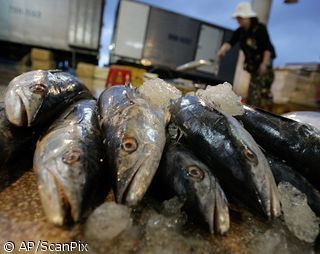 The planned overhaul of the EU common fisheries policy should take better account of the huge differences across European fleets and fisheries, give greater responsibility to fishing regions, address the problem of fleet overcapacity and improve the traditional quota system, according to a non-binding report adopted by Parliament on Thursday.
more »
The planned overhaul of the EU common fisheries policy should take better account of the huge differences across European fleets and fisheries, give greater responsibility to fishing regions, address the problem of fleet overcapacity and improve the traditional quota system, according to a non-binding report adopted by Parliament on Thursday.
more »
 The EMU framework and economic governance within the eurozone need to be revamped.
more »
The EMU framework and economic governance within the eurozone need to be revamped.
more »
 Young people should be a priority in EU action next year, it emerged on Tuesday, as the Budgets Committee started work on the EU's 2011 budget.
more »
Young people should be a priority in EU action next year, it emerged on Tuesday, as the Budgets Committee started work on the EU's 2011 budget.
more »
 European Investment Bank (EIB) support for EU regional policy is crucial for tackling the economic crisis, EIB President Philippe Maystadt told the Regional Development Committee on Monday.
more »
European Investment Bank (EIB) support for EU regional policy is crucial for tackling the economic crisis, EIB President Philippe Maystadt told the Regional Development Committee on Monday.
more »
 Three thousand former car, refrigerator and construction workers in Germany and Lithuania could get €7.6 million in EU globalisation adjustment fund aid for training, self-employment and professional orientation under plans approved by the Budgets Committee on Tuesday.
more »
Three thousand former car, refrigerator and construction workers in Germany and Lithuania could get €7.6 million in EU globalisation adjustment fund aid for training, self-employment and professional orientation under plans approved by the Budgets Committee on Tuesday.
more »
 Today, 22 February, the EU Council of Agriculture and Fishing in Brussels, under the chairmanship of the Spanish Minister, Elena Espinosa, will analyse the impact of the economic crisis on the Greek agricultural sector, which has experienced a drop in prices and income, with small farms that pose an obstacle for the producer for negotiating with large distribution chains.
more »
Today, 22 February, the EU Council of Agriculture and Fishing in Brussels, under the chairmanship of the Spanish Minister, Elena Espinosa, will analyse the impact of the economic crisis on the Greek agricultural sector, which has experienced a drop in prices and income, with small farms that pose an obstacle for the producer for negotiating with large distribution chains.
more »
 Municipal policies to tackle the crisis and their application at EU level will be discussed during the three days of the summit entitled, “Networked Local Governments for a New Europe”, which will bring together representatives from 260 cities in Barcelona.
more »
Municipal policies to tackle the crisis and their application at EU level will be discussed during the three days of the summit entitled, “Networked Local Governments for a New Europe”, which will bring together representatives from 260 cities in Barcelona.
more »
 The EBRD is promoting energy efficiency and renewable energy projects in Moldova, helping the economy to reduce its energy intensity with a new €20 million credit line for on-lending to local private companies.
more »
The EBRD is promoting energy efficiency and renewable energy projects in Moldova, helping the economy to reduce its energy intensity with a new €20 million credit line for on-lending to local private companies.
more »
 The EBRD is lending $1.2 million to Salkyn, one of the largest ice cream producers in Turkmenistan, to help the company expand its distribution network and build up its brand.
more »
The EBRD is lending $1.2 million to Salkyn, one of the largest ice cream producers in Turkmenistan, to help the company expand its distribution network and build up its brand.
more »