Kazakhstan's Prime Minister Kasymzhomart Tokaev tried to assure foreign investors last week that their assets will not be nationalized under a new law.
Published:
13 June 2001 y., Wednesday
But business fears are growing following a report that a commission may review past contracts. Concern is rising over political pressures on investors in Kazakhstan as the country pushes ahead with a series of changes in its laws.
On 8 June, Prime Minister Kasymzhomart Tokaev sought to reassure foreign companies that their holdings will not be taken over as the result of a new investment statute.
Tokaev's comment may calm some of the fears over the draft law, which is set to replace Kazakhstan's 1994 investment code at the start of next year. But it may also be seen as a measure of how far the worries have spread through the business community.The new law would end preferential tax breaks for foreign ventures, while making it easier to nationalize their assets. It would also make it harder to take disputes to international arbitration.
The concerns were compounded in recent days when the Kazakhstan Press agency reported that a new special commission on subsurface development could review past agreements "with an eye on canceling those contracts deemed 'disadvantageous' for Kazakhstan." The report was relayed by the BISNIS commercial service of the U.S. Commerce Department last week.The outcome could have huge importance both for business and Kazakhstan, which has attracted some $13 billion in foreign investment in the past decade. The country has been a center for energy development with two of the world's biggest discoveries at the Tengiz and Kashagan oil fields.
It is unclear whether any actions will be taken against foreign investors, but the new law and the commission could give President Nursultan Nazarbaev the tools to act if he chooses to do so. Industry analysts say that apprehension is running high, but foreign companies are reluctant to speak out for fear of making matters worse.
Šaltinis:
caspian.ru
Copying, publishing, announcing any information from the News.lt portal without written permission of News.lt editorial office is prohibited.
The most popular articles
 An International Monetary Fund mission led by Mr. Paulo Drummond visited Bissau during January 12-27, 2010, to discuss the government’s medium-term economic program that could be supported by the IMF under the Extended Credit Facility.
more »
An International Monetary Fund mission led by Mr. Paulo Drummond visited Bissau during January 12-27, 2010, to discuss the government’s medium-term economic program that could be supported by the IMF under the Extended Credit Facility.
more »
 The International Monetary Fund (IMF) and the World Bank's International Development Association (IDA) have agreed to support US$1.9 billion in debt relief for the Republic of Congo, which includes US$255.2 million of debt relief from the two institutions.
more »
The International Monetary Fund (IMF) and the World Bank's International Development Association (IDA) have agreed to support US$1.9 billion in debt relief for the Republic of Congo, which includes US$255.2 million of debt relief from the two institutions.
more »
 In 2009, net external assets of Monetary Financial Institutions remained negative but increased by LTL 9.3 billion.
more »
In 2009, net external assets of Monetary Financial Institutions remained negative but increased by LTL 9.3 billion.
more »
 Spain's Minister for Science and Innovation, Cristina Garmendia, supports making R&D+i at the heart of Europe as a key to economic recovery.
more »
Spain's Minister for Science and Innovation, Cristina Garmendia, supports making R&D+i at the heart of Europe as a key to economic recovery.
more »
 Lithuania and Malta granted reprieve on budget deficits; Hungary and Latvia on track to meet deadlines.
more »
Lithuania and Malta granted reprieve on budget deficits; Hungary and Latvia on track to meet deadlines.
more »
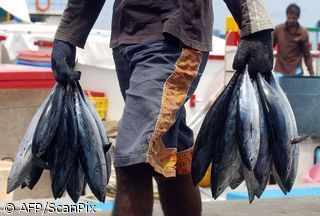 More responsibility for fishermen, rules favouring good fishing practice and adjusting fisheries management models to complement and improve the traditional quota system should be among the key aims of common fisheries policy reform, say MEPs in an own-initiative report approved by the Fisheries Committee on Wednesday.
more »
More responsibility for fishermen, rules favouring good fishing practice and adjusting fisheries management models to complement and improve the traditional quota system should be among the key aims of common fisheries policy reform, say MEPs in an own-initiative report approved by the Fisheries Committee on Wednesday.
more »
 On January 8, 2010, the Executive Board of the International Monetary Fund (IMF) concluded the Article IV consultation with Yemen.
more »
On January 8, 2010, the Executive Board of the International Monetary Fund (IMF) concluded the Article IV consultation with Yemen.
more »
 On January 22, 2010, the Executive Board of the International Monetary Fund (IMF) concluded the Article IV consultation with Norway.
more »
On January 22, 2010, the Executive Board of the International Monetary Fund (IMF) concluded the Article IV consultation with Norway.
more »
 Agriculture can help to slow climate change, but should be ready to adapt to the impact of global warming, said Agriculture Committee MEPs and scientists at a public hearing on Wednesday.
more »
Agriculture can help to slow climate change, but should be ready to adapt to the impact of global warming, said Agriculture Committee MEPs and scientists at a public hearing on Wednesday.
more »
 The Ministers for Employment of the European Union are holding an informal council on Thursday 28 and Friday 29 January which will lay the foundations for drawing up the common policies in the area of employment which the European Union will adopt over the next ten years as part of the “2020 Strategy”.
more »
The Ministers for Employment of the European Union are holding an informal council on Thursday 28 and Friday 29 January which will lay the foundations for drawing up the common policies in the area of employment which the European Union will adopt over the next ten years as part of the “2020 Strategy”.
more »