Lithuania shuts down unit one of its Chernobyl-style Ignalina nuclear power plant on New Year’s Eve, as it moves to honour a promise to the EU to close the facility in the coming years
Published:
5 January 2005 y., Wednesday
Under the agreement, which secured the republic its membership earlier this year of the EU bloc, Lithuania closes the first unit on Friday and is scheduled to close the remaining unit in 2009.
The EU has been worried about safety at the Ignalina plant, as it operates the same kind of reactors as in Ukraine’s Chernobyl nuclear plant, which exploded in 1986 in the world’s worst civil nuclear disaster.
The EU has promised to finance the closure of the plant, estimated at 2-3 billion euros (2.5-3.75 billion dollars) over 30 years and has already allocated more than 200 million euros to prepare decommissioning of the first unit.
The Ignalina plant, which supplies about 70 per cent of all energy consumed in the Baltic states, operates two Chernobyl-type RBMK reactors with 1300 Megawatt capacity each.
Šaltinis:
Copying, publishing, announcing any information from the News.lt portal without written permission of News.lt editorial office is prohibited.
The most popular articles
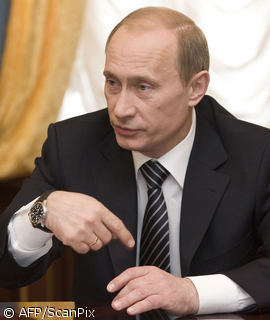 Vladimir Putin appeared on live television and radio for his annual question-and answer session with the public.
more »
Vladimir Putin appeared on live television and radio for his annual question-and answer session with the public.
more »
 EUFISERV Payments announced today that the separation of the EUFISERV ATM Scheme from EUFISERV's former processing business is now complete, and is in line with the SEPA requirements of the European Central Bank and the European Commission.
more »
EUFISERV Payments announced today that the separation of the EUFISERV ATM Scheme from EUFISERV's former processing business is now complete, and is in line with the SEPA requirements of the European Central Bank and the European Commission.
more »
 600,000 Mexicans work in the auto and auto parts industries, and U.S. automakers run around a dozen plants.
more »
600,000 Mexicans work in the auto and auto parts industries, and U.S. automakers run around a dozen plants.
more »
 The President of the European Commission Jose Barroso says some British politicians are considering signing up to the euro
more »
The President of the European Commission Jose Barroso says some British politicians are considering signing up to the euro
more »
 It's official. The U.S. economy is in a recession.
more »
It's official. The U.S. economy is in a recession.
more »
 The crisis that started in the US over a year ago has sent shock waves around the globe.
more »
The crisis that started in the US over a year ago has sent shock waves around the globe.
more »
 Offering a coordinated response to the EU’s deepening economic crisis, the Commission is proposing €200bn in measures to boost purchasing power and generate growth and jobs.
more »
Offering a coordinated response to the EU’s deepening economic crisis, the Commission is proposing €200bn in measures to boost purchasing power and generate growth and jobs.
more »
 The two men charged with keeping Britain's economy afloat moved on Monday to ward off a deepening recession.
more »
The two men charged with keeping Britain's economy afloat moved on Monday to ward off a deepening recession.
more »
 European citizens are getting older and greyer. By 2050 it is estimated that the average age in the European Union will be 49, up from 39 now.
more »
European citizens are getting older and greyer. By 2050 it is estimated that the average age in the European Union will be 49, up from 39 now.
more »
 Addressing U.S citizens, Barack Obama spoke of plans to revive the economy.
more »
Addressing U.S citizens, Barack Obama spoke of plans to revive the economy.
more »