Threat merely a mix-up, executive says.
Published:
21 February 1999 y., Sunday
Microsoft yesterday attempted to douse one of the most explosive charges in 1 1/2 years of federal antitrust scrutiny - that it threatened Compaq Computer with the industry equivalent of the death penalty for replacing Microsoft software with a competitor_s product. The allegation, which first arose in a 1997 lawsuit brought by the U.S. Department of Justice against Microsoft, is one example federal and state antitrust prosecutors cite to show that Microsoft attempted to illegally protect and extend an alleged monopoly held by its Windows operating system. In summer 1996, Microsoft told Compaq that it intended to revoke the Texas computer maker_s Windows license. The sticking point: Compaq had put Netscape Communications_ Internet browser on the desktop of its PCs, bumping Microsoft_s browser off the screen. The Justice Department and 19 states contend Microsoft_ reaction in this case was an example of an illegal attempt to use its power to harm Netscape and hurt it before its Navigator browser could gain enough popularity to challenge Windows as a kind of operating system. Over the past few days in federal court, Microsoft teamed up with Compaq to answer that allegation by showing a different version of events. Testifying for Microsoft, Compaq Senior Vice President John Rose said the dispute that led to Microsoft_s threat was actually the fault of an internal communications flub. Rose said that its handling of competitors_ software on the Compaq desktop had violated the terms of an agreement requiring that the Microsoft Internet browser remain on the desktop. Rose also testified that America Online pressured Compaq to ensure that AOL was the only Internet software accessible on the desktop through an icon.
The most popular articles
 The President of the Spanish Government, José Luis Rodríguez Zapatero, will meet this Monday with the German Chancellor, Angela Merkel, to analyse the future EU economic and employment strategy EU2020 before the Twenty-seven approve its basic lines at the Spring European Council.
more »
The President of the Spanish Government, José Luis Rodríguez Zapatero, will meet this Monday with the German Chancellor, Angela Merkel, to analyse the future EU economic and employment strategy EU2020 before the Twenty-seven approve its basic lines at the Spring European Council.
more »
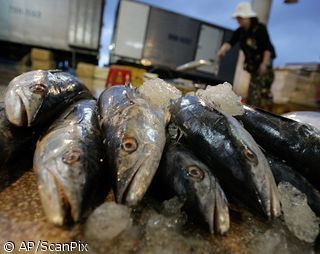 The planned overhaul of the EU common fisheries policy should take better account of the huge differences across European fleets and fisheries, give greater responsibility to fishing regions, address the problem of fleet overcapacity and improve the traditional quota system, according to a non-binding report adopted by Parliament on Thursday.
more »
The planned overhaul of the EU common fisheries policy should take better account of the huge differences across European fleets and fisheries, give greater responsibility to fishing regions, address the problem of fleet overcapacity and improve the traditional quota system, according to a non-binding report adopted by Parliament on Thursday.
more »
 The EMU framework and economic governance within the eurozone need to be revamped.
more »
The EMU framework and economic governance within the eurozone need to be revamped.
more »
 Young people should be a priority in EU action next year, it emerged on Tuesday, as the Budgets Committee started work on the EU's 2011 budget.
more »
Young people should be a priority in EU action next year, it emerged on Tuesday, as the Budgets Committee started work on the EU's 2011 budget.
more »
 European Investment Bank (EIB) support for EU regional policy is crucial for tackling the economic crisis, EIB President Philippe Maystadt told the Regional Development Committee on Monday.
more »
European Investment Bank (EIB) support for EU regional policy is crucial for tackling the economic crisis, EIB President Philippe Maystadt told the Regional Development Committee on Monday.
more »
 Three thousand former car, refrigerator and construction workers in Germany and Lithuania could get €7.6 million in EU globalisation adjustment fund aid for training, self-employment and professional orientation under plans approved by the Budgets Committee on Tuesday.
more »
Three thousand former car, refrigerator and construction workers in Germany and Lithuania could get €7.6 million in EU globalisation adjustment fund aid for training, self-employment and professional orientation under plans approved by the Budgets Committee on Tuesday.
more »
 Today, 22 February, the EU Council of Agriculture and Fishing in Brussels, under the chairmanship of the Spanish Minister, Elena Espinosa, will analyse the impact of the economic crisis on the Greek agricultural sector, which has experienced a drop in prices and income, with small farms that pose an obstacle for the producer for negotiating with large distribution chains.
more »
Today, 22 February, the EU Council of Agriculture and Fishing in Brussels, under the chairmanship of the Spanish Minister, Elena Espinosa, will analyse the impact of the economic crisis on the Greek agricultural sector, which has experienced a drop in prices and income, with small farms that pose an obstacle for the producer for negotiating with large distribution chains.
more »
 Municipal policies to tackle the crisis and their application at EU level will be discussed during the three days of the summit entitled, “Networked Local Governments for a New Europe”, which will bring together representatives from 260 cities in Barcelona.
more »
Municipal policies to tackle the crisis and their application at EU level will be discussed during the three days of the summit entitled, “Networked Local Governments for a New Europe”, which will bring together representatives from 260 cities in Barcelona.
more »
 The EBRD is promoting energy efficiency and renewable energy projects in Moldova, helping the economy to reduce its energy intensity with a new €20 million credit line for on-lending to local private companies.
more »
The EBRD is promoting energy efficiency and renewable energy projects in Moldova, helping the economy to reduce its energy intensity with a new €20 million credit line for on-lending to local private companies.
more »
 The EBRD is lending $1.2 million to Salkyn, one of the largest ice cream producers in Turkmenistan, to help the company expand its distribution network and build up its brand.
more »
The EBRD is lending $1.2 million to Salkyn, one of the largest ice cream producers in Turkmenistan, to help the company expand its distribution network and build up its brand.
more »