Threat merely a mix-up, executive says.
Published:
21 February 1999 y., Sunday
Microsoft yesterday attempted to douse one of the most explosive charges in 1 1/2 years of federal antitrust scrutiny - that it threatened Compaq Computer with the industry equivalent of the death penalty for replacing Microsoft software with a competitor_s product. The allegation, which first arose in a 1997 lawsuit brought by the U.S. Department of Justice against Microsoft, is one example federal and state antitrust prosecutors cite to show that Microsoft attempted to illegally protect and extend an alleged monopoly held by its Windows operating system. In summer 1996, Microsoft told Compaq that it intended to revoke the Texas computer maker_s Windows license. The sticking point: Compaq had put Netscape Communications_ Internet browser on the desktop of its PCs, bumping Microsoft_s browser off the screen. The Justice Department and 19 states contend Microsoft_ reaction in this case was an example of an illegal attempt to use its power to harm Netscape and hurt it before its Navigator browser could gain enough popularity to challenge Windows as a kind of operating system. Over the past few days in federal court, Microsoft teamed up with Compaq to answer that allegation by showing a different version of events. Testifying for Microsoft, Compaq Senior Vice President John Rose said the dispute that led to Microsoft_s threat was actually the fault of an internal communications flub. Rose said that its handling of competitors_ software on the Compaq desktop had violated the terms of an agreement requiring that the Microsoft Internet browser remain on the desktop. Rose also testified that America Online pressured Compaq to ensure that AOL was the only Internet software accessible on the desktop through an icon.
The most popular articles
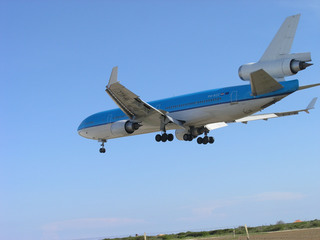 The European Commission has today decided to close the formal investigation procedure into the agreement between Bratislava Airport in Slovakia and Ryanair after concluding that the airport operator acted as a market economy investor and therefore no advantage has been granted to Ryanair.
more »
The European Commission has today decided to close the formal investigation procedure into the agreement between Bratislava Airport in Slovakia and Ryanair after concluding that the airport operator acted as a market economy investor and therefore no advantage has been granted to Ryanair.
more »
 The coffee industry of Jamaica represents one the largest earners of foreign exchange, approximately US$30 million in 2008.
more »
The coffee industry of Jamaica represents one the largest earners of foreign exchange, approximately US$30 million in 2008.
more »
 On January 13, 2010, the Executive Board of the International Monetary Fund (IMF) concluded the Article IV consultation with Mauritius.
more »
On January 13, 2010, the Executive Board of the International Monetary Fund (IMF) concluded the Article IV consultation with Mauritius.
more »
 The World Bank's International Development Association and the International Monetary Fund have agreed to support US$1.6 billion in debt relief for the Islamic Republic of Afghanistan.
more »
The World Bank's International Development Association and the International Monetary Fund have agreed to support US$1.6 billion in debt relief for the Islamic Republic of Afghanistan.
more »
 The Common Agricultural Policy plays a critical role in helping farmers to deliver environmental goods and services, provided that policies are targeted in the right way.
more »
The Common Agricultural Policy plays a critical role in helping farmers to deliver environmental goods and services, provided that policies are targeted in the right way.
more »
 Regional Policy Commissioner Paweł Samecki will meet Croatia's Prime Minister Jadranka Kosor and members of her government in Zagreb on 25-26 January to discuss the country's preparations for accession in the context of the EU cohesion policy.
more »
Regional Policy Commissioner Paweł Samecki will meet Croatia's Prime Minister Jadranka Kosor and members of her government in Zagreb on 25-26 January to discuss the country's preparations for accession in the context of the EU cohesion policy.
more »
 The World Bank Board of Directors today approved US$20 million for the Dominican Republic in support of the Municipal Development Project, which aims to improve the technical and financial capacity of local governments.
more »
The World Bank Board of Directors today approved US$20 million for the Dominican Republic in support of the Municipal Development Project, which aims to improve the technical and financial capacity of local governments.
more »
 The European Investment Bank (EIB) is lending EUR 400 million to Ford Romania SA for the expansion and refurbishment of the company’s existing car assembly plant located in Craiova in the South-West of Romania.
more »
The European Investment Bank (EIB) is lending EUR 400 million to Ford Romania SA for the expansion and refurbishment of the company’s existing car assembly plant located in Craiova in the South-West of Romania.
more »
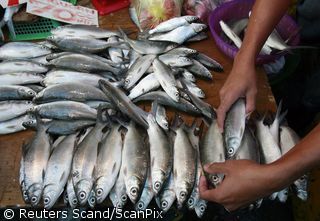 The Agriculture Council of the European Union has examined ways to improve the functioning of the food supply chain with the ultimate aim of controlling the fluctuation in prices and ensuring a more equitative distribution of the added value throughout the chain.
more »
The Agriculture Council of the European Union has examined ways to improve the functioning of the food supply chain with the ultimate aim of controlling the fluctuation in prices and ensuring a more equitative distribution of the added value throughout the chain.
more »
 The European Commission has today approved an application from Lithuania for assistance under the Globalisation Adjustment Fund (EGF).
more »
The European Commission has today approved an application from Lithuania for assistance under the Globalisation Adjustment Fund (EGF).
more »