Threat merely a mix-up, executive says.
Published:
21 February 1999 y., Sunday
Microsoft yesterday attempted to douse one of the most explosive charges in 1 1/2 years of federal antitrust scrutiny - that it threatened Compaq Computer with the industry equivalent of the death penalty for replacing Microsoft software with a competitor_s product. The allegation, which first arose in a 1997 lawsuit brought by the U.S. Department of Justice against Microsoft, is one example federal and state antitrust prosecutors cite to show that Microsoft attempted to illegally protect and extend an alleged monopoly held by its Windows operating system. In summer 1996, Microsoft told Compaq that it intended to revoke the Texas computer maker_s Windows license. The sticking point: Compaq had put Netscape Communications_ Internet browser on the desktop of its PCs, bumping Microsoft_s browser off the screen. The Justice Department and 19 states contend Microsoft_ reaction in this case was an example of an illegal attempt to use its power to harm Netscape and hurt it before its Navigator browser could gain enough popularity to challenge Windows as a kind of operating system. Over the past few days in federal court, Microsoft teamed up with Compaq to answer that allegation by showing a different version of events. Testifying for Microsoft, Compaq Senior Vice President John Rose said the dispute that led to Microsoft_s threat was actually the fault of an internal communications flub. Rose said that its handling of competitors_ software on the Compaq desktop had violated the terms of an agreement requiring that the Microsoft Internet browser remain on the desktop. Rose also testified that America Online pressured Compaq to ensure that AOL was the only Internet software accessible on the desktop through an icon.
The most popular articles
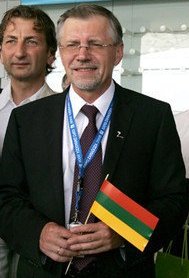 In Brussels, Prime Minister Gediminas Kirkilas participated in the meeting of Nordic and Baltic (NB6) Prime Ministers which focused on the pressing topics on the agenda of the European Council: global finance crisis, energy, climate change, EU-Russia relations, and financial situation in Iceland.
more »
In Brussels, Prime Minister Gediminas Kirkilas participated in the meeting of Nordic and Baltic (NB6) Prime Ministers which focused on the pressing topics on the agenda of the European Council: global finance crisis, energy, climate change, EU-Russia relations, and financial situation in Iceland.
more »
 Prime Minister Gediminas Kirkilas attended the working dinner with President of the European Commission José Manuel Barroso, Danish, Estonian, Finnish, Latvian, Polish Prime Ministers – Anders Fogh Rasmussen, Andrus Ansip, Matti Vanhanen, Ivars Godmanis, Donald Tusk – and Swedish Minister of Foreign Affairs Carl Bildt.
more »
Prime Minister Gediminas Kirkilas attended the working dinner with President of the European Commission José Manuel Barroso, Danish, Estonian, Finnish, Latvian, Polish Prime Ministers – Anders Fogh Rasmussen, Andrus Ansip, Matti Vanhanen, Ivars Godmanis, Donald Tusk – and Swedish Minister of Foreign Affairs Carl Bildt.
more »
 The European Commission has put forward a revision of EU rules on deposit guarantee schemes that puts into action the commitments made by EU Finance Ministers on 7 October.
more »
The European Commission has put forward a revision of EU rules on deposit guarantee schemes that puts into action the commitments made by EU Finance Ministers on 7 October.
more »
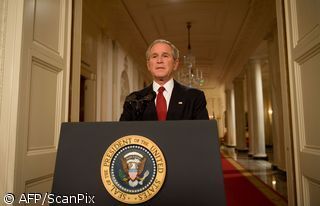 The United States began releasing long-awaited details of its $700 billion rescue plan.
more »
The United States began releasing long-awaited details of its $700 billion rescue plan.
more »
 Australia's Prime Minister announces plans for the government to guarantee bank deposits for the next three years.
more »
Australia's Prime Minister announces plans for the government to guarantee bank deposits for the next three years.
more »
 Ethical bank, Triodos, says it is offering customers an alternative way to invest their funds.
more »
Ethical bank, Triodos, says it is offering customers an alternative way to invest their funds.
more »
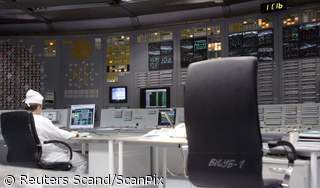 Energy security was the dominant theme during the meeting between Lithuanian Prime Minister Gediminas Kirkilas and Latvian Prime Minister Ivars Godmanis.
more »
Energy security was the dominant theme during the meeting between Lithuanian Prime Minister Gediminas Kirkilas and Latvian Prime Minister Ivars Godmanis.
more »
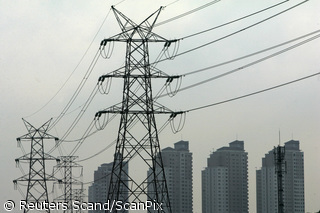 The draft law would require utilities to separate – or unbundle – the distribution of electricity and gas from production.
more »
The draft law would require utilities to separate – or unbundle – the distribution of electricity and gas from production.
more »
 A holistic approach to eradicating poverty, which seeks to ensure adequate incomes, quality jobs and better access to social services, is advocated by the EP in an own-initiative report.
more »
A holistic approach to eradicating poverty, which seeks to ensure adequate incomes, quality jobs and better access to social services, is advocated by the EP in an own-initiative report.
more »
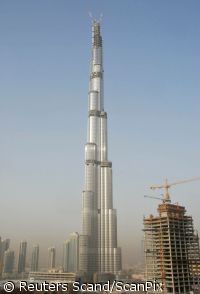 Dubai showcases multi-billion dollar development projects at the annual Cityscape exhibition.
more »
Dubai showcases multi-billion dollar development projects at the annual Cityscape exhibition.
more »