Threat merely a mix-up, executive says.
Published:
21 February 1999 y., Sunday
Microsoft yesterday attempted to douse one of the most explosive charges in 1 1/2 years of federal antitrust scrutiny - that it threatened Compaq Computer with the industry equivalent of the death penalty for replacing Microsoft software with a competitor_s product. The allegation, which first arose in a 1997 lawsuit brought by the U.S. Department of Justice against Microsoft, is one example federal and state antitrust prosecutors cite to show that Microsoft attempted to illegally protect and extend an alleged monopoly held by its Windows operating system. In summer 1996, Microsoft told Compaq that it intended to revoke the Texas computer maker_s Windows license. The sticking point: Compaq had put Netscape Communications_ Internet browser on the desktop of its PCs, bumping Microsoft_s browser off the screen. The Justice Department and 19 states contend Microsoft_ reaction in this case was an example of an illegal attempt to use its power to harm Netscape and hurt it before its Navigator browser could gain enough popularity to challenge Windows as a kind of operating system. Over the past few days in federal court, Microsoft teamed up with Compaq to answer that allegation by showing a different version of events. Testifying for Microsoft, Compaq Senior Vice President John Rose said the dispute that led to Microsoft_s threat was actually the fault of an internal communications flub. Rose said that its handling of competitors_ software on the Compaq desktop had violated the terms of an agreement requiring that the Microsoft Internet browser remain on the desktop. Rose also testified that America Online pressured Compaq to ensure that AOL was the only Internet software accessible on the desktop through an icon.
The most popular articles
 Statistics Lithuania informs that based on provisional data as of 1 April 2008 foreign direct investment (FDI) made LTL 33.63 billion, or by 2.8 per cent less than on 1 January 2008.
more »
Statistics Lithuania informs that based on provisional data as of 1 April 2008 foreign direct investment (FDI) made LTL 33.63 billion, or by 2.8 per cent less than on 1 January 2008.
more »
 Boston-based Celent LLC has published a new report about the state of the Turkish credit-card market, which has developed rapidly over the last decade and is expected to represent a high-growth opportunity.
more »
Boston-based Celent LLC has published a new report about the state of the Turkish credit-card market, which has developed rapidly over the last decade and is expected to represent a high-growth opportunity.
more »
 Fastest annual revenue growth since 1999 fuels 32% increase in earnings per share.
more »
Fastest annual revenue growth since 1999 fuels 32% increase in earnings per share.
more »
First Data Shareholders to Receive $34 per Share in Cash;
Transaction Valued at $29 Billion
more »
 Belarus' international reserves decreased by 3.8 percent in January 2007 to $1,329.9 million as of February 1, according to the National Bank of Belarus (NBB).
more »
Belarus' international reserves decreased by 3.8 percent in January 2007 to $1,329.9 million as of February 1, according to the National Bank of Belarus (NBB).
more »
 The Minsk Tractor Works (MTZ) manufactured nearly 172 billion rubels worth of industrial products in the first month of 2007, which was a 19.8-percent year-on-year increase.
more »
The Minsk Tractor Works (MTZ) manufactured nearly 172 billion rubels worth of industrial products in the first month of 2007, which was a 19.8-percent year-on-year increase.
more »
 The Belarusian government plans to borrow up to $1 billion abroad this year to cushion the effects of a sharp hike in the price of energy resources.
more »
The Belarusian government plans to borrow up to $1 billion abroad this year to cushion the effects of a sharp hike in the price of energy resources.
more »
 Russia's Audit Chamber has suggested reviewing all economy agreements between Belarus and Russia, Andrei Kokoshin, head of the standing committee on CIS affairs in the State Duma (Russia's lower parliamentary house), said on Thursday.
more »
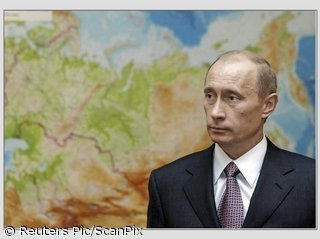
Russia's Audit Chamber has suggested reviewing all economy agreements between Belarus and Russia, Andrei Kokoshin, head of the standing committee on CIS affairs in the State Duma (Russia's lower parliamentary house), said on Thursday.
more »
 Belarus is contemplating the purchase of two oil wells in Russia, a senior executive at the Belneftekhim state-controlled petrochemical concern said Tuesday.
more »
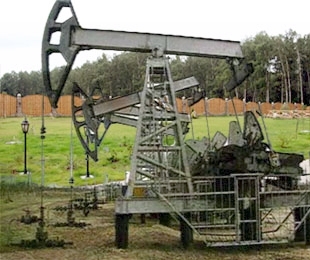
Belarus is contemplating the purchase of two oil wells in Russia, a senior executive at the Belneftekhim state-controlled petrochemical concern said Tuesday.
more »
 Aleksandr Lukashenko warned that a slowdown of Belarus' economic development pace could undermine public confidence in the government and damage the country's image in the international arena.
more »
Aleksandr Lukashenko warned that a slowdown of Belarus' economic development pace could undermine public confidence in the government and damage the country's image in the international arena.
more »