The mobile Internet access market will cater to 136 million people by the end of 2007
Published:
6 August 2001 y., Monday
The mobile Internet access market will cater to 136 million people by the end of 2007, thanks to the increased mobility of the workforce and the introduction of mobile-specific applications, according to Frost & Sullivan. That's an increase from 2.9 million active subscribers in 2000.
Along with the increase in customers will come an increase in revenue for mobile access carriers. Revenue reached $417.6 million from Internet traffic in 2000, and this is projected to surge to $25.89 billion by 2007.
Subscribers to mobile Internet services will vary significantly, specifically as to their choice of access device, whether a smart phone, a PDA or a laptop, which will largely influence their usage patterns. Consumers and corporate users will utilize different devices, because they will have different needs.
According to Frost & Sullivan Research Analysts Brent Iadarola and Kshitij Moghe, the new packet-data environment requires new pricing strategies in order to regulate traffic. They expect operators to introduce "bucket" pricing for bundled voice and data services with varying bucket sizes for different user segments.
The 2001 edition of the "Mobile Cellular Communications" series from Web-Feet Research found that mobile Internet consumers using phones may have to wait a bit longer than originally expected because the recent downturn in the mobile market has caused significant delays in the 3G implementation, but only minor ones in the transition to 2.5G.
Šaltinis:
cyberatlas.internet.com
Copying, publishing, announcing any information from the News.lt portal without written permission of News.lt editorial office is prohibited.
The most popular articles
 The EU needs a strategy by 2011 to encourage the creation of green jobs, says a draft resolution by the Employment and Social Affairs Committee that was adopted on Wednesday.
more »
The EU needs a strategy by 2011 to encourage the creation of green jobs, says a draft resolution by the Employment and Social Affairs Committee that was adopted on Wednesday.
more »
 Householders should not have to go without gas due to a gas-supply crisis, and such crises should be better managed, thanks to EU-wide co-ordination procedures and interconnection requirements laid down in draft legislation agreed informally with the Council at the end of June and approved by the Industry Committee on Tuesday.
more »
Householders should not have to go without gas due to a gas-supply crisis, and such crises should be better managed, thanks to EU-wide co-ordination procedures and interconnection requirements laid down in draft legislation agreed informally with the Council at the end of June and approved by the Industry Committee on Tuesday.
more »
 Today the Council has taken the formal decision which will pave the way for the introduction of the euro in Estonia as of 1 January 2011 and will become the 17th European Union country to share the euro currency.
more »
Today the Council has taken the formal decision which will pave the way for the introduction of the euro in Estonia as of 1 January 2011 and will become the 17th European Union country to share the euro currency.
more »
 Proposals to improve protection for bank account holders and retail investors, and set up similar schemes for insurance policies.
more »
Proposals to improve protection for bank account holders and retail investors, and set up similar schemes for insurance policies.
more »
 How should the EU's farm policy be reshaped and how should it be funded after 2013?
more »
How should the EU's farm policy be reshaped and how should it be funded after 2013?
more »
 MEPs on Wednesday approved some of the strictest rules in the world on bankers' bonuses.
more »
MEPs on Wednesday approved some of the strictest rules in the world on bankers' bonuses.
more »
 Long before the financial crisis the European Parliament regularly pointed out the significant failures in the EU’s supervision of ever more integrated financial markets.
more »
Long before the financial crisis the European Parliament regularly pointed out the significant failures in the EU’s supervision of ever more integrated financial markets.
more »
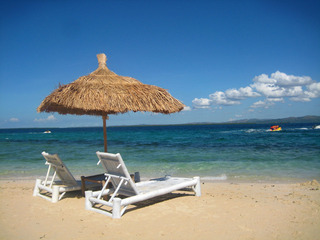 New strategy for stimulating tourism in Europe – to realise the full potential of an industry that already plays an important role in the economy.
more »
New strategy for stimulating tourism in Europe – to realise the full potential of an industry that already plays an important role in the economy.
more »
 The European Commission has disclosed who in 2009 received EU funds in policy areas like research, education and culture, energy and transport or external aid.
more »
The European Commission has disclosed who in 2009 received EU funds in policy areas like research, education and culture, energy and transport or external aid.
more »
The European Commission has approved 19 programmes in 14 Member States (Austria, Belgium, Czech Republic, Denmark, Germany, France, Greece, Italy, Ireland, the Netherlands, Poland, Slovenia, Spain and the United Kingdom) to provide information on and to promote agricultural products in the European Union.
more »