The International rating agency Moody's Investors Service has risen the forecast for Russian bonds nominated in currency and for banking deposits from stable to positive.
Published:
13 April 2000 y., Thursday
This change in the forecast also applies to eurobonds and Russian bonds nominated in rubles. In the opinion of experts of the agency, the political situation has improved significantly due to the results of the presidential elections. The main economic indices for 2000-2001 testify to the significant strengthening of the economic situation in Russia. For example, experts noted positive growth rates and the preliminary surplus of the consolidated budget. Owning to the restructuring of various Russian debts, the terms of the redemption of the corresponding bonds have been postponed. This had a positive impact on Russia's gold and currency reserves. Experts from the Moody agency think that the improvement of the economic situation in Russia became possible mostly due to high oil prices on world stock exchanges. As a result, the Russian budget gets additional revenues. Nonetheless, in the experts' view, despite this improvement, Russia still needs serious structural reforms in the spheres of taxation, land use, labor legislation, bankruptcy legislation, social protection system and the restructuring of industries. This increase of the rating implies minuses too. Thus, Japan, the world's largest creditor, announced an intention today to fully write off debts of the poorest countries and also to give additional funds of $200 million to the World Bank for coping with poverty in the third world countries. Having a positive rating, from now on Russia can hardly count on its debts being written off.
Šaltinis:
RBC
Copying, publishing, announcing any information from the News.lt portal without written permission of News.lt editorial office is prohibited.
The most popular articles
 The EU needs a strategy by 2011 to encourage the creation of green jobs, says a draft resolution by the Employment and Social Affairs Committee that was adopted on Wednesday.
more »
The EU needs a strategy by 2011 to encourage the creation of green jobs, says a draft resolution by the Employment and Social Affairs Committee that was adopted on Wednesday.
more »
 Householders should not have to go without gas due to a gas-supply crisis, and such crises should be better managed, thanks to EU-wide co-ordination procedures and interconnection requirements laid down in draft legislation agreed informally with the Council at the end of June and approved by the Industry Committee on Tuesday.
more »
Householders should not have to go without gas due to a gas-supply crisis, and such crises should be better managed, thanks to EU-wide co-ordination procedures and interconnection requirements laid down in draft legislation agreed informally with the Council at the end of June and approved by the Industry Committee on Tuesday.
more »
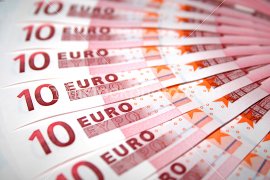 Today the Council has taken the formal decision which will pave the way for the introduction of the euro in Estonia as of 1 January 2011 and will become the 17th European Union country to share the euro currency.
more »
Today the Council has taken the formal decision which will pave the way for the introduction of the euro in Estonia as of 1 January 2011 and will become the 17th European Union country to share the euro currency.
more »
 Proposals to improve protection for bank account holders and retail investors, and set up similar schemes for insurance policies.
more »
Proposals to improve protection for bank account holders and retail investors, and set up similar schemes for insurance policies.
more »
 How should the EU's farm policy be reshaped and how should it be funded after 2013?
more »
How should the EU's farm policy be reshaped and how should it be funded after 2013?
more »
 MEPs on Wednesday approved some of the strictest rules in the world on bankers' bonuses.
more »
MEPs on Wednesday approved some of the strictest rules in the world on bankers' bonuses.
more »
 Long before the financial crisis the European Parliament regularly pointed out the significant failures in the EU’s supervision of ever more integrated financial markets.
more »
Long before the financial crisis the European Parliament regularly pointed out the significant failures in the EU’s supervision of ever more integrated financial markets.
more »
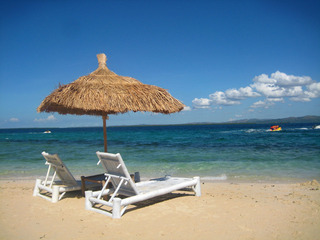 New strategy for stimulating tourism in Europe – to realise the full potential of an industry that already plays an important role in the economy.
more »
New strategy for stimulating tourism in Europe – to realise the full potential of an industry that already plays an important role in the economy.
more »
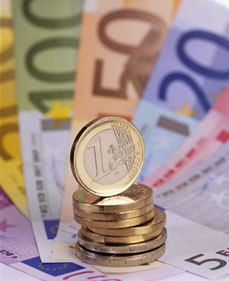 The European Commission has disclosed who in 2009 received EU funds in policy areas like research, education and culture, energy and transport or external aid.
more »
The European Commission has disclosed who in 2009 received EU funds in policy areas like research, education and culture, energy and transport or external aid.
more »
The European Commission has approved 19 programmes in 14 Member States (Austria, Belgium, Czech Republic, Denmark, Germany, France, Greece, Italy, Ireland, the Netherlands, Poland, Slovenia, Spain and the United Kingdom) to provide information on and to promote agricultural products in the European Union.
more »