A desert country ruled by a virtual dictatorship, Turkmenistan has drawn international interest for one reason: its enormous oil and natural gas deposits.
Published:
21 September 2001 y., Friday
Turkmenistan sits in central Asia, bordering the oil-rich Caspian sea to the west, Kazakhstan and Uzbekistan to the north, and Iran and Afghanistan to the south and west.
With only 3 percent of its land - a territory slightly larger than California - suitable for farming, the predominantly Muslim nation's economy is centered around oil and natural gas.
Since achieving independence with the collapse of the Soviet Union in 1991, the country has remained stable under the autocratic rule of President Saparmurat Niyazov, but has seen its economy contract sharply.
Much of the nation's history involves exploitation by despots; so much so that the 66 years it spent as part of the Soviet Union were a period of relative prosperity.
Even if the nation meets economic growth targets in 2001, however, GDP will still be only 59 percent of pre-independence levels.
Turkmenistan has been reluctant to line up with regional alliances. Its leaders have been feuding for years with neighboring countries over control of oil deposits below the Caspian Sea.
Recently, international aid groups have warned of a growing AIDS problem among Turkmenistan's 4.5 million inhabitants, as well as in the surrounding countries of Central Asia.
Šaltinis:
abcnews
Copying, publishing, announcing any information from the News.lt portal without written permission of News.lt editorial office is prohibited.
The most popular articles
 The financial and economic crisis has shown that reckless behaviour of banks and other financial institutions can have serious and costly consequences for Europe's economy and its people.
more »
The financial and economic crisis has shown that reckless behaviour of banks and other financial institutions can have serious and costly consequences for Europe's economy and its people.
more »
 Local services that create jobs and improve energy efficiency received a boost Thursday (2 September) when MEPs on the Industry, Research and Energy Committee approved plans for more investment.
more »
Local services that create jobs and improve energy efficiency received a boost Thursday (2 September) when MEPs on the Industry, Research and Energy Committee approved plans for more investment.
more »
 The European Commission approved the first financing decisions under the EUR 264 million 2010 allocation for the so-called Vulnerability FLEX mechanism to help the most vulnerable African, Caribbean and Pacific countries cope with the impact of the global financial crisis and economic downturn.
more »
The European Commission approved the first financing decisions under the EUR 264 million 2010 allocation for the so-called Vulnerability FLEX mechanism to help the most vulnerable African, Caribbean and Pacific countries cope with the impact of the global financial crisis and economic downturn.
more »
 The European Commission has today updated the list of airlines banned in the European Union to impose an operating ban on one air carrier from Ghana and to place operating restrictions on another air carrier from that country.
more »
The European Commission has today updated the list of airlines banned in the European Union to impose an operating ban on one air carrier from Ghana and to place operating restrictions on another air carrier from that country.
more »
 The European Commission today approved an application from Denmark for assistance under the European Globalisation adjustment Fund (EGF).
more »
The European Commission today approved an application from Denmark for assistance under the European Globalisation adjustment Fund (EGF).
more »
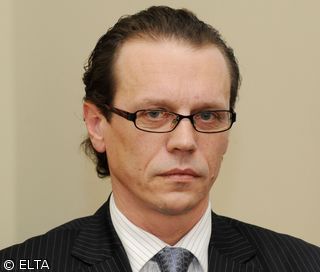 Algirdas Šemeta, EU Commissioner for Taxation, Customs Union, Anti-Fraud and Audit, will open tomorrow an international conference at the Shanghai World Expo 2010 on building bridges to facilitate trade between China and the EU.
more »
Algirdas Šemeta, EU Commissioner for Taxation, Customs Union, Anti-Fraud and Audit, will open tomorrow an international conference at the Shanghai World Expo 2010 on building bridges to facilitate trade between China and the EU.
more »
 Moldova is set to receive an EU grant of up to €90 million to help it through the financial crisis, following a vote at Parliament's Committee on International Trade on Monday.
more »
Moldova is set to receive an EU grant of up to €90 million to help it through the financial crisis, following a vote at Parliament's Committee on International Trade on Monday.
more »
 Important notice: since May 2010 business surveys data are classified in accordance with an updated version of the Nomenclature of Economic Activities (NACE rev. 2) causing a potential break in series at this date.
more »
Important notice: since May 2010 business surveys data are classified in accordance with an updated version of the Nomenclature of Economic Activities (NACE rev. 2) causing a potential break in series at this date.
more »
 75% of Europeans think that stronger coordination of economic and financial policies among EU Member States would be effective in fighting the economic crisis, according to the Spring 2010 Eurobarometer, the bi-annual opinion poll organised by the EU.
more »
75% of Europeans think that stronger coordination of economic and financial policies among EU Member States would be effective in fighting the economic crisis, according to the Spring 2010 Eurobarometer, the bi-annual opinion poll organised by the EU.
more »
 The European Commission has extended until the end of the year the liquidity support scheme for banks in Slovenia.
more »
The European Commission has extended until the end of the year the liquidity support scheme for banks in Slovenia.
more »